Descargado 17 veces
- 1 / 59

- 2 / 59
- 3 / 59

- 4 / 59
- 5 / 59

- 6 / 59

- 7 / 59

- 8 / 59
- 9 / 59

- 10 / 59
- 11 / 59

- 12 / 59
- 13 / 59

- 14 / 59
- 15 / 59

- 16 / 59

- 17 / 59

- 18 / 59

- 19 / 59

- 20 / 59


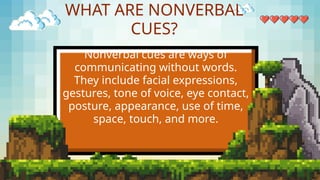

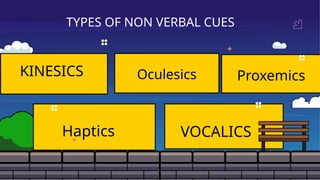
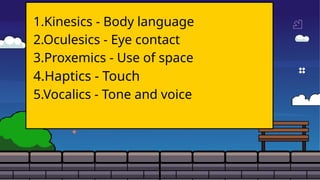
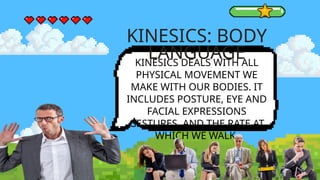
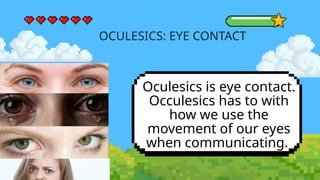
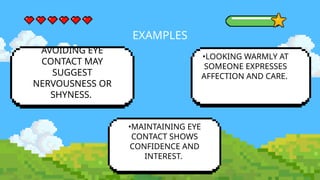

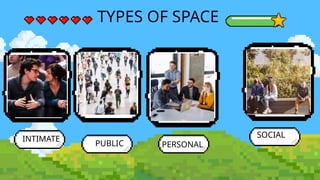
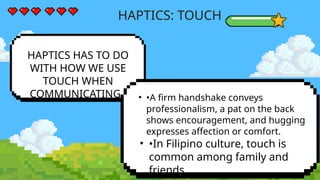

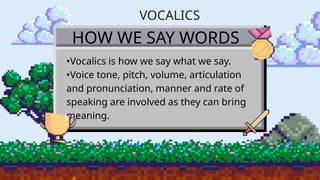



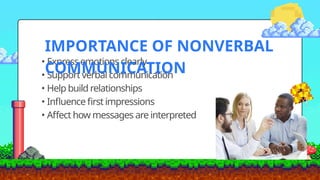

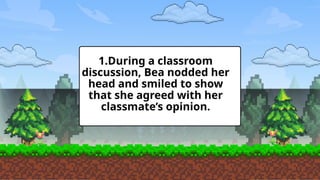
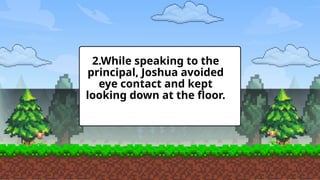
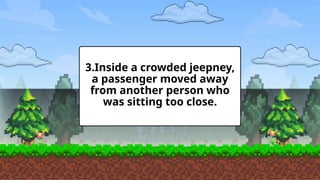
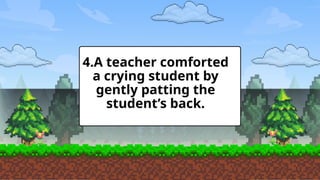
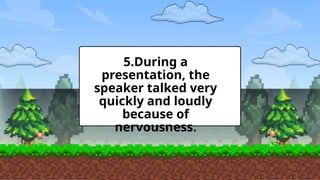







Effective Communication – Nonverbal Strategies Effective communication is more than simply choosing the right words. The way we use our body, eyes, voice, facial expressions, gestures, personal space, and even touch can strongly influence how our message is understood. This presentation, “Effective Communication – Nonverbal Strategies,” explores the important role of nonverbal communication in expressing ideas, emotions, attitudes, and intentions. Nonverbal communication refers to the messages we send without relying entirely on spoken or written words. In everyday interactions, people constantly communicate through body movements, facial expressions, eye contact, posture, distance, touch, and vocal qualities. These nonverbal cues can support spoken messages, emphasize important ideas, show emotions, or sometimes communicate something completely different from what is being said. This presentation introduces learners to several important forms of nonverbal communication, including kinesics, oculesics, proxemics, haptics, and vocalics. Understanding these strategies can help students become more confident and effective communicators in classrooms, social situations, workplaces, and everyday interactions. Kinesics focuses on body language, including gestures, posture, facial expressions, and body movements. A smile may communicate friendliness, while crossed arms may sometimes suggest discomfort or defensiveness. Learning to recognize and appropriately use body language can help speakers express confidence and openness. Oculesics refers to the use of eye behavior and eye contact during communication. Appropriate eye contact can demonstrate attention, confidence, respect, and interest. However, eye-contact expectations may differ depending on culture, situation, and relationship, making it important to use it appropriately. Proxemics deals with the use of physical space and distance between people. The distance we maintain when speaking to a friend, teacher, stranger, or coworker can communicate different meanings. Being aware of personal space can prevent discomfort and promote respectful communication. Haptics refers to communication through touch. Handshakes, pats on the shoulder, high-fives, and other forms of touch may communicate greetings, encouragement, support, or affection. Because touch can have different meanings across cultures and situations, it should always be used appropriately and respectfully. Vocalics, sometimes called paralanguage, focuses on how something is said rather than simply the words being spoken. Tone, pitch, volume, rate, pauses, and emphasis can significantly affect the meaning of a message. The same words can communicate excitement, anger, sadness, confidence, or uncertainty depending on the speaker’s voice. The presentation also highlights the importance of consistency between verbal and nonverbal messages. When a person's words and nonverbal cues agree, the message is generally easier to understand. When


