TRAVELLING
and
TRANSPORT
Para decir en qué medio de transporte viajamos, usamos la preposición
BYBY
We go by car He travels by train I'll arrive by helicopter...
¡OJO! Hay una excepción: I go on foot (voy a pie)
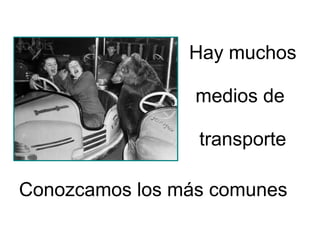
Hay muchos
medios de
transporte
Conozcamos los más comunes
ON THE ROAD
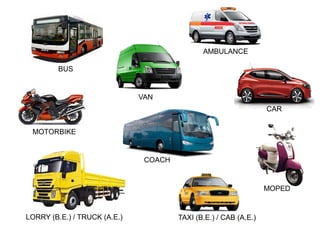
CAR
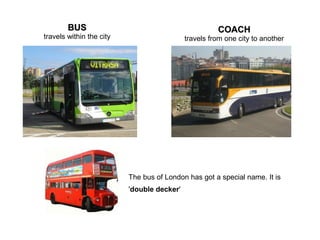
BUS
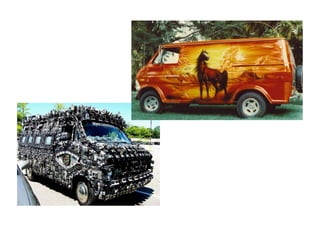
VAN
COACH
LORRY (B.E.) / TRUCK (A.E.)
MOTORBIKE
MOPED
TAXI (B.E.) / CAB (A.E.)
AMBULANCE
BUSBUS
travels within the city
COACHCOACH
travels from one city to another
The bus of London has got a special name. It is
'double decker'
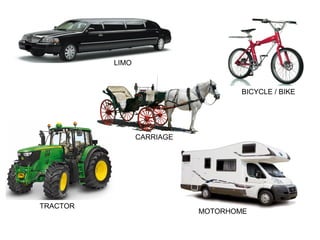
LIMO
TRACTOR
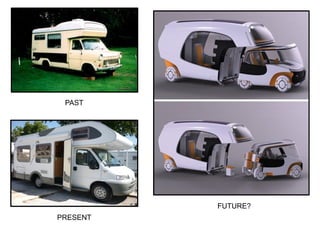
MOTORHOME
BICYCLE / BIKE
CARRIAGE
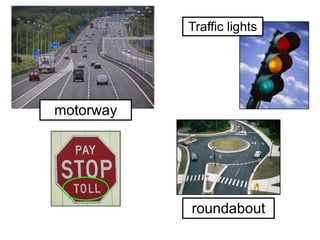
roundabout
motorway
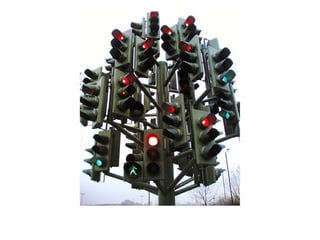
Traffic lights
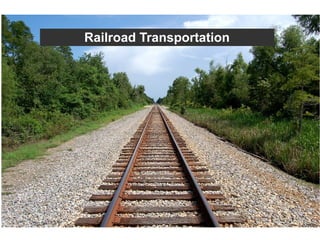
Railroad Transportation
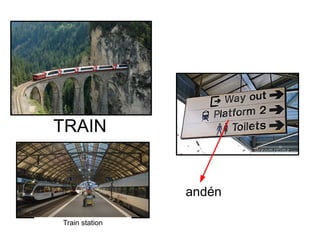
TRAIN
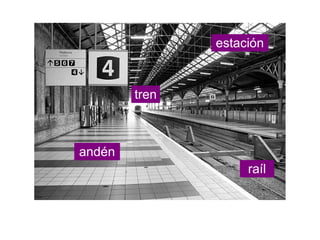
Train station
andén
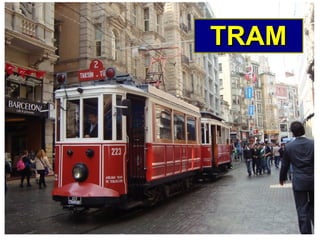
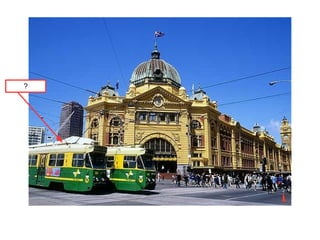
TRAMTRAM
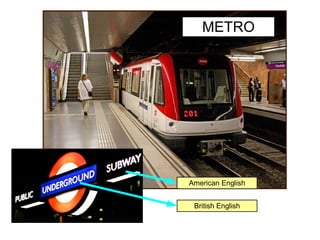
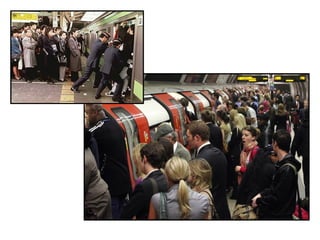
METRO
American English
British English
AIR TRANSPORTAIR TRANSPORT
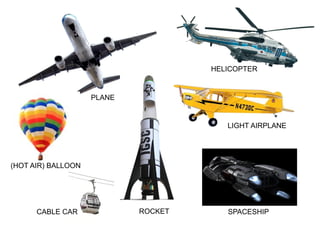
PLANE
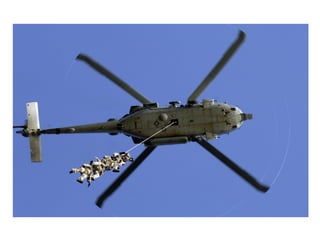
HELICOPTER
LIGHT AIRPLANE
ROCKET SPACESHIP
(HOT AIR) BALLOON
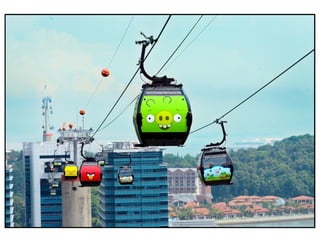
CABLE CAR
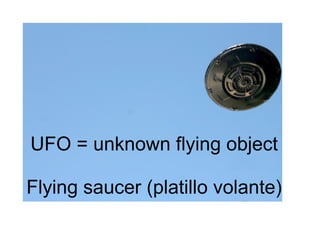
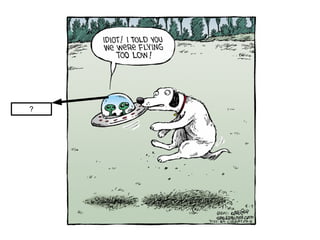
UFO = unknown flying object
Flying saucer (platillo volante)
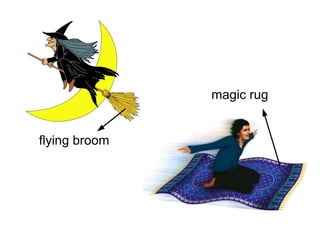
flying broom
magic rug
WATER
TRANSPORTATION
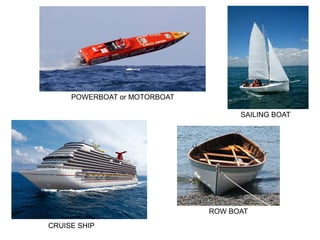
CRUISE SHIP
SAILING BOAT
POWERBOAT or MOTORBOAT
ROW BOAT
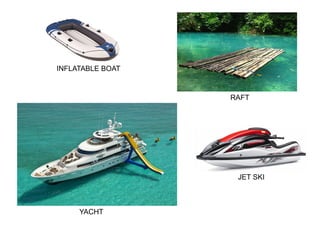
RAFT
YACHT
INFLATABLE BOAT
JET SKI
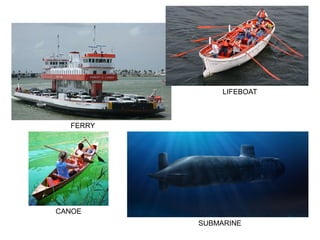
FERRY
LIFEBOAT
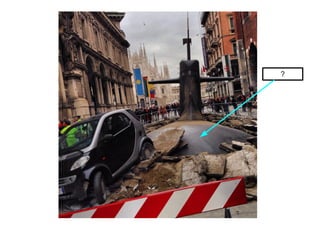
SUBMARINE
CANOE
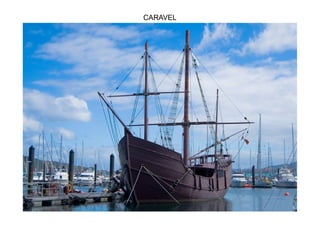
CARAVEL
¿Cuánto eres capaz de recordar?
¡Comprobémoslo!
estación
andén
tren
raíl
?
?
?
PAST
PRESENT
FUTURE?
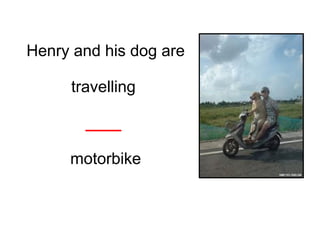
Henry and his dog are
travelling
____
motorbike
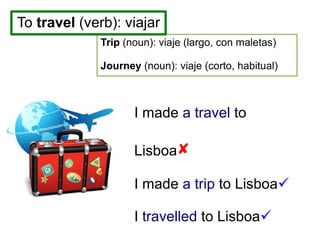
Trip (noun): viaje (largo, con maletas)
Journey (noun): viaje (corto, habitual)
I made a travel to
Lisboa
I made a trip to Lisboa
I travelled to Lisboa
To travel (verb): viajar
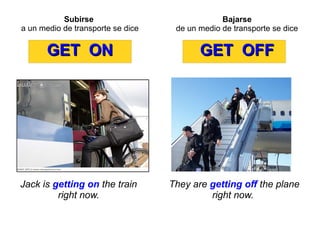
Subirse
a un medio de transporte se dice
GET ONGET ON
Jack is getting on the train
right now.
Bajarse
de un medio de transporte se dice
GET OFFGET OFF
They are getting off the plane
right now.
Vale, pues. Subirse es GET ON y bajarse
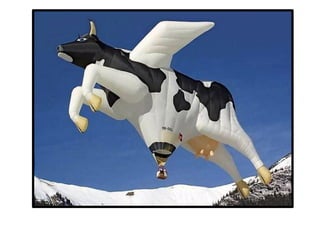
GET OFF. ¿Para todos los vehículos?
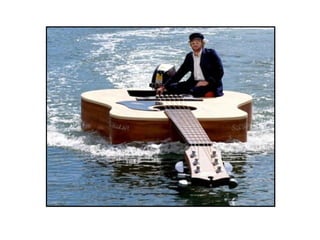
Casi; hay una excepción.
Subirse a un cochecoche (o taxi, claro), se dice
GET INTO. Y bajarse se dice GET OUT OF
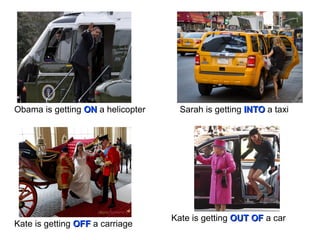
Obama is getting ONON a helicopter Sarah is getting INTOINTO a taxi
Kate is getting OFFOFF a carriage
Kate is getting OUT OFOUT OF a car
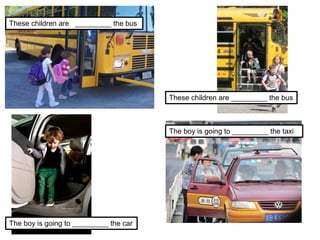
The boy is going to _________ the taxi
The boy is going to _________ the car
These children are _________ the bus
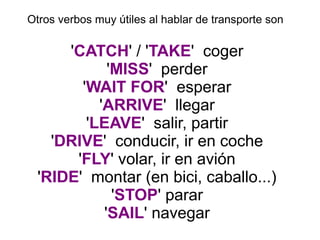
Otros verbos muy útiles al hablar de transporte son
'CATCH' / 'TAKE' coger
'MISS' perder
'WAIT FOR' esperar
'ARRIVE' llegar
'LEAVE' salir, partir
'DRIVE' conducir, ir en coche
'FLY' volar, ir en avión
'RIDE' montar (en bici, caballo...)
'STOP' parar
'SAIL' navegar
The death is __________ the bus!
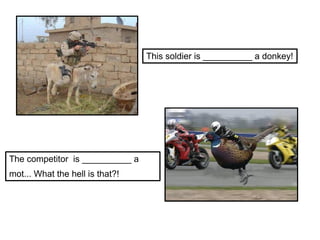
This soldier is __________ a donkey!
The competitor is __________ a
mot... What the hell is that?!
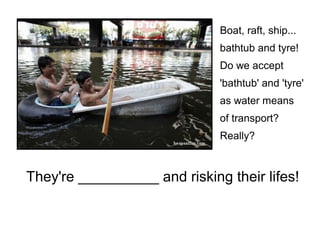
They're __________ and risking their lifes!
Boat, raft, ship...
bathtub and tyre!
Do we accept
'bathtub' and 'tyre'
as water means
of transport?
Really?
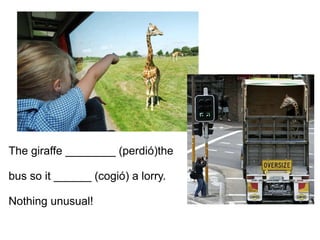
The giraffe ________ (perdió)the
bus so it ______ (cogió) a lorry.
Nothing unusual!
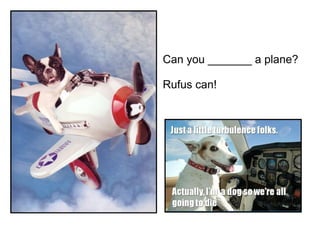
Can you _______ a plane?
Rufus can!
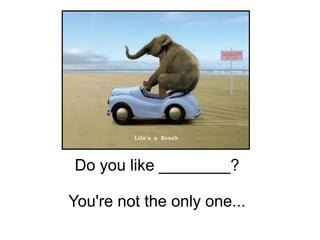
Do you like ________?
You're not the only one...
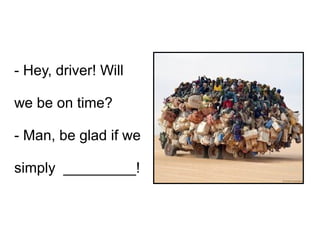
- Hey, driver! Will
we be on time?
- Man, be glad if we
simply _________!
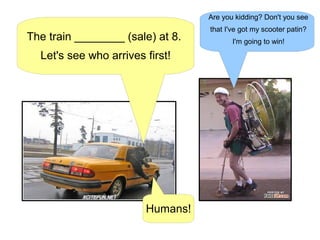
The train ________ (sale) at 8.
Let's see who arrives first!
Are you kidding? Don't you see
that I've got my scooter patin?
I'm going to win!
Humans!
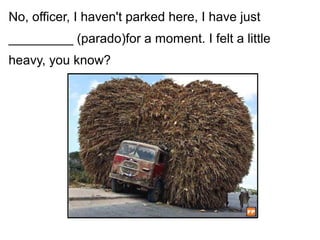
No, officer, I haven't parked here, I have just
_________ (parado)for a moment. I felt a little
heavy, you know?
Hay muchos adjetivos que nos son útiles para hablar de
transporte. Por ejemplo éstos:
'COMFORTABLE' cómodo
'UNCOMFORTABLE' incómodo
'SAFE' seguro
'DANGEROUS' peligroso
'FAST' rápido
'SLOW' lento
'CONVENIENT' práctico
'INCOVENIENT' poco práctico, inconveniente
'CHEAP' barato
'EXPENSIVE' caro
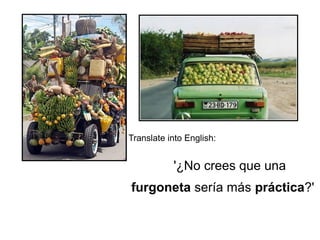
Translate into English:
'¿No crees que una
furgoneta sería más práctica?'
Translate into English:
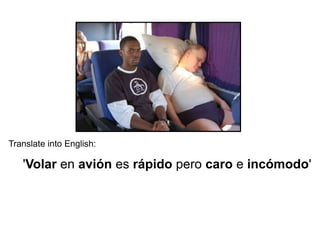
'Volar en avión es rápido pero caro e incómodo'
Translate into English:
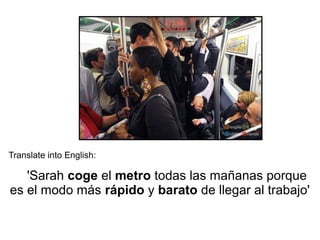
'Sarah coge el metro todas las mañanas porque
es el modo más rápido y barato de llegar al trabajo'
Translate into English:
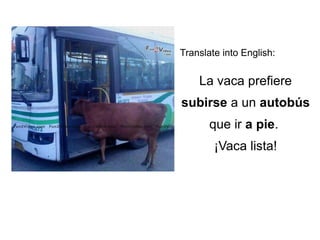
La vaca prefiere
subirse a un autobús
que ir a pie.
¡Vaca lista!
Translate into English:
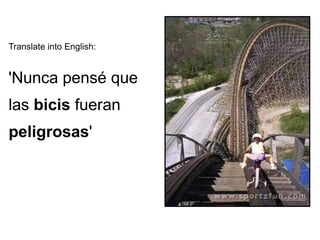
'Nunca pensé que
las bicis fueran
peligrosas'
Translate into English:
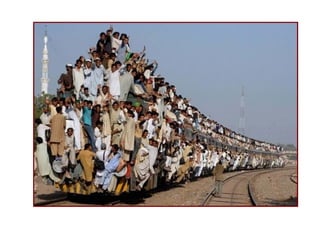
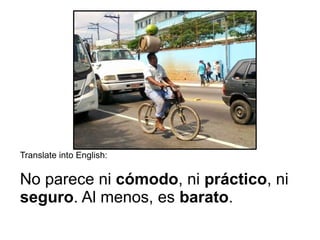
No parece ni cómodo, ni práctico, ni
seguro. Al menos, es barato.

Transports and travelling