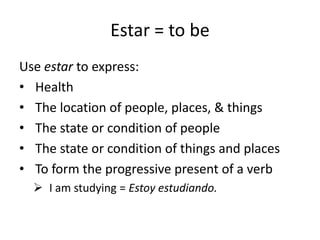
Estar = to be
Use estar to express:
• Health
• The location of people, places, & things
• The state or condition of people
• The state or condition of things and places
• To form the progressive present of a verb
 I am studying = Estoy estudiando.
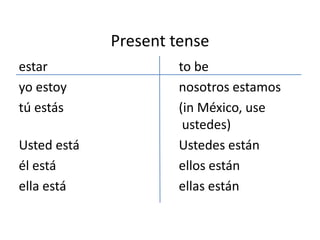
Present tense
estar to be
yo estoy nosotros estamos
tú estás (in México, use
ustedes)
Usted está Ustedes están
él está ellos están
ella está ellas están
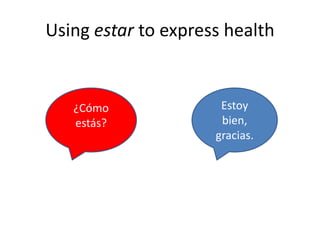
Using estar to express health
¿Cómo
estás?
Estoy
bien,
gracias.
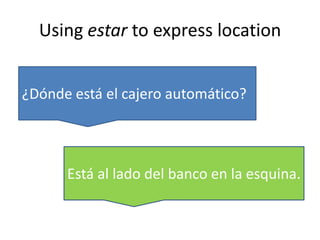
Using estar to express location
¿Dónde está el cajero automático?
Está al lado del banco en la esquina.
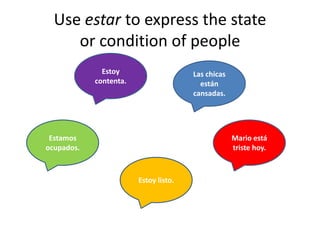
Use estar to express the state
or condition of people
Las chicas
están
cansadas.
Mario está
triste hoy.
Estoy listo.
Estamos
ocupados.
Estoy
contenta.
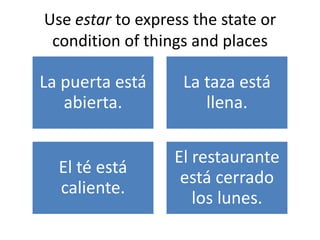
Use estar to express the state or
condition of things and places
La puerta está
abierta.
La taza está
llena.
El té está
caliente.
El restaurante
está cerrado
los lunes.
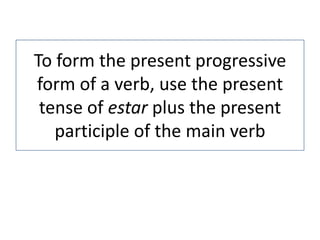
To form the present progressive
form of a verb, use the present
tense of estar plus the present
participle of the main verb
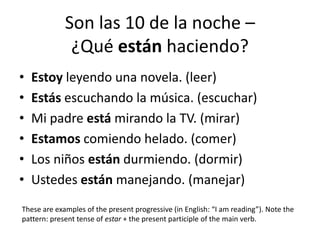
Son las 10 de la noche –
¿Qué están haciendo?
• Estoy leyendo una novela. (leer)
• Estás escuchando la música. (escuchar)
• Mi padre está mirando la TV. (mirar)
• Estamos comiendo helado. (comer)
• Los niños están durmiendo. (dormir)
• Ustedes están manejando. (manejar)
These are examples of the present progressive (in English: “I am reading”). Note the
pattern: present tense of estar + the present participle of the main verb.

How to Use the Verb "estar"

  • 1.
    Estar = tobe Use estar to express: • Health • The location of people, places, & things • The state or condition of people • The state or condition of things and places • To form the progressive present of a verb  I am studying = Estoy estudiando.
  • 2.
    Present tense estar tobe yo estoy nosotros estamos tú estás (in México, use ustedes) Usted está Ustedes están él está ellos están ella está ellas están
  • 3.
    Using estar toexpress health ¿Cómo estás? Estoy bien, gracias.
  • 4.
    Using estar toexpress location ¿Dónde está el cajero automático? Está al lado del banco en la esquina.
  • 5.
    Use estar toexpress the state or condition of people Las chicas están cansadas. Mario está triste hoy. Estoy listo. Estamos ocupados. Estoy contenta.
  • 6.
    Use estar toexpress the state or condition of things and places La puerta está abierta. La taza está llena. El té está caliente. El restaurante está cerrado los lunes.
  • 7.
    To form thepresent progressive form of a verb, use the present tense of estar plus the present participle of the main verb
  • 8.
    Son las 10de la noche – ¿Qué están haciendo? • Estoy leyendo una novela. (leer) • Estás escuchando la música. (escuchar) • Mi padre está mirando la TV. (mirar) • Estamos comiendo helado. (comer) • Los niños están durmiendo. (dormir) • Ustedes están manejando. (manejar) These are examples of the present progressive (in English: “I am reading”). Note the pattern: present tense of estar + the present participle of the main verb.