Things that we should know 
Unit 2
PRESENT SIMPLE 
• We use this verb tense to express: 
- habits or things that we do 
regularly. 
- when something is generally true. 
- for a situation that we think is 
more or less permanent.
to work (trabajar) 
AFIRMATIVE 
I work 
You work 
He/She/It works 
We work 
You work 
They work.
En inglés para decir una frase en negativo 
necesitamos un verbo auxiliar:………DO 
(CON UN VERBO QUE NO SEA EL TO BE) 
NEGATIVE 
• I do not work I don’t work 
• You do not work You don’t work 
• He does not work He doesn’t work 
• She does not work She doesn’t work 
• It does not work It doesn’t work 
• We do not work We don’t work 
• You do not work We don’t work 
• They do not work They don’t work
QUESTIONS: 
• Para hacer preguntas en ingles con un 
verbo que no es el ver bo to be 
necesitamos el auxiliar Do. 
AUXILAR + SUJETO + VERBO 
For example: 
Do I work in an office? … Yes, I do. 
AUX SUJ VERBO
Other examples: 
Do you play tennis? 
Yes, I do. 
Does she speak English? 
No, she doesn’t 
Do I live in San Fulgencio? 
Yes, I do. 
Do we study French? 
No, we don’t.
Other examples: 
Does Peter work in a supermarket? 
Yes, she does. 
Do John and Susan play the piano? 
No, they don’t. 
Does Linda have a baby? 
She, she does. 
Do they go to the theatre? 
No, they don’t
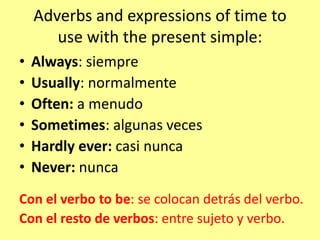
Adverbs and expressions of time to 
use with the present simple: 
• Always: siempre 
• Usually: normalmente 
• Often: a menudo 
• Sometimes: algunas veces 
• Hardly ever: casi nunca 
• Never: nunca 
Con el verbo to be: se colocan detrás del verbo. 
Con el resto de verbos: entre sujeto y verbo.
Expressions of time 
• Every day: todos los días. 
• Every week: todas las semanas. 
• Every month: todos los meses. 
• Every year: todos los años. 
• Every Monday: todos los lunes. 
• In the morning.: por la mañana. 
• In the afternoon.: por la tarde. 
• In the evening.: por la noche. 
• At night.: por la noche. 
• At the weekend. : en el fin de semana. 
Normalmente estas expresiones se colocan al final 
de la frase, aunque en algunas ocasiones también 
se pueden colocar al principio de la frase.

Present simple

  • 1.
    Things that weshould know Unit 2
  • 2.
    PRESENT SIMPLE •We use this verb tense to express: - habits or things that we do regularly. - when something is generally true. - for a situation that we think is more or less permanent.
  • 3.
    to work (trabajar) AFIRMATIVE I work You work He/She/It works We work You work They work.
  • 4.
    En inglés paradecir una frase en negativo necesitamos un verbo auxiliar:………DO (CON UN VERBO QUE NO SEA EL TO BE) NEGATIVE • I do not work I don’t work • You do not work You don’t work • He does not work He doesn’t work • She does not work She doesn’t work • It does not work It doesn’t work • We do not work We don’t work • You do not work We don’t work • They do not work They don’t work
  • 5.
    QUESTIONS: • Parahacer preguntas en ingles con un verbo que no es el ver bo to be necesitamos el auxiliar Do. AUXILAR + SUJETO + VERBO For example: Do I work in an office? … Yes, I do. AUX SUJ VERBO
  • 6.
    Other examples: Doyou play tennis? Yes, I do. Does she speak English? No, she doesn’t Do I live in San Fulgencio? Yes, I do. Do we study French? No, we don’t.
  • 7.
    Other examples: DoesPeter work in a supermarket? Yes, she does. Do John and Susan play the piano? No, they don’t. Does Linda have a baby? She, she does. Do they go to the theatre? No, they don’t
  • 8.
    Adverbs and expressionsof time to use with the present simple: • Always: siempre • Usually: normalmente • Often: a menudo • Sometimes: algunas veces • Hardly ever: casi nunca • Never: nunca Con el verbo to be: se colocan detrás del verbo. Con el resto de verbos: entre sujeto y verbo.
  • 9.
    Expressions of time • Every day: todos los días. • Every week: todas las semanas. • Every month: todos los meses. • Every year: todos los años. • Every Monday: todos los lunes. • In the morning.: por la mañana. • In the afternoon.: por la tarde. • In the evening.: por la noche. • At night.: por la noche. • At the weekend. : en el fin de semana. Normalmente estas expresiones se colocan al final de la frase, aunque en algunas ocasiones también se pueden colocar al principio de la frase.