A continuación aprenderás a utilizar dos tipos de pronombres que en
inglés se utilizan de distinta manera por cuestión de fonética y uso del
idioma. Estos dos tipos de pronombres los veras en la misma oración y
teniendo la misma función en referencia al mismo sujeto es decir el
sujeto principal de la oración. Vamos a ver como funcionan estos
pronombres.
Reflexive Pronouns
REFLEXIVE PRONOUNS
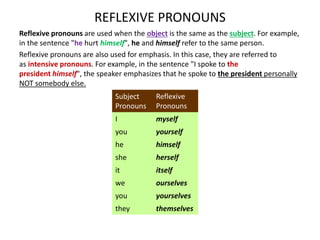
Reflexive pronouns are used when the object is the same as the subject. For example,
in the sentence "he hurt himself", he and himself refer to the same person.
Reflexive pronouns are also used for emphasis. In this case, they are referred to
as intensive pronouns. For example, in the sentence "I spoke to the
president himself", the speaker emphasizes that he spoke to the president personally
NOT somebody else.
Subject
Pronouns
Reflexive
Pronouns
I myself
you yourself
he himself
she herself
it itself
we ourselves
you yourselves
they themselves
"I always do my homework myself. Nobody helps me." "He never does his homework himself. The teacher
always helps him."
Reflexive pronouns mean NO HELP and NO COMPANY but can sometimes be
accompanied by the preposition BY and the meaning is the same it doesn’t change
“I always do my homework by bmyself . Nobody
helps me.”
“He never does his homework by himself. The
teacher always helps him.”
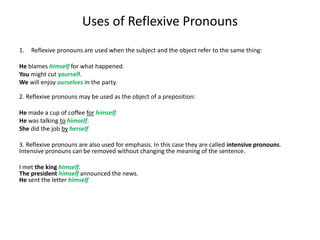
Uses of Reflexive Pronouns
1. Reflexive pronouns are used when the subject and the object refer to the same thing:
He blames himself for what happened.
You might cut yourself.
We will enjoy ourselves in the party.
2. Reflexive pronouns may be used as the object of a preposition:
He made a cup of coffee for himself.
He was talking to himself.
She did the job by herself.
3. Reflexive pronouns are also used for emphasis. In this case they are called intensive pronouns.
Intensive pronouns can be removed without changing the meaning of the sentence.
I met the king himself.
The president himself announced the news.
He sent the letter himself
Como pudiste observar y aprender en este nuevo tema los pronombres
reflexivos se utilizan cuando se habla de la misma persona o sujeto de la oración
solo que esto ayudaran a indicar que la persona realizo esa actividad sin ayuda
de nadie o bien sin la compañía de nadie, los pronombres reflexivos como bien
se te indico en la explicación gramatical pueden aparecer en una oración solo o
acompañados por una preposición que les antecede, principalmente veras el
uso de la preposición by, sin embargo esto no cambia su significado es decir que
puede ser utilizada la preposición by indistintamente.
Esperamos que este nuevo tema te haya sido de utilidad uy sobre todo fácil de
digerir, de cualquier manera recuerda que el maestro a cargo del grupo estará
siempre gustosos de apoyarte y resolver cualquier dudas que pueda surgir con
relación a este tema. Mas adelante dejaremos como siempre unos ejercicios
para que puedas practicar lo aprendido y el profesor posteriormente te dará su
retroalimentación en caso de cualquier error que pusiera suscitarse.
Suerte en tu próximo tema
TECNOLÓGICO DE ESTUDIOS SUPERIORES
DE CUAUTITLAN IZCALLI (TESCI)

Reflexive Pronouns

  • 1.
    A continuación aprenderása utilizar dos tipos de pronombres que en inglés se utilizan de distinta manera por cuestión de fonética y uso del idioma. Estos dos tipos de pronombres los veras en la misma oración y teniendo la misma función en referencia al mismo sujeto es decir el sujeto principal de la oración. Vamos a ver como funcionan estos pronombres. Reflexive Pronouns
  • 2.
    REFLEXIVE PRONOUNS Reflexive pronounsare used when the object is the same as the subject. For example, in the sentence "he hurt himself", he and himself refer to the same person. Reflexive pronouns are also used for emphasis. In this case, they are referred to as intensive pronouns. For example, in the sentence "I spoke to the president himself", the speaker emphasizes that he spoke to the president personally NOT somebody else. Subject Pronouns Reflexive Pronouns I myself you yourself he himself she herself it itself we ourselves you yourselves they themselves
  • 3.
    "I always domy homework myself. Nobody helps me." "He never does his homework himself. The teacher always helps him." Reflexive pronouns mean NO HELP and NO COMPANY but can sometimes be accompanied by the preposition BY and the meaning is the same it doesn’t change “I always do my homework by bmyself . Nobody helps me.” “He never does his homework by himself. The teacher always helps him.”
  • 4.
    Uses of ReflexivePronouns 1. Reflexive pronouns are used when the subject and the object refer to the same thing: He blames himself for what happened. You might cut yourself. We will enjoy ourselves in the party. 2. Reflexive pronouns may be used as the object of a preposition: He made a cup of coffee for himself. He was talking to himself. She did the job by herself. 3. Reflexive pronouns are also used for emphasis. In this case they are called intensive pronouns. Intensive pronouns can be removed without changing the meaning of the sentence. I met the king himself. The president himself announced the news. He sent the letter himself
  • 5.
    Como pudiste observary aprender en este nuevo tema los pronombres reflexivos se utilizan cuando se habla de la misma persona o sujeto de la oración solo que esto ayudaran a indicar que la persona realizo esa actividad sin ayuda de nadie o bien sin la compañía de nadie, los pronombres reflexivos como bien se te indico en la explicación gramatical pueden aparecer en una oración solo o acompañados por una preposición que les antecede, principalmente veras el uso de la preposición by, sin embargo esto no cambia su significado es decir que puede ser utilizada la preposición by indistintamente. Esperamos que este nuevo tema te haya sido de utilidad uy sobre todo fácil de digerir, de cualquier manera recuerda que el maestro a cargo del grupo estará siempre gustosos de apoyarte y resolver cualquier dudas que pueda surgir con relación a este tema. Mas adelante dejaremos como siempre unos ejercicios para que puedas practicar lo aprendido y el profesor posteriormente te dará su retroalimentación en caso de cualquier error que pusiera suscitarse. Suerte en tu próximo tema
  • 6.
    TECNOLÓGICO DE ESTUDIOSSUPERIORES DE CUAUTITLAN IZCALLI (TESCI)