Past Simple Tense
El Pasado Simple
Pasado Simple
Se usa para referirse a acciones
que se realizaron en el pasado y
que ya han finalizado.
 I studied English yesterday
• Yo estudié inglés ayer.
 We played soccer last week.
• Jugamos al fútbol la semana pasada.
Tipos de verbos
To be
• was - were
Verbos regulares
• Terminan en -d / -ed / -ied
Verbos irregulares
• Cambian completamente
• Permanecen iguales
TO BE (ser o estar)
Present / Presente Past / Pasado
I am (yo soy / yo estoy) I was (yo era / estaba / fuí / estuve)
You are (tú eres / tú estás) You were (tú eras / estabas / fuiste
/estuviste)
He is (él es / él está) He was (él era / estaba / fue / estuvo)
She is (ella es / ella está) She was (ella era / estaba / fue /
estuvo)
It is (es / está) It was (era / estaba / fue / estuvo)
We are (nosotros somos / nosotros
estamos)
We were (nosotros éramos /
estábamos / fuimos / estuvimos)
You are (ustedes son / ustedes están) You were (ustedes eran / estaban /
fueron / estuvieron)
They are (ellos son / ellos están) They were (ellos eran /estaban /
fueron / estuvieron)
TO BE (ser o estar)
I
He
She
It
We
You
They
WAS / WASN’T
WERE / WEREN´T
THERE WAS / THERE WERE
THERE WAS es el pasado de THERE IS,
usándose para el singular:
 There was a student in the room.
• Había un estudiante en el aula.
THERE WERE es el pasado de THERE
ARE, usándose para el plural:
 There were many students in the room.
• Había muchos estudiantes en el aula.
Verbos regulares
Los verbos regulares forman el pasado
agregando –ed:
 He played the guitar yesterday
• Él tocó la guitarra ayer (play)
 They travelled to Australia by plane.
• Viajaron a Australia en avión.
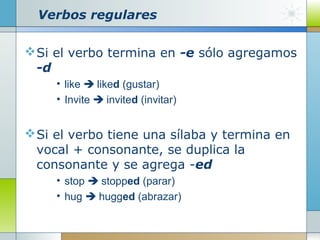
Verbos regulares
Si el verbo termina en -e sólo agregamos
-d
• like  liked (gustar)
• Invite  invited (invitar)
Si el verbo tiene una sílaba y termina en
vocal + consonante, se duplica la
consonante y se agrega -ed
• stop  stopped (parar)
• hug  hugged (abrazar)
Verbos regulares
 Si el verbo termina en -y, tenemos que mirar la
letra que va adelante:
 Si es una vocal se agrega -ed:
• play  played (jugar, tocar)
• stay  stayed (quedarse)
 excepción:
• say  said (decir)
• pay  paid (pagar)
 Si es una consonante, la -y se elimina y se agrega
-ied:
• Study  studied (estudiar)
• Cry  cried (llorar, gritar)
Verbos regulares
Terminación Presente Pasado Traducción
-d live lived vivir
-ed show showed mostrar
-d like liked gustar
-ed work worked trabajar
-ied study studied estudiar
-ed obey obeyed obedecer
Verbos irregulares
Hay muchos verbos que no agregan -ed
porque toman una forma nueva.
 Hay verbos que cambian totalmente
• go  went (ir)
• see  saw (ver)
 Y otros que permanecen igual
• hit  hit (golpear)
• cut  cut (cortar)
Verbos irregulares
¿Cambia? Presente Pasado Traducción
si go went ir
si write wrote escribir
si eat ate comer
si buy bought comprar
no hit hit golpear
no cost cost costar
Negativo
Para la forma negativa de los verbos
regulares e irregulares se utiliza el
auxiliar
DID + not + verbo en infinitivo
o el auxiliar en negativo DIDN’T
• He didn’t go to Paris
– Él no fue a París
• I didn’t break the window
– Yo no rompí la ventana
Interrogativo
Para la forma interrogativa usamos DID
delante del sujeto y detrás del sujeto se
usa el infinitivo:
 Did you study English?
• ¿Estudiaste Inglés?
 Did she write the letter?
• ¿Escribió ella la carta?
Estructura de la pregunta
Cuando usamos un pronombre
interrogativo, lo escribimos delante del
auxiliar
Interrogative
Pronoun
+ Auxiliary + Subject + Infinitive
verb
+ Complement ?
What did she eat yesterday ?
Where did you study English ?
Expresiones de tiempo
Expression Translation
Yesterday Ayer
Last week La semana pasada
Last year El año pasado
Last month El mes pasado
Two days ago Hace dos días
Two weeks ago Hace dos semanas
Two months ago Hace dos meses
In 2010 En 2010
In September En septiembre
On Monday El lunes (pasado)
Simple past   el pasado simple-

Simple past el pasado simple-

  • 1.
    Past Simple Tense ElPasado Simple
  • 2.
    Pasado Simple Se usapara referirse a acciones que se realizaron en el pasado y que ya han finalizado.  I studied English yesterday • Yo estudié inglés ayer.  We played soccer last week. • Jugamos al fútbol la semana pasada.
  • 3.
    Tipos de verbos Tobe • was - were Verbos regulares • Terminan en -d / -ed / -ied Verbos irregulares • Cambian completamente • Permanecen iguales
  • 4.
    TO BE (sero estar) Present / Presente Past / Pasado I am (yo soy / yo estoy) I was (yo era / estaba / fuí / estuve) You are (tú eres / tú estás) You were (tú eras / estabas / fuiste /estuviste) He is (él es / él está) He was (él era / estaba / fue / estuvo) She is (ella es / ella está) She was (ella era / estaba / fue / estuvo) It is (es / está) It was (era / estaba / fue / estuvo) We are (nosotros somos / nosotros estamos) We were (nosotros éramos / estábamos / fuimos / estuvimos) You are (ustedes son / ustedes están) You were (ustedes eran / estaban / fueron / estuvieron) They are (ellos son / ellos están) They were (ellos eran /estaban / fueron / estuvieron)
  • 5.
    TO BE (sero estar) I He She It We You They WAS / WASN’T WERE / WEREN´T
  • 6.
    THERE WAS /THERE WERE THERE WAS es el pasado de THERE IS, usándose para el singular:  There was a student in the room. • Había un estudiante en el aula. THERE WERE es el pasado de THERE ARE, usándose para el plural:  There were many students in the room. • Había muchos estudiantes en el aula.
  • 7.
    Verbos regulares Los verbosregulares forman el pasado agregando –ed:  He played the guitar yesterday • Él tocó la guitarra ayer (play)  They travelled to Australia by plane. • Viajaron a Australia en avión.
  • 8.
    Verbos regulares Si elverbo termina en -e sólo agregamos -d • like  liked (gustar) • Invite  invited (invitar) Si el verbo tiene una sílaba y termina en vocal + consonante, se duplica la consonante y se agrega -ed • stop  stopped (parar) • hug  hugged (abrazar)
  • 9.
    Verbos regulares  Siel verbo termina en -y, tenemos que mirar la letra que va adelante:  Si es una vocal se agrega -ed: • play  played (jugar, tocar) • stay  stayed (quedarse)  excepción: • say  said (decir) • pay  paid (pagar)  Si es una consonante, la -y se elimina y se agrega -ied: • Study  studied (estudiar) • Cry  cried (llorar, gritar)
  • 10.
    Verbos regulares Terminación PresentePasado Traducción -d live lived vivir -ed show showed mostrar -d like liked gustar -ed work worked trabajar -ied study studied estudiar -ed obey obeyed obedecer
  • 11.
    Verbos irregulares Hay muchosverbos que no agregan -ed porque toman una forma nueva.  Hay verbos que cambian totalmente • go  went (ir) • see  saw (ver)  Y otros que permanecen igual • hit  hit (golpear) • cut  cut (cortar)
  • 12.
    Verbos irregulares ¿Cambia? PresentePasado Traducción si go went ir si write wrote escribir si eat ate comer si buy bought comprar no hit hit golpear no cost cost costar
  • 13.
    Negativo Para la formanegativa de los verbos regulares e irregulares se utiliza el auxiliar DID + not + verbo en infinitivo o el auxiliar en negativo DIDN’T • He didn’t go to Paris – Él no fue a París • I didn’t break the window – Yo no rompí la ventana
  • 14.
    Interrogativo Para la formainterrogativa usamos DID delante del sujeto y detrás del sujeto se usa el infinitivo:  Did you study English? • ¿Estudiaste Inglés?  Did she write the letter? • ¿Escribió ella la carta?
  • 15.
    Estructura de lapregunta Cuando usamos un pronombre interrogativo, lo escribimos delante del auxiliar Interrogative Pronoun + Auxiliary + Subject + Infinitive verb + Complement ? What did she eat yesterday ? Where did you study English ?
  • 16.
    Expresiones de tiempo ExpressionTranslation Yesterday Ayer Last week La semana pasada Last year El año pasado Last month El mes pasado Two days ago Hace dos días Two weeks ago Hace dos semanas Two months ago Hace dos meses In 2010 En 2010 In September En septiembre On Monday El lunes (pasado)