The word tipi comes into English from the Lakota language; the word thípi consists of two elements: the
verb THI, meaning "to dwell", and a pluralising enclitic PI, and means "they dwell". Lakota verbs can be
used as nouns and this is the case with thípi, which in practice just means "dwelling".


  La palabra tipi viene en inglés de la lengua Lakota. La palabra Thipi se compone de dos elementos:
  el verbo THI que significa "habitar“ y un pronombre enclítico PI que significa "morar". Los verbos
  Lakota se pueden utilizar como sustantivos y en este caso con Thipi, que en la práctica sólo significa
  "casa".
A tipi (also tepee and teepee) is a conical
               tent traditionally made of animal skins and
               wooden poles used by the nomadic tribes
               and sedentary tribal dwellers (when
               hunting) of the Great Plains. Tipis are
               stereotypically associated with Native
               Americans in the United States in
               general, but Native Americans from places
               other than the Great Plains mostly used
               different types of dwellings.


               Un tipi (también tepee y teepee ) es una
               tienda cónica, tradicionalmente, hecha con
               pieles de animales y postes de madera
               usados ​por las tribus nómadas, y por los
               habitantes de tribus sedentarias (cuando
               cazaban) de las Llanuras. Los tipis son un
               estereotipo asociado con los nativos
               americanos en los Estados Unidos en
               general, pero los nativos americanos de
               otros lugares, en su mayoría, utilizaban
               diferentes tipos de viviendas.


Arapaho Tipi
A typical family tipi was a conical, portable structure with two adjustable smoke flaps, multiple poles (from
12 to 25 feet long), and a detachable cover over the structure. The cover used buffalo skins; an optional
skin/cloth lining; and a canvas or bison calf skin as a door. There may also be an optional, partial interior
ceiling, called an “ozan” in Lakota, that covers sleepers and protects them from rain.


Un tipi típico familiar era una estructura cónica, portátil, con dos aletas ajustables para el
humo, múltiples postes (12 a 25 pies de largo), y una cubierta desmontable sobre su estructura. Para la
cubierta usaban pieles de búfalo, un revestimiento opcional de piel / lona, y una piel de becerro o
bisonte para la puerta. También podía haber un techo opcional, parcial e interior, llamado “ozan” en
Lakota, que protegía a sus habitantes de la lluvia.
The tipi was durable, provided warmth and
comfort in winter, was dry during heavy
rains, and was cool in the heat of summer. It
could be disassembled and packed away
when a tribe decided to move and could be
reconstructed upon settling in a new area.
This portability was important to Plains
Indians with their nomadic lifestyle, following
game migrations, especially the bison.


El tipi era duradero, siempre cálido y
cómodo en invierno, seco durante las fuertes
lluvias, y fresco en el calor del verano. Podía
ser desmontado y embalado cuando una
tribu decidía mudarse, y ser reconstruido
para establecerse en una área nueva. Esta
portabilidad era importante para los indios
de las llanuras siguiendo las migraciones de
la caza, especialmente, el bisonte.


                                                  Asarsi Tipi
When dismantled the tipi poles were used to construct a dog- or later horse-pulled travois on
which additional poles and tipi cover were placed.

Cuando los palos del tipi eran desmantelados, algunos de ellos, se usaban para construir una
camilla empujada por perros o caballos, que transportaban la cubierta del tipi y los postes
adicionales.
The covers were made by sewing together strips
                        of canvas or tanned bison hide and cutting out a
                        semicircular shape from the resulting surface.
                        Las cubiertas se hacían cosiendo juntas
                        tiras de lona o cuero curtido de bisontes, y
                        cortándolas de una forma semicircular.


Pawnee Tipi


          Ojibwa Tipi
Joseph dead feast lodge nez percé
Historically the family tipi bison skin covers were richly painted and drawn upon, mostly with images of
 deeds of the owner or owners and of sacred religious symbols, as evidenced in historical accounts (from
 the 16th century until 19th century), and anthropological studies.


Jicarilla
   Tipi


   Históricamente, las cubiertas de piel de bisonte de los tipis familiares fueron pintadas y dibujadas
   ricamente, en su mayoría, con imágenes de obras y proezas de los dueños y con símbolos sagrados
   religiosos, como se muestran en relatos históricos (desde el siglo XVI hasta el siglo XIX), y en
   estudios antropológicos.
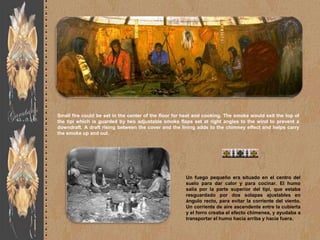
Small fire could be set in the center of the floor for heat and cooking. The smoke would exit the top of
the tipi which is guarded by two adjustable smoke flaps set at right angles to the wind to prevent a
downdraft. A draft rising between the cover and the lining adds to the chimney effect and helps carry
the smoke up and out.


                                                       Un fuego pequeño era situado en el centro del
                                                       suelo para dar calor y para cocinar. El humo
                                                       salía por la parte superior del tipi, que estaba
                                                       resguardado por dos solapas ajustables en
                                                       ángulo recto, para evitar la corriente del viento.
                                                       Un corriente de aire ascendente entre la cubierta
                                                       y el forro creaba el efecto chimenea, y ayudaba a
                                                       transportar el humo hacia arriba y hacia fuera.
The liner does add insulation in very cold weather when
stuffed with grass and can direct the draft upwards and
away from the occupants while still admitting fresh air. Air
for combustion can be ducted to the fire through a buried
pipe when the tipi is closed tightly against inclement
weather.


El forro ofrecía un aislamiento complemento en un clima
muy frío, cuando se rellenaba de hierba, dirigiendo la
corriente de aire hacia arriba y lejos de los ocupantes;
ventilando el ambiente con aire fresco. El aire para la
combustión, se canalizaba hacia el fuego a través de una
tubería enterrada, cuando el tipi se cerraba herméticamente
contra las inclemencias del tiempo.


                                   Cheyenne TIPI
BLACKFOOT PIPE CEREMONY
Assiniboin Tipi

Many tipis, including those the Cheyenne, Sioux, Arapaho, Kiowa, and other Plains tribes, were decorated with
pendants and colored medallions. Traditionally these were embroidered with dyed porcupine quills. Buffalo horns
and tails, tufts of buffalo and horse hair, bear claws and buckskin fringe were also used to decorate tipi covers.


Muchos tipis, como los de los Cheyenne, Sioux, Arapaho, Kiowa, y otras tribus de las llanuras,
estaban decorados con colgantes y medallones de colores. Tradicionalmente, estaban bordados con
púas de puercoespín teñidas. Cuernos de búfalo y colas, mechones de pelo de búfalo y caballo,
garras de oso y flecos de ante. También se utilizaron para decorar las cubiertas del tipi.
Slow Bulls TIpi


Apsaroke Medicine Tipi
Atsina Tipi


Black Foot Tipi
Last home of joseph -
nez perce
Kalispel village
Teepees.(Spanish/English)

Teepees.(Spanish/English)

  • 2.
    The word tipicomes into English from the Lakota language; the word thípi consists of two elements: the verb THI, meaning "to dwell", and a pluralising enclitic PI, and means "they dwell". Lakota verbs can be used as nouns and this is the case with thípi, which in practice just means "dwelling". La palabra tipi viene en inglés de la lengua Lakota. La palabra Thipi se compone de dos elementos: el verbo THI que significa "habitar“ y un pronombre enclítico PI que significa "morar". Los verbos Lakota se pueden utilizar como sustantivos y en este caso con Thipi, que en la práctica sólo significa "casa".
  • 3.
    A tipi (alsotepee and teepee) is a conical tent traditionally made of animal skins and wooden poles used by the nomadic tribes and sedentary tribal dwellers (when hunting) of the Great Plains. Tipis are stereotypically associated with Native Americans in the United States in general, but Native Americans from places other than the Great Plains mostly used different types of dwellings. Un tipi (también tepee y teepee ) es una tienda cónica, tradicionalmente, hecha con pieles de animales y postes de madera usados ​por las tribus nómadas, y por los habitantes de tribus sedentarias (cuando cazaban) de las Llanuras. Los tipis son un estereotipo asociado con los nativos americanos en los Estados Unidos en general, pero los nativos americanos de otros lugares, en su mayoría, utilizaban diferentes tipos de viviendas. Arapaho Tipi
  • 4.
    A typical familytipi was a conical, portable structure with two adjustable smoke flaps, multiple poles (from 12 to 25 feet long), and a detachable cover over the structure. The cover used buffalo skins; an optional skin/cloth lining; and a canvas or bison calf skin as a door. There may also be an optional, partial interior ceiling, called an “ozan” in Lakota, that covers sleepers and protects them from rain. Un tipi típico familiar era una estructura cónica, portátil, con dos aletas ajustables para el humo, múltiples postes (12 a 25 pies de largo), y una cubierta desmontable sobre su estructura. Para la cubierta usaban pieles de búfalo, un revestimiento opcional de piel / lona, y una piel de becerro o bisonte para la puerta. También podía haber un techo opcional, parcial e interior, llamado “ozan” en Lakota, que protegía a sus habitantes de la lluvia.
  • 6.
    The tipi wasdurable, provided warmth and comfort in winter, was dry during heavy rains, and was cool in the heat of summer. It could be disassembled and packed away when a tribe decided to move and could be reconstructed upon settling in a new area. This portability was important to Plains Indians with their nomadic lifestyle, following game migrations, especially the bison. El tipi era duradero, siempre cálido y cómodo en invierno, seco durante las fuertes lluvias, y fresco en el calor del verano. Podía ser desmontado y embalado cuando una tribu decidía mudarse, y ser reconstruido para establecerse en una área nueva. Esta portabilidad era importante para los indios de las llanuras siguiendo las migraciones de la caza, especialmente, el bisonte. Asarsi Tipi
  • 7.
    When dismantled thetipi poles were used to construct a dog- or later horse-pulled travois on which additional poles and tipi cover were placed. Cuando los palos del tipi eran desmantelados, algunos de ellos, se usaban para construir una camilla empujada por perros o caballos, que transportaban la cubierta del tipi y los postes adicionales.
  • 8.
    The covers weremade by sewing together strips of canvas or tanned bison hide and cutting out a semicircular shape from the resulting surface. Las cubiertas se hacían cosiendo juntas tiras de lona o cuero curtido de bisontes, y cortándolas de una forma semicircular. Pawnee Tipi Ojibwa Tipi
  • 9.
    Joseph dead feastlodge nez percé
  • 11.
    Historically the familytipi bison skin covers were richly painted and drawn upon, mostly with images of deeds of the owner or owners and of sacred religious symbols, as evidenced in historical accounts (from the 16th century until 19th century), and anthropological studies. Jicarilla Tipi Históricamente, las cubiertas de piel de bisonte de los tipis familiares fueron pintadas y dibujadas ricamente, en su mayoría, con imágenes de obras y proezas de los dueños y con símbolos sagrados religiosos, como se muestran en relatos históricos (desde el siglo XVI hasta el siglo XIX), y en estudios antropológicos.
  • 12.
    Small fire couldbe set in the center of the floor for heat and cooking. The smoke would exit the top of the tipi which is guarded by two adjustable smoke flaps set at right angles to the wind to prevent a downdraft. A draft rising between the cover and the lining adds to the chimney effect and helps carry the smoke up and out. Un fuego pequeño era situado en el centro del suelo para dar calor y para cocinar. El humo salía por la parte superior del tipi, que estaba resguardado por dos solapas ajustables en ángulo recto, para evitar la corriente del viento. Un corriente de aire ascendente entre la cubierta y el forro creaba el efecto chimenea, y ayudaba a transportar el humo hacia arriba y hacia fuera.
  • 13.
    The liner doesadd insulation in very cold weather when stuffed with grass and can direct the draft upwards and away from the occupants while still admitting fresh air. Air for combustion can be ducted to the fire through a buried pipe when the tipi is closed tightly against inclement weather. El forro ofrecía un aislamiento complemento en un clima muy frío, cuando se rellenaba de hierba, dirigiendo la corriente de aire hacia arriba y lejos de los ocupantes; ventilando el ambiente con aire fresco. El aire para la combustión, se canalizaba hacia el fuego a través de una tubería enterrada, cuando el tipi se cerraba herméticamente contra las inclemencias del tiempo. Cheyenne TIPI
  • 16.
  • 19.
    Assiniboin Tipi Many tipis,including those the Cheyenne, Sioux, Arapaho, Kiowa, and other Plains tribes, were decorated with pendants and colored medallions. Traditionally these were embroidered with dyed porcupine quills. Buffalo horns and tails, tufts of buffalo and horse hair, bear claws and buckskin fringe were also used to decorate tipi covers. Muchos tipis, como los de los Cheyenne, Sioux, Arapaho, Kiowa, y otras tribus de las llanuras, estaban decorados con colgantes y medallones de colores. Tradicionalmente, estaban bordados con púas de puercoespín teñidas. Cuernos de búfalo y colas, mechones de pelo de búfalo y caballo, garras de oso y flecos de ante. También se utilizaron para decorar las cubiertas del tipi.
  • 20.
  • 22.
  • 24.
    Last home ofjoseph - nez perce
  • 25.