ProyectoDiseño IFunción del Diseñador
IntroducciónPDIDiseño no hacemos referencia a un objeto
Objetos son la respuesta materializada a un problema planteado.El diseñador como un alquimista	Toma elementos cercanos, analiza aspectos y códigos de la comunicación interpersonal, el comportamiento humano y sus necesidades. Mediante un proceso creativo, reúne estos elementos, materializándolos en un objeto.
Funcióndel DiseñadorPDIII Diseñar objetos que respondan a las necesidades del hombre, a su tradición, su cultura, su historia, su sociedad, su lenguaje… Los medios para producirlos son la mente, las manos, la materia, los procesos, la tecnología.
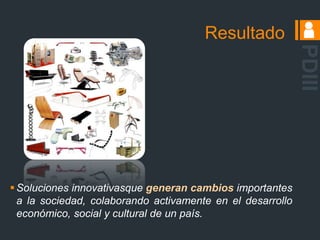
ResultadoPDIIISoluciones innovativasque generan cambios importantes a la sociedad, colaborando activamente en el desarrollo económico, social y cultural de un país.
Características1  Observador  Curiosidad por la investigación de los objetos que lo  rodean; sus formas, materiales, mecanismos y procesos.  Sensibilidad estética.  Percepción y memoria visual  Percepción de relaciones espaciales situadas en su entorno.PDIII2345
VideoPDIIIR.A. Mashelkar: Diseñosinnovadoresparaproductos de muybajocosto
ReflexiónPDIIIInovación inclusivaInnovación disruptivaLente convexo de liderazgo
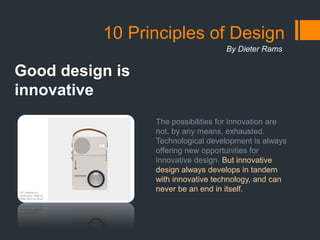
10 Principles of Design By Dieter RamsGood design is innovativeThe possibilities for innovation are not, by any means, exhausted. Technological development is always offering new opportunities for innovative design. But innovative design always develops in tandem with innovative technology, and can never be an end in itself.
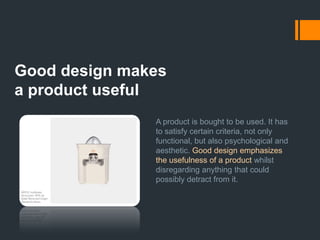
Good design makes a product usefulA product is bought to be used. It has to satisfy certain criteria, not only functional, but also psychological and aesthetic. Good design emphasizes the usefulness of a product whilst disregarding anything that could possibly detract from it.
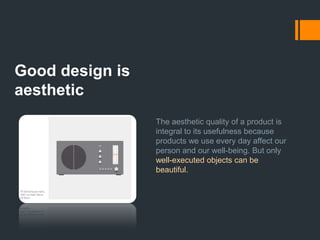
Good design is aestheticThe aesthetic quality of a product is integral to its usefulness because products we use every day affect our person and our well-being. But only well-executed objects can be beautiful.
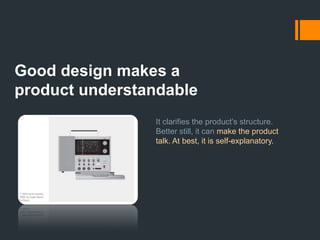
Good design makes a product understandableIt clarifies the product’s structure. Better still, it can make the product talk. At best, it is self-explanatory.
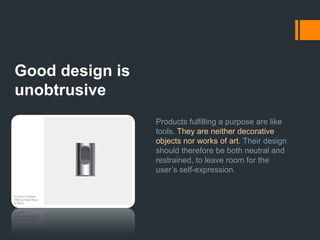
Good design is unobtrusiveProducts fulfilling a purpose are like tools. They are neither decorative objects nor works of art. Their design should therefore be both neutral and restrained, to leave room for the user’s self-expression.
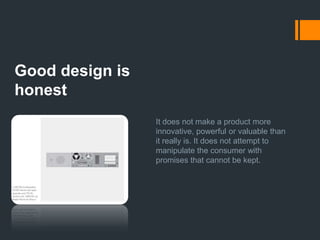
Good design is honestIt does not make a product more innovative, powerful or valuable than it really is. It does not attempt to manipulate the consumer with promises that cannot be kept.
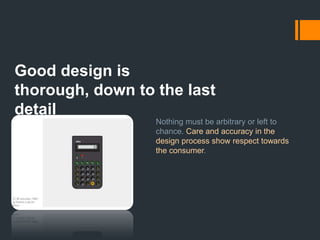
Good design is thorough, down to the last detailNothing must be arbitrary or left to chance. Care and accuracy in the design process show respect towards the consumer.
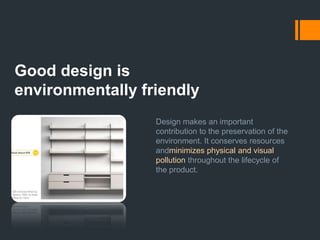
Good design is environmentally friendly Design makes an important contribution to the preservation of the environment. It conserves resources andminimizes physical and visual pollution throughout the lifecycle of the product.
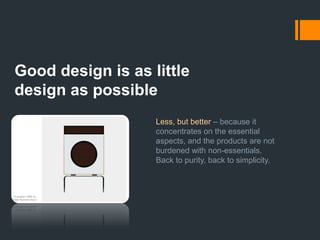
Good design is as little design as possibleLess, but better – because it concentrates on the essential aspects, and the products are not burdened with non-essentials.Back to purity, back to simplicity.

Modulo 1: Función del disenador

  • 1.
  • 2.
  • 3.
    Objetos son larespuesta materializada a un problema planteado.El diseñador como un alquimista Toma elementos cercanos, analiza aspectos y códigos de la comunicación interpersonal, el comportamiento humano y sus necesidades. Mediante un proceso creativo, reúne estos elementos, materializándolos en un objeto.
  • 4.
    Funcióndel DiseñadorPDIII Diseñarobjetos que respondan a las necesidades del hombre, a su tradición, su cultura, su historia, su sociedad, su lenguaje… Los medios para producirlos son la mente, las manos, la materia, los procesos, la tecnología.
  • 5.
    Funcióndel DiseñadorPDIII Diseñarobjetos que respondan a las necesidades del hombre, a su tradición, su cultura, su historia, su sociedad, su lenguaje… Los medios para producirlos son la mente, las manos, la materia, los procesos, la tecnología.
  • 6.
    Funcióndel DiseñadorPDIII Diseñarobjetos que respondan a las necesidades del hombre, a su tradición, su cultura, su historia, su sociedad, su lenguaje… Los medios para producirlos son la mente, las manos, la materia, los procesos, la tecnología.
  • 7.
    ResultadoPDIIISoluciones innovativasque generancambios importantes a la sociedad, colaborando activamente en el desarrollo económico, social y cultural de un país.
  • 8.
    Características1 Observador Curiosidad por la investigación de los objetos que lo rodean; sus formas, materiales, mecanismos y procesos. Sensibilidad estética. Percepción y memoria visual Percepción de relaciones espaciales situadas en su entorno.PDIII2345
  • 9.
  • 10.
  • 11.
    10 Principles ofDesign By Dieter RamsGood design is innovativeThe possibilities for innovation are not, by any means, exhausted. Technological development is always offering new opportunities for innovative design. But innovative design always develops in tandem with innovative technology, and can never be an end in itself.
  • 12.
    Good design makesa product usefulA product is bought to be used. It has to satisfy certain criteria, not only functional, but also psychological and aesthetic. Good design emphasizes the usefulness of a product whilst disregarding anything that could possibly detract from it.
  • 13.
    Good design isaestheticThe aesthetic quality of a product is integral to its usefulness because products we use every day affect our person and our well-being. But only well-executed objects can be beautiful.
  • 14.
    Good design makesa product understandableIt clarifies the product’s structure. Better still, it can make the product talk. At best, it is self-explanatory.
  • 15.
    Good design isunobtrusiveProducts fulfilling a purpose are like tools. They are neither decorative objects nor works of art. Their design should therefore be both neutral and restrained, to leave room for the user’s self-expression.
  • 16.
    Good design ishonestIt does not make a product more innovative, powerful or valuable than it really is. It does not attempt to manipulate the consumer with promises that cannot be kept.
  • 17.
    Good design isthorough, down to the last detailNothing must be arbitrary or left to chance. Care and accuracy in the design process show respect towards the consumer.
  • 18.
    Good design isenvironmentally friendly Design makes an important contribution to the preservation of the environment. It conserves resources andminimizes physical and visual pollution throughout the lifecycle of the product.
  • 19.
    Good design isas little design as possibleLess, but better – because it concentrates on the essential aspects, and the products are not burdened with non-essentials.Back to purity, back to simplicity.