PRESENT CONTINUOUS

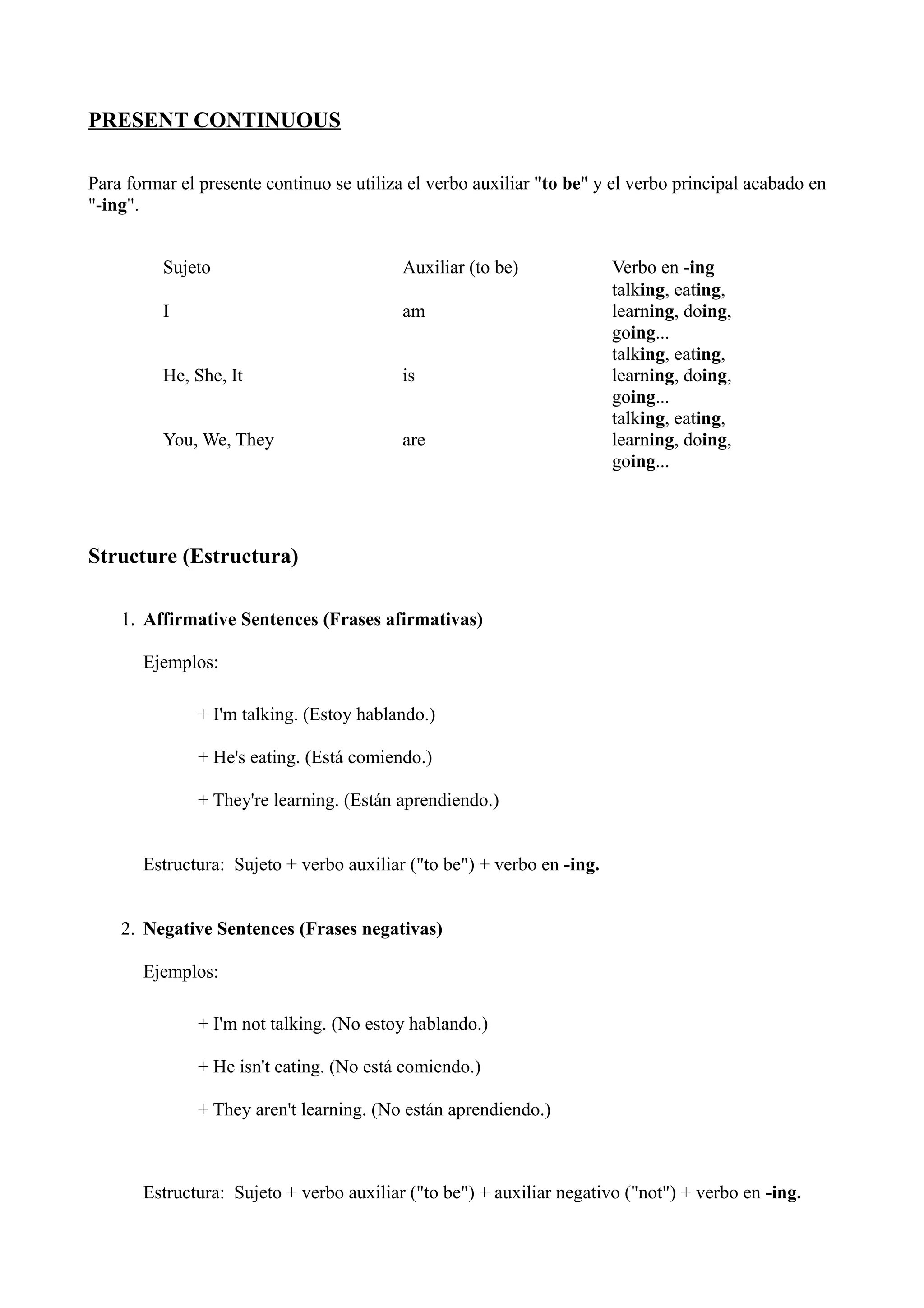
Para formar el presente continuo se utiliza el verbo auxiliar "to be" y el verbo principal acabado en
"-ing".


          Sujeto                           Auxiliar (to be)             Verbo en -ing
                                                                        talking, eating,
          I                                am                           learning, doing,
                                                                        going...
                                                                        talking, eating,
          He, She, It                      is                           learning, doing,
                                                                        going...
                                                                        talking, eating,
          You, We, They                    are                          learning, doing,
                                                                        going...


Structure (Estructura)

    1. Affirmative Sentences (Frases afirmativas)

       Ejemplos:

               + I'm talking. (Estoy hablando.)

               + He's eating. (Está comiendo.)

               + They're learning. (Están aprendiendo.)


       Estructura: Sujeto + verbo auxiliar ("to be") + verbo en -ing.


    2. Negative Sentences (Frases negativas)

       Ejemplos:

               + I'm not talking. (No estoy hablando.)

               + He isn't eating. (No está comiendo.)

               + They aren't learning. (No están aprendiendo.)


       Estructura: Sujeto + verbo auxiliar ("to be") + auxiliar negativo ("not") + verbo en -ing.
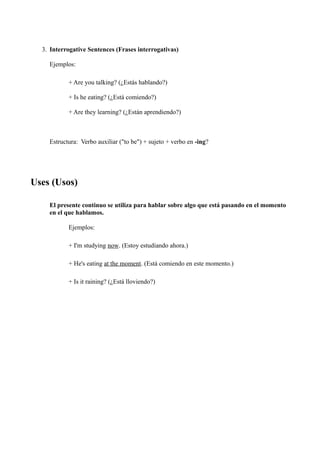
3. Interrogative Sentences (Frases interrogativas)

    Ejemplos:

           + Are you talking? (¿Estás hablando?)

           + Is he eating? (¿Está comiendo?)

           + Are they learning? (¿Están aprendiendo?)


    Estructura: Verbo auxiliar ("to be") + sujeto + verbo en -ing?


Uses (Usos)

    El presente continuo se utiliza para hablar sobre algo que está pasando en el momento
    en el que hablamos.

           Ejemplos:

           + I'm studying now. (Estoy estudiando ahora.)

           + He's eating at the moment. (Está comiendo en este momento.)

           + Is it raining? (¿Está lloviendo?)

Present continuous

  • 1.
    PRESENT CONTINUOUS Para formarel presente continuo se utiliza el verbo auxiliar "to be" y el verbo principal acabado en "-ing". Sujeto Auxiliar (to be) Verbo en -ing talking, eating, I am learning, doing, going... talking, eating, He, She, It is learning, doing, going... talking, eating, You, We, They are learning, doing, going... Structure (Estructura) 1. Affirmative Sentences (Frases afirmativas) Ejemplos: + I'm talking. (Estoy hablando.) + He's eating. (Está comiendo.) + They're learning. (Están aprendiendo.) Estructura: Sujeto + verbo auxiliar ("to be") + verbo en -ing. 2. Negative Sentences (Frases negativas) Ejemplos: + I'm not talking. (No estoy hablando.) + He isn't eating. (No está comiendo.) + They aren't learning. (No están aprendiendo.) Estructura: Sujeto + verbo auxiliar ("to be") + auxiliar negativo ("not") + verbo en -ing.
  • 2.
    3. Interrogative Sentences(Frases interrogativas) Ejemplos: + Are you talking? (¿Estás hablando?) + Is he eating? (¿Está comiendo?) + Are they learning? (¿Están aprendiendo?) Estructura: Verbo auxiliar ("to be") + sujeto + verbo en -ing? Uses (Usos) El presente continuo se utiliza para hablar sobre algo que está pasando en el momento en el que hablamos. Ejemplos: + I'm studying now. (Estoy estudiando ahora.) + He's eating at the moment. (Está comiendo en este momento.) + Is it raining? (¿Está lloviendo?)