Greetings 
Saludos
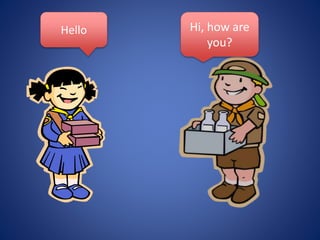
Hello Hi, how are 
you?
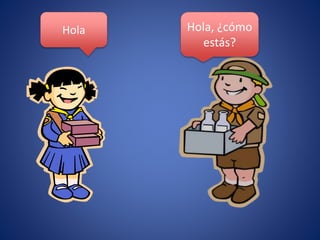
Hola Hola, ¿cómo 
estás?
¿Cómo estás? 
vs. 
¿Cómo está? 
What is the difference?
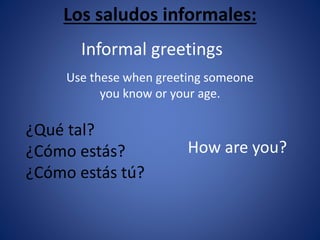
Los saludos informales: 
Informal greetings 
Use these when greeting someone 
you know or your age. 
¿Qué tal? 
¿Cómo estás? 
¿Cómo estás tú? 
How are you?
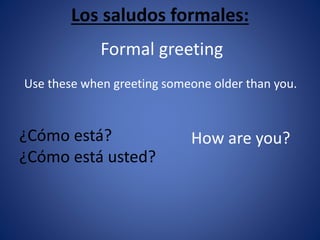
Los saludos formales: 
Formal greeting 
Use these when greeting someone older than you. 
¿Cómo está? 
¿Cómo está usted? 
How are you?
Estoy…. 
I am… 
Use both informally and formally.
Bien 
Well (good) 
Muy bien 
Very well (good)
Así así 
So so
Mal 
Bad 
Muy mal 
Very bad
¿Y tú? 
And you?
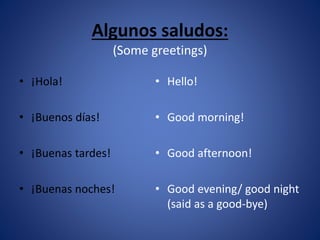
Algunos saludos: 
(Some greetings) 
• Hello! 
• Good morning! 
• Good afternoon! 
• Good evening/ good night 
(said as a good-bye) 
• ¡Hola! 
• ¡Buenos días! 
• ¡Buenas tardes! 
• ¡Buenas noches!
Respuestas: 
• Bien, gracias, ¿y tú? 
• Bien, gracias, ¿y usted? 
• Estoy bien, gracias. 
• Así así. 
• Mal. 
How to respond: 
• I am well, thank you, and 
you? Informal 
• I am well, thank you, and 
you? Formal 
• I am well, thank you. 
• So so 
• Bad
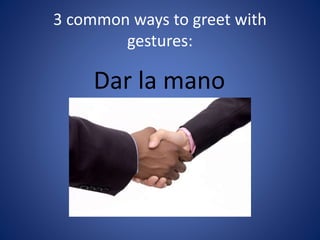
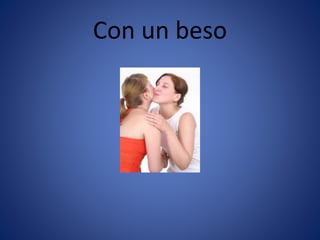
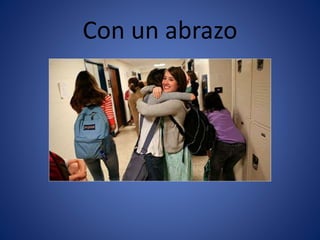
3 common ways to greet with 
gestures: 
Dar la mano
Con un beso
Con un abrazo
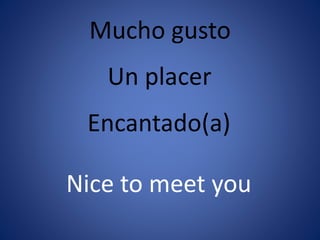
Mucho gusto 
Un placer 
Encantado(a) 
Nice to meet you
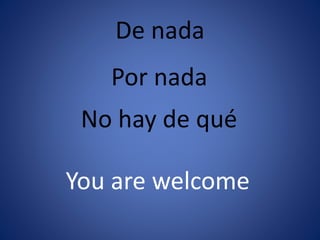
De nada 
Por nada 
No hay de qué 
You are welcome
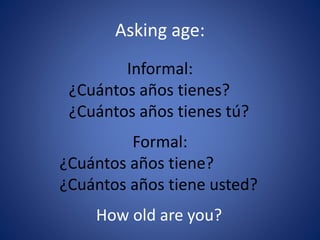
Asking age: 
Informal: 
¿Cuántos años tienes? 
¿Cuántos años tienes tú? 
Formal: 
¿Cuántos años tiene? 
¿Cuántos años tiene usted? 
How old are you?
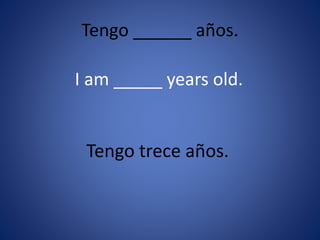
Tengo ______ años. 
I am _____ years old. 
Tengo trece años.
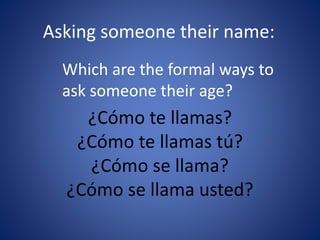
Asking someone their name: 
Which are the formal ways to 
ask someone their age? 
¿Cómo te llamas? 
¿Cómo te llamas tú? 
¿Cómo se llama? 
¿Cómo se llama usted?
Me llamo Señorita Maza. 
Me llamo _____. 
Used both formally and informally.
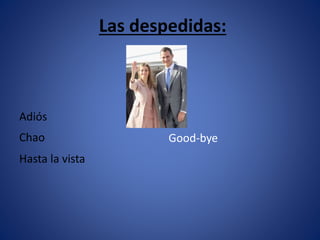
Las despedidas: 
Adiós 
Chao Good-bye 
Hasta la vista
When you plan on seeing the person 
later that SAME day: 
Hasta luego 
Until later
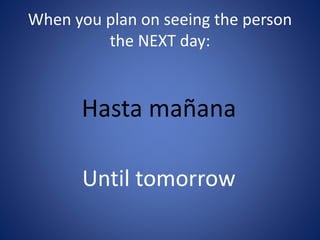
When you plan on seeing the person 
the NEXT day: 
Hasta mañana 
Until tomorrow
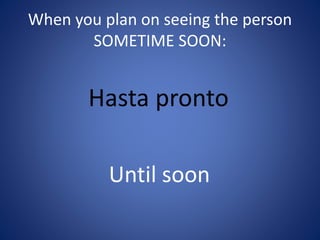
When you plan on seeing the person 
SOMETIME SOON: 
Hasta pronto 
Until soon
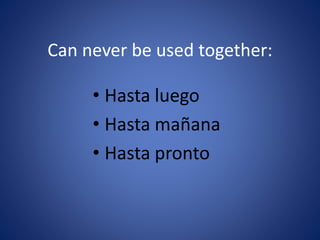
Can never be used together: 
• Hasta luego 
• Hasta mañana 
• Hasta pronto
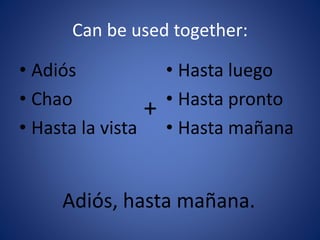
Can be used together: 
• Adiós 
• Chao 
• Hasta la vista 
• Hasta luego 
• Hasta pronto 
• Hasta mañana 
+ 
Adiós, hasta mañana.
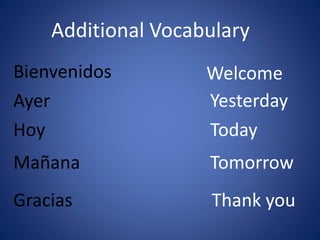
Additional Vocabulary 
Bienvenidos 
Ayer 
Hoy 
Mañana 
Gracias 
Welcome 
Yesterday 
Today 
Tomorrow 
Thank you
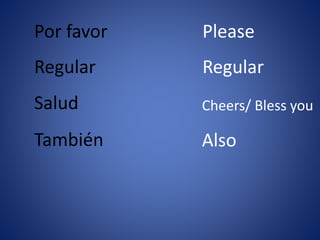
Por favor 
Regular 
Salud 
También 
Please 
Regular 
Cheers/ Bless you 
Also
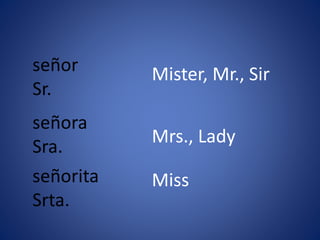
señor 
Sr. 
señora 
Sra. 
señorita 
Srta. 
Mister, Mr., Sir 
Mrs., Lady 
Miss
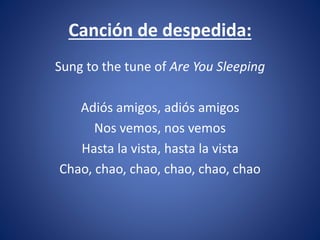
Canción de despedida: 
Sung to the tune of Are You Sleeping 
Adiós amigos, adiós amigos 
Nos vemos, nos vemos 
Hasta la vista, hasta la vista 
Chao, chao, chao, chao, chao, chao
Canción de saludo: 
Sung to the tune of Are You Sleeping 
Buenos días, buenos días 
¿Cómo estás? ¿Cómo estás? 
Muy bien, gracias, Muy bien, gracias 
¿y usted? ¿y usted? 
(replace “Buenos días” with “buenas noches/tardes”)

Saludos PowerPoint

  • 1.
  • 2.
    Hello Hi, howare you?
  • 3.
  • 4.
    ¿Cómo estás? vs. ¿Cómo está? What is the difference?
  • 5.
    Los saludos informales: Informal greetings Use these when greeting someone you know or your age. ¿Qué tal? ¿Cómo estás? ¿Cómo estás tú? How are you?
  • 6.
    Los saludos formales: Formal greeting Use these when greeting someone older than you. ¿Cómo está? ¿Cómo está usted? How are you?
  • 7.
    Estoy…. I am… Use both informally and formally.
  • 8.
    Bien Well (good) Muy bien Very well (good)
  • 9.
  • 10.
    Mal Bad Muymal Very bad
  • 11.
  • 12.
    Algunos saludos: (Somegreetings) • Hello! • Good morning! • Good afternoon! • Good evening/ good night (said as a good-bye) • ¡Hola! • ¡Buenos días! • ¡Buenas tardes! • ¡Buenas noches!
  • 13.
    Respuestas: • Bien,gracias, ¿y tú? • Bien, gracias, ¿y usted? • Estoy bien, gracias. • Así así. • Mal. How to respond: • I am well, thank you, and you? Informal • I am well, thank you, and you? Formal • I am well, thank you. • So so • Bad
  • 14.
    3 common waysto greet with gestures: Dar la mano
  • 15.
  • 16.
  • 17.
    Mucho gusto Unplacer Encantado(a) Nice to meet you
  • 18.
    De nada Pornada No hay de qué You are welcome
  • 19.
    Asking age: Informal: ¿Cuántos años tienes? ¿Cuántos años tienes tú? Formal: ¿Cuántos años tiene? ¿Cuántos años tiene usted? How old are you?
  • 20.
    Tengo ______ años. I am _____ years old. Tengo trece años.
  • 21.
    Asking someone theirname: Which are the formal ways to ask someone their age? ¿Cómo te llamas? ¿Cómo te llamas tú? ¿Cómo se llama? ¿Cómo se llama usted?
  • 22.
    Me llamo SeñoritaMaza. Me llamo _____. Used both formally and informally.
  • 23.
    Las despedidas: Adiós Chao Good-bye Hasta la vista
  • 24.
    When you planon seeing the person later that SAME day: Hasta luego Until later
  • 25.
    When you planon seeing the person the NEXT day: Hasta mañana Until tomorrow
  • 26.
    When you planon seeing the person SOMETIME SOON: Hasta pronto Until soon
  • 27.
    Can never beused together: • Hasta luego • Hasta mañana • Hasta pronto
  • 28.
    Can be usedtogether: • Adiós • Chao • Hasta la vista • Hasta luego • Hasta pronto • Hasta mañana + Adiós, hasta mañana.
  • 29.
    Additional Vocabulary Bienvenidos Ayer Hoy Mañana Gracias Welcome Yesterday Today Tomorrow Thank you
  • 30.
    Por favor Regular Salud También Please Regular Cheers/ Bless you Also
  • 31.
    señor Sr. señora Sra. señorita Srta. Mister, Mr., Sir Mrs., Lady Miss
  • 32.
    Canción de despedida: Sung to the tune of Are You Sleeping Adiós amigos, adiós amigos Nos vemos, nos vemos Hasta la vista, hasta la vista Chao, chao, chao, chao, chao, chao
  • 33.
    Canción de saludo: Sung to the tune of Are You Sleeping Buenos días, buenos días ¿Cómo estás? ¿Cómo estás? Muy bien, gracias, Muy bien, gracias ¿y usted? ¿y usted? (replace “Buenos días” with “buenas noches/tardes”)