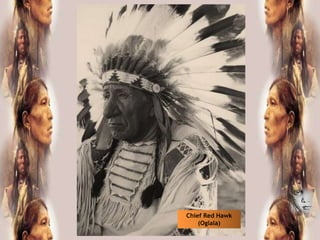
Chief Red Hawk
    (Oglala)
Crow Warrior
Smoky Mountains


Los tocados guerreros de plumas (también llamados war bonnets), eran usados ​por los
amerindios con honores de la planicies. En el pasado se usaban, en ocasiones, para la
batalla, pero más a menudo para ceremonias espirituales, como es el caso de hoy en
día. Son considerados como elementos de gran importancia espiritual y mágica. El
águila es considerada por las tribus de las planicies, como la más grande y más
poderosa de todas las aves, y por lo tanto, los tocados más finos se hacen con sus
plumas.
Su belleza era considerada de importancia secundaria; su valor real se encontraba en
su supuesto poder para proteger al portador. El tocado guerrero se sigue usando, en la
actualidad, sólo para ocasiones especiales y es altamente simbólico.
Cheyenne Warrior
Dakota-sioux
Réplica de
                                                       Red Sun


Feathered war bonnets (also called warbonnets or headdresses) are worn by
honored Plains Indian men. In the past they were sometimes worn into
battle, but most often worn for ceremonial occasions as is the case today. They
are seen as items of great spiritual and magical importance. The eagle is
considered by Plains tribes as the greatest and most powerful of all birds, and
thus the finest bonnets are made out of its feathers.
Its beauty was considered of secondary importance; the bonnet's real value was
in its supposed power to protect the wearer. The bonnet is still only to be worn
on special occasions and is highly symbolic.
Crow Brave
Chief
Choctaw Tribu


El tocado de guerra tuvo que ser ganado través de proezas en la batalla, porque las
plumas significaban las proezas mismas. Algunos guerreros obtuvieron sólo dos o tres
plumas de honor en toda su vida, tan difícil era ganarlas. El tocado también fue una
señal de gran respeto, porque nunca, podían ser usados ​sin el consentimiento de los
líderes de la tribu. Un gran honor recibido por el guerrero consistía, por
ejemplo, cuando éste era el primero en tocar a un enemigo caído en la batalla, pues eso
significaba que se encontraba en la línea frontal de la lucha. Las plumas eran dentadas y
decoradas para designar un evento, y contar historias individuales, tales como
matar, capturar el arma de un enemigo y un escudo, y si la proeza se había hecho a
caballo o a pie.
Sitting Bear
Arikara Chief
Thunderbird


The bonnet had to be earned through brave deeds in battle because the feathers
signified the deeds themselves. Some warriors might have obtained only two or three
honor feathers in their whole lifetime, so difficult were they to earn. The bonnet was
also a mark of highest respect because it could never be worn without the consent of
the leaders of the tribe. A high honor, for example, was received by the warrior who
was the first to touch an enemy fallen in battle, for this meant the warrior was at the
very front of fighting. Feathers were notched and decorated to designate an event
and told individual stories such as killing, capturing an enemy's weapon and
shield, and whether the deed had been done on horseback or foot.
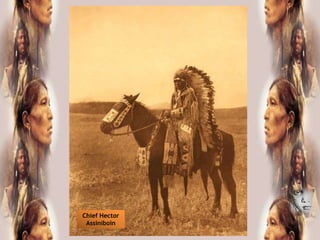
Chief Hector
 Assiniboin
Black Foot
Shadow- Dancer                              Brown Prairie Coyote

Una vez que el guerrero había ganado diez honores, éste salía, para asegurar las
plumas de águila con las cuales hacer su tocado. En algunas tribus tenían que
comprarlas a un individuo, al cual, se le daba un permiso especial para cazar el
ave; con una cola de doce plumas perfecta, el vendedor podría ganar tanto como el
precio de un buen caballo. Algunas tribus permitían a un guerrero cazar sus propias
águilas. Esta era una misión peligrosa y requería mucho tiempo, porque significaba
que debía de dejar la tribu y viajar a tierras altas donde podría encontrarse el ave.
Cuando el destino se alcanzaba, se llevaban a cabo ceremonias para atraer a los
espíritus de las aves que iban a ser sacrificadas.
Oglala Warrior
Crow Warrior
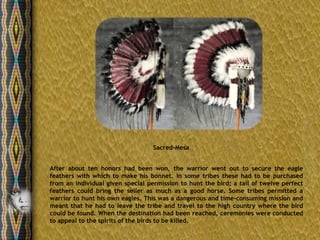
Sacred-Mesa


After about ten honors had been won, the warrior went out to secure the eagle
feathers with which to make his bonnet. In some tribes these had to be purchased
from an individual given special permission to hunt the bird; a tail of twelve perfect
feathers could bring the seller as much as a good horse. Some tribes permitted a
warrior to hunt his own eagles. This was a dangerous and time-consuming mission and
meant that he had to leave the tribe and travel to the high country where the bird
could be found. When the destination had been reached, ceremonies were conducted
to appeal to the spirits of the birds to be killed.
Atsina Warrior
Red Hawk
(Oglala)
Peacock eye

Un tocado guerra del jefe de la tribu, estaba hecho de plumas recibidas por las
buenas obras a su comunidad y se llevaba con gran honor. Cada pluma
representaba una buena acción. Un tocado de guerra de un guerrero, como el
tocado famoso de “Nariz Romana”, guerrero Cheyenne, dijo que lo protegía
durante el combate. En varios casos, Nariz Romana, con su tocado de
guerra, montó de un lado a otro ante los soldados del Ejército de Estados Unidos
durante las batallas de las guerras indias, y a pesar de ser disparado por muchos
de ellos, salió ileso. Los jefes y los guerreros de honor siguen usando a menudo
los tocados de guerra para ocasiones ceremoniales.
Jicarilla brave
Indian Brave
Turkey feathers            Black cloud

A chief's war bonnet is made of feathers received for good deeds to his community
and is worn in high honor. Each feather would represent a good deed. A warrior's
war bonnet, such as the famous war bonnet of Roman Nose, the Cheyenne warrior,
was said to protect him during battle. In several instances Roman Nose, wearing his
war bonnet, rode back and forth before soldiers of the United States Army during
battles of the Indian Wars and despite being firing upon by many soldiers was
unscathed. Chiefs and honored warriors still often wear war bonnets for ceremonial
occasions.
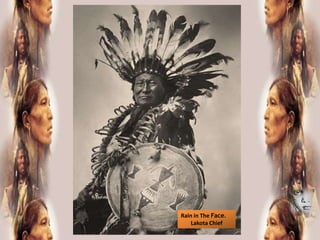
Rain in The Face.
    Lakota Chief
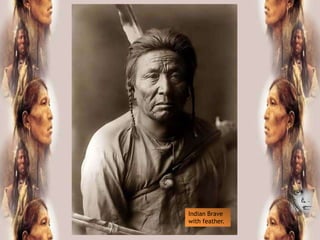
Indian Brave
with feather.
Tocado guerrero Arapaho hecho con veintinueve plumas de águila.

  Arapaho warbonnet made of twenty- nine eagle feathers.
Ogalala Chief
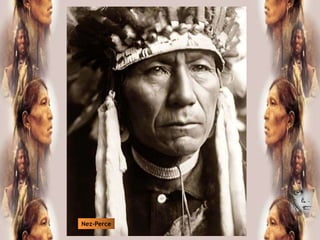
Nez-Perce
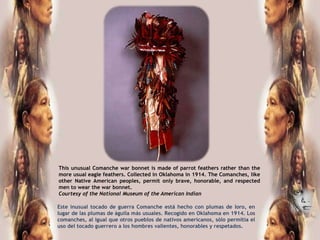
This unusual Comanche war bonnet is made of parrot feathers rather than the
more usual eagle feathers. Collected in Oklahoma in 1914. The Comanches, like
other Native American peoples, permit only brave, honorable, and respected
men to wear the war bonnet.
Courtesy of the National Museum of the American Indian

Este inusual tocado de guerra Comanche está hecho con plumas de loro, en
lugar de las plumas de águila más usuales. Recogido en Oklahoma en 1914. Los
comanches, al igual que otros pueblos de nativos americanos, sólo permitía el
uso del tocado guerrero a los hombres valientes, honorables y respetados.
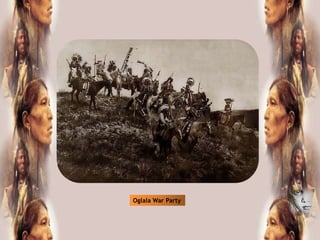
Oglala War Party
"La civilización no suprime la barbarie, la perfecciona."
                        (Voltaire)

War bonnets

  • 2.
  • 3.
  • 4.
    Smoky Mountains Los tocadosguerreros de plumas (también llamados war bonnets), eran usados ​por los amerindios con honores de la planicies. En el pasado se usaban, en ocasiones, para la batalla, pero más a menudo para ceremonias espirituales, como es el caso de hoy en día. Son considerados como elementos de gran importancia espiritual y mágica. El águila es considerada por las tribus de las planicies, como la más grande y más poderosa de todas las aves, y por lo tanto, los tocados más finos se hacen con sus plumas. Su belleza era considerada de importancia secundaria; su valor real se encontraba en su supuesto poder para proteger al portador. El tocado guerrero se sigue usando, en la actualidad, sólo para ocasiones especiales y es altamente simbólico.
  • 5.
  • 6.
  • 7.
    Réplica de Red Sun Feathered war bonnets (also called warbonnets or headdresses) are worn by honored Plains Indian men. In the past they were sometimes worn into battle, but most often worn for ceremonial occasions as is the case today. They are seen as items of great spiritual and magical importance. The eagle is considered by Plains tribes as the greatest and most powerful of all birds, and thus the finest bonnets are made out of its feathers. Its beauty was considered of secondary importance; the bonnet's real value was in its supposed power to protect the wearer. The bonnet is still only to be worn on special occasions and is highly symbolic.
  • 8.
  • 9.
  • 10.
    Choctaw Tribu El tocadode guerra tuvo que ser ganado través de proezas en la batalla, porque las plumas significaban las proezas mismas. Algunos guerreros obtuvieron sólo dos o tres plumas de honor en toda su vida, tan difícil era ganarlas. El tocado también fue una señal de gran respeto, porque nunca, podían ser usados ​sin el consentimiento de los líderes de la tribu. Un gran honor recibido por el guerrero consistía, por ejemplo, cuando éste era el primero en tocar a un enemigo caído en la batalla, pues eso significaba que se encontraba en la línea frontal de la lucha. Las plumas eran dentadas y decoradas para designar un evento, y contar historias individuales, tales como matar, capturar el arma de un enemigo y un escudo, y si la proeza se había hecho a caballo o a pie.
  • 11.
  • 12.
  • 13.
    Thunderbird The bonnet hadto be earned through brave deeds in battle because the feathers signified the deeds themselves. Some warriors might have obtained only two or three honor feathers in their whole lifetime, so difficult were they to earn. The bonnet was also a mark of highest respect because it could never be worn without the consent of the leaders of the tribe. A high honor, for example, was received by the warrior who was the first to touch an enemy fallen in battle, for this meant the warrior was at the very front of fighting. Feathers were notched and decorated to designate an event and told individual stories such as killing, capturing an enemy's weapon and shield, and whether the deed had been done on horseback or foot.
  • 14.
  • 15.
  • 16.
    Shadow- Dancer Brown Prairie Coyote Una vez que el guerrero había ganado diez honores, éste salía, para asegurar las plumas de águila con las cuales hacer su tocado. En algunas tribus tenían que comprarlas a un individuo, al cual, se le daba un permiso especial para cazar el ave; con una cola de doce plumas perfecta, el vendedor podría ganar tanto como el precio de un buen caballo. Algunas tribus permitían a un guerrero cazar sus propias águilas. Esta era una misión peligrosa y requería mucho tiempo, porque significaba que debía de dejar la tribu y viajar a tierras altas donde podría encontrarse el ave. Cuando el destino se alcanzaba, se llevaban a cabo ceremonias para atraer a los espíritus de las aves que iban a ser sacrificadas.
  • 17.
  • 18.
  • 19.
    Sacred-Mesa After about tenhonors had been won, the warrior went out to secure the eagle feathers with which to make his bonnet. In some tribes these had to be purchased from an individual given special permission to hunt the bird; a tail of twelve perfect feathers could bring the seller as much as a good horse. Some tribes permitted a warrior to hunt his own eagles. This was a dangerous and time-consuming mission and meant that he had to leave the tribe and travel to the high country where the bird could be found. When the destination had been reached, ceremonies were conducted to appeal to the spirits of the birds to be killed.
  • 20.
  • 21.
  • 22.
    Peacock eye Un tocadoguerra del jefe de la tribu, estaba hecho de plumas recibidas por las buenas obras a su comunidad y se llevaba con gran honor. Cada pluma representaba una buena acción. Un tocado de guerra de un guerrero, como el tocado famoso de “Nariz Romana”, guerrero Cheyenne, dijo que lo protegía durante el combate. En varios casos, Nariz Romana, con su tocado de guerra, montó de un lado a otro ante los soldados del Ejército de Estados Unidos durante las batallas de las guerras indias, y a pesar de ser disparado por muchos de ellos, salió ileso. Los jefes y los guerreros de honor siguen usando a menudo los tocados de guerra para ocasiones ceremoniales.
  • 23.
  • 24.
  • 25.
    Turkey feathers Black cloud A chief's war bonnet is made of feathers received for good deeds to his community and is worn in high honor. Each feather would represent a good deed. A warrior's war bonnet, such as the famous war bonnet of Roman Nose, the Cheyenne warrior, was said to protect him during battle. In several instances Roman Nose, wearing his war bonnet, rode back and forth before soldiers of the United States Army during battles of the Indian Wars and despite being firing upon by many soldiers was unscathed. Chiefs and honored warriors still often wear war bonnets for ceremonial occasions.
  • 26.
    Rain in TheFace. Lakota Chief
  • 27.
  • 28.
    Tocado guerrero Arapahohecho con veintinueve plumas de águila. Arapaho warbonnet made of twenty- nine eagle feathers.
  • 29.
  • 30.
  • 31.
    This unusual Comanchewar bonnet is made of parrot feathers rather than the more usual eagle feathers. Collected in Oklahoma in 1914. The Comanches, like other Native American peoples, permit only brave, honorable, and respected men to wear the war bonnet. Courtesy of the National Museum of the American Indian Este inusual tocado de guerra Comanche está hecho con plumas de loro, en lugar de las plumas de águila más usuales. Recogido en Oklahoma en 1914. Los comanches, al igual que otros pueblos de nativos americanos, sólo permitía el uso del tocado guerrero a los hombres valientes, honorables y respetados.
  • 32.
  • 33.
    "La civilización nosuprime la barbarie, la perfecciona." (Voltaire)