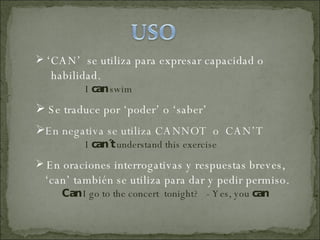
‘ CAN’  se utiliza para expresar capacidad o  habilidad.  I  can  swim  Se traduce por ‘poder’ o ‘saber’   En negativa se utiliza CANNOT  o  CAN’T I  can´t  understand this exercise En oraciones interrogativas y respuestas breves,  ‘ can’ también se utiliza para dar y pedir permiso. Can  I go to the concert  tonight?  - Yes, you  can
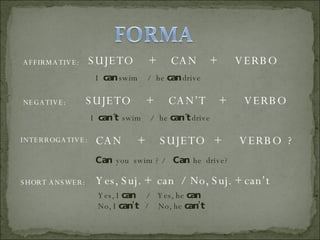
AFFIRMATIVE: SUJETO  +  CAN  +  VERBO NEGATIVE: SUJETO  +  CAN’T  +  VERBO INTERROGATIVE: CAN  +  SUJETO  +  VERBO  ? I  can  swim  /  he  can  drive I  can´t   swim  /  he  can´t  drive Can  you  swim ? /  Can  he  drive? SHORT ANSWER: Yes, Suj. +  can  /  No, Suj. + can’t Yes, I  can  /  Yes, he  can No, I  can’t  /  No, he  can’t
 
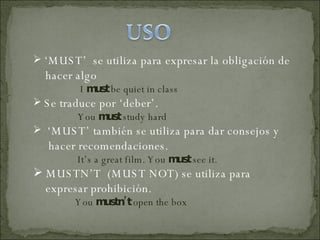
‘ MUST’  se utiliza para expresar la obligación de  hacer algo  I  must  be quiet in class Se traduce por ‘deber’. You  must  study hard ‘ MUST’ también se utiliza para dar consejos y  hacer recomendaciones. It’s a great film. You  must  see it. MUSTN’T  (MUST NOT) se utiliza para  expresar prohibición. You  mustn’t  open the box
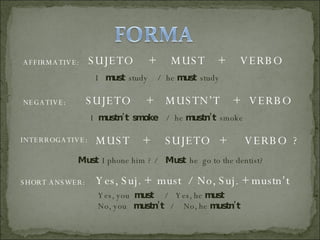
AFFIRMATIVE: SUJETO  +  MUST  +  VERBO NEGATIVE: SUJETO  +  MUSTN’T  +  VERBO INTERROGATIVE: MUST  +  SUJETO  +  VERBO  ? I  must  study  /  he  must  study I  mustn’t  smoke   /  he  mustn’t  smoke Must  I phone him ? /  Must  he  go to the dentist? SHORT ANSWER: Yes, Suj. +  must  /  No, Suj. + mustn’t Yes, you  must  /  Yes, he  must No, you  mustn’t  /  No, he  mustn’t

Can Must

  • 1.
  • 2.
    ‘ CAN’ se utiliza para expresar capacidad o habilidad. I can swim Se traduce por ‘poder’ o ‘saber’ En negativa se utiliza CANNOT o CAN’T I can´t understand this exercise En oraciones interrogativas y respuestas breves, ‘ can’ también se utiliza para dar y pedir permiso. Can I go to the concert tonight? - Yes, you can
  • 3.
    AFFIRMATIVE: SUJETO + CAN + VERBO NEGATIVE: SUJETO + CAN’T + VERBO INTERROGATIVE: CAN + SUJETO + VERBO ? I can swim / he can drive I can´t swim / he can´t drive Can you swim ? / Can he drive? SHORT ANSWER: Yes, Suj. + can / No, Suj. + can’t Yes, I can / Yes, he can No, I can’t / No, he can’t
  • 4.
  • 5.
    ‘ MUST’ se utiliza para expresar la obligación de hacer algo I must be quiet in class Se traduce por ‘deber’. You must study hard ‘ MUST’ también se utiliza para dar consejos y hacer recomendaciones. It’s a great film. You must see it. MUSTN’T (MUST NOT) se utiliza para expresar prohibición. You mustn’t open the box
  • 6.
    AFFIRMATIVE: SUJETO + MUST + VERBO NEGATIVE: SUJETO + MUSTN’T + VERBO INTERROGATIVE: MUST + SUJETO + VERBO ? I must study / he must study I mustn’t smoke / he mustn’t smoke Must I phone him ? / Must he go to the dentist? SHORT ANSWER: Yes, Suj. + must / No, Suj. + mustn’t Yes, you must / Yes, he must No, you mustn’t / No, he mustn’t