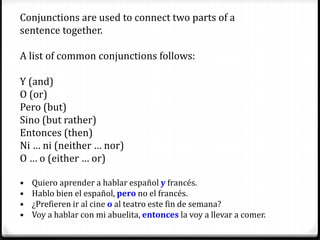
Conjunctions are used to connect two parts of a
sentence together.
A list of common conjunctions follows:
Y (and)
O (or)
Pero (but)
Sino (but rather)
Entonces (then)
Ni … ni (neither … nor)
O … o (either … or)
• Quiero aprender a hablar español y francés.
• Hablo bien el español, pero no el francés.
• ¿Prefieren ir al cine o al teatro este fin de semana?
• Voy a hablar con mi abuelita, entonces la voy a llevar a comer.
Sino means but rather and is used after a negative clause to
show something opposite.
• Mi hermano no es muy flaco, sino gordo.
• No llegamos por Uber, sino un taxi.
Y becomes ‘e’ before a word starting with ‘i’ or ‘hi’ but not ‘hie’…
• Estudiamos español e inglés.
• Mi novio aprende cálculo e historia este año.
• Me gusta mi té con azúcar y hielo.
Become ‘u’ before a word starting with ‘o’ or ‘ho’.
• Voy a comprarlo mañana u otro día.
• Cuando entramos, decimos ‘buenos días’ u ‘hola’.

Conjunctions in Spanish

  • 2.
    Conjunctions are usedto connect two parts of a sentence together. A list of common conjunctions follows: Y (and) O (or) Pero (but) Sino (but rather) Entonces (then) Ni … ni (neither … nor) O … o (either … or) • Quiero aprender a hablar español y francés. • Hablo bien el español, pero no el francés. • ¿Prefieren ir al cine o al teatro este fin de semana? • Voy a hablar con mi abuelita, entonces la voy a llevar a comer.
  • 3.
    Sino means butrather and is used after a negative clause to show something opposite. • Mi hermano no es muy flaco, sino gordo. • No llegamos por Uber, sino un taxi. Y becomes ‘e’ before a word starting with ‘i’ or ‘hi’ but not ‘hie’… • Estudiamos español e inglés. • Mi novio aprende cálculo e historia este año. • Me gusta mi té con azúcar y hielo. Become ‘u’ before a word starting with ‘o’ or ‘ho’. • Voy a comprarlo mañana u otro día. • Cuando entramos, decimos ‘buenos días’ u ‘hola’.