There is / there are 
glezcasere@hotmail.com
• Las expresiones there is y there are se utilizan en inglés 
para indicar que un objeto o una persona se encuentran 
en un sitio especificado. Ejemplo: 
There is a book on the table. 
There are two books on the table. 
glezcasere@hotmail.com
glezcasere@hotmail.com 
1. Utilizamos there is cuando el sujeto es: 
• Un sustantivo contable singular: 
There is an apple in the basket. 
• Observe que el sustantivo lleva el artículo idenfinido (a/an). 
Normalmente no se utiliza el artículo definido the con there 
is:
glezcasere@hotmail.com 
2. Utilizamos there are cuando el sujeto es: 
• Un sustantivo plural: 
There are two apples in the basket. 
*cuando usamos there are los artículos desaparecen y son 
cambiados por números o palabras de cantidad como: some, a 
lot, any, many.
glezcasere@hotmail.com 
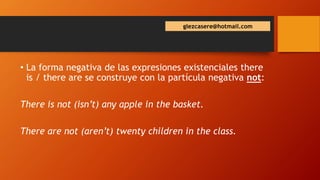
• La forma negativa de las expresiones existenciales there 
is / there are se construye con la partícula negativa not: 
There is not (isn’t) any apple in the basket. 
There are not (aren’t) twenty children in the class.
glezcasere@hotmail.com 
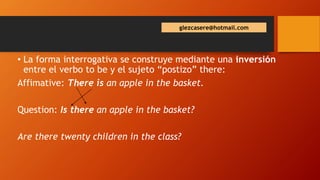
• La forma interrogativa se construye mediante una inversión 
entre el verbo to be y el sujeto “postizo” there: 
Affimative: There is an apple in the basket. 
Question: Is there an apple in the basket? 
Are there twenty children in the class?

there is / are

  • 1.
    There is /there are glezcasere@hotmail.com
  • 2.
    • Las expresionesthere is y there are se utilizan en inglés para indicar que un objeto o una persona se encuentran en un sitio especificado. Ejemplo: There is a book on the table. There are two books on the table. glezcasere@hotmail.com
  • 3.
    glezcasere@hotmail.com 1. Utilizamosthere is cuando el sujeto es: • Un sustantivo contable singular: There is an apple in the basket. • Observe que el sustantivo lleva el artículo idenfinido (a/an). Normalmente no se utiliza el artículo definido the con there is:
  • 4.
    glezcasere@hotmail.com 2. Utilizamosthere are cuando el sujeto es: • Un sustantivo plural: There are two apples in the basket. *cuando usamos there are los artículos desaparecen y son cambiados por números o palabras de cantidad como: some, a lot, any, many.
  • 5.
    glezcasere@hotmail.com • Laforma negativa de las expresiones existenciales there is / there are se construye con la partícula negativa not: There is not (isn’t) any apple in the basket. There are not (aren’t) twenty children in the class.
  • 6.
    glezcasere@hotmail.com • Laforma interrogativa se construye mediante una inversión entre el verbo to be y el sujeto “postizo” there: Affimative: There is an apple in the basket. Question: Is there an apple in the basket? Are there twenty children in the class?