Grammar bookCarlota Shoup
Table of contentsQué vs. CuálSerEstarGustarTransitionsImperfectTriggersAcabar de + InfinitiveHacer + Time + Qué + Present Tense
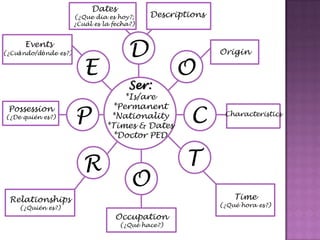
Dates(¿Quediaeshoy?; ¿Cuáles la fecha?)DescriptionsD Events (¿Cuándo/dóndees?)OriginOESer: *Is/are*Permanent*Nationality*Times & Dates*Doctor PEDCPPossession(¿De quiénes?)CharacteristicsTROvTime(¿Quéhoraes?)Relationships(¿Quiénes?)Occupation(¿Quéhace?)
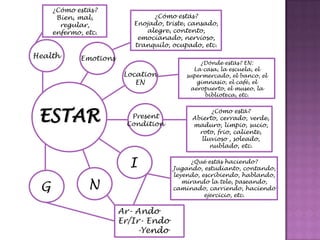
¿Cómoestás?Bien, mal, regular, enfermo, etc.¿Cómoestás?Enojado, triste, cansado, alegre, contento, emocianado, nervioso, tranquilo, ocupado, etc.HealthEmotions¿Dóndeestás? EN:La casa, la escuela, el supermercado, el banco, el gimnasio, el café, el aeropuerto, el museo, la biblioteca, etc. LocationENESTAR¿Cómoestá? Abierto, cerrado, verde, maduro, limpio, sucio, roto, frio, caliente, lluvioso , soleado, nublado, etc.PresentConditionI¿Quéestáshaciendo?Jugando, estudianto, contando, leyendo, escribiendo, hablando, mirandola tele, paseando, caminado, carriendo, haciendoejercicio, etc.NGAr- AndoEr/Ir- Endo       -Yendo
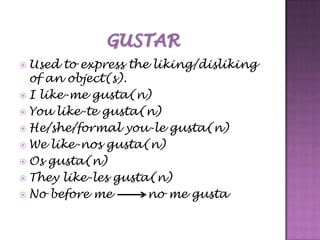
GUSTARUsed to express the liking/disliking of an object(s).I like-me gusta(n)You like-tegusta(n)He/she/formal you-le gusta(n)We like-nosgusta(n)Os gusta(n)They like-les gusta(n)No before me         no me gusta
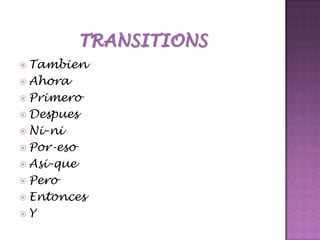
TransitionsTambienAhoraPrimeroDespuesNi-niPor-esoAsi-quePeroEntoncesY
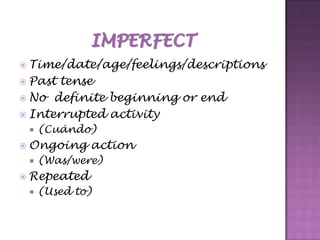
ImperfectTime/date/age/feelings/descriptionsPast tenseNo  definite beginning or endInterrupted activity (Cuándo)Ongoing action(Was/were)Repeated(Used to)
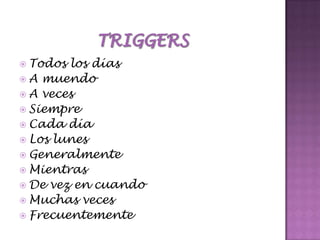
TriggersTodos los díasA muendoA vecesSiempreCadadíaLos lunesGeneralmenteMientrasDe vez en cuandoMuchasvecesFrecuentemente
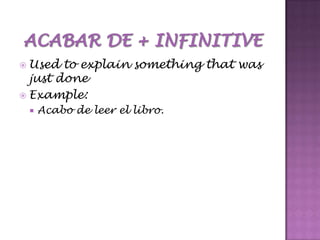
Acabar de + infinitiveUsed to explain something that was just doneExample:Acabo de leer el libro.
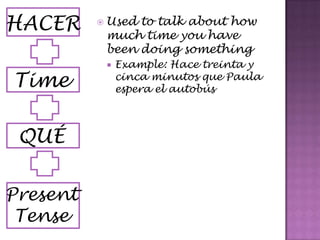
Used to talk about how much time you have been doing somethingExample: Hacetreinta y cincaminutosque Paula espera el autobúsHACERTimevQUÉPresentTense

Grammar Book

  • 1.
  • 2.
    Table of contentsQuévs. CuálSerEstarGustarTransitionsImperfectTriggersAcabar de + InfinitiveHacer + Time + Qué + Present Tense
  • 3.
    Dates(¿Quediaeshoy?; ¿Cuáles lafecha?)DescriptionsD Events (¿Cuándo/dóndees?)OriginOESer: *Is/are*Permanent*Nationality*Times & Dates*Doctor PEDCPPossession(¿De quiénes?)CharacteristicsTROvTime(¿Quéhoraes?)Relationships(¿Quiénes?)Occupation(¿Quéhace?)
  • 4.
    ¿Cómoestás?Bien, mal, regular,enfermo, etc.¿Cómoestás?Enojado, triste, cansado, alegre, contento, emocianado, nervioso, tranquilo, ocupado, etc.HealthEmotions¿Dóndeestás? EN:La casa, la escuela, el supermercado, el banco, el gimnasio, el café, el aeropuerto, el museo, la biblioteca, etc. LocationENESTAR¿Cómoestá? Abierto, cerrado, verde, maduro, limpio, sucio, roto, frio, caliente, lluvioso , soleado, nublado, etc.PresentConditionI¿Quéestáshaciendo?Jugando, estudianto, contando, leyendo, escribiendo, hablando, mirandola tele, paseando, caminado, carriendo, haciendoejercicio, etc.NGAr- AndoEr/Ir- Endo -Yendo
  • 5.
    GUSTARUsed to expressthe liking/disliking of an object(s).I like-me gusta(n)You like-tegusta(n)He/she/formal you-le gusta(n)We like-nosgusta(n)Os gusta(n)They like-les gusta(n)No before me no me gusta
  • 6.
  • 7.
    ImperfectTime/date/age/feelings/descriptionsPast tenseNo definite beginning or endInterrupted activity (Cuándo)Ongoing action(Was/were)Repeated(Used to)
  • 8.
    TriggersTodos los díasAmuendoA vecesSiempreCadadíaLos lunesGeneralmenteMientrasDe vez en cuandoMuchasvecesFrecuentemente
  • 9.
    Acabar de +infinitiveUsed to explain something that was just doneExample:Acabo de leer el libro.
  • 10.
    Used to talkabout how much time you have been doing somethingExample: Hacetreinta y cincaminutosque Paula espera el autobúsHACERTimevQUÉPresentTense