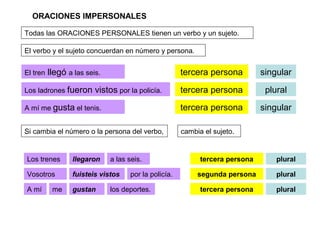
ORACIONES IMPERSONALES
Todas las ORACIONES PERSONALES tienen un verbo y un sujeto.
El verbo y el sujeto concuerdan en número y persona.
tercera persona
tercera persona
El tren llegó a las seis.
Los ladrones fueron vistos por la policía.
A mí me gusta el tenis.
Si cambia el número o la persona del verbo, cambia el sujeto.
plural
Los trenes llegaron
Vosotros fuisteis vistos
los deportes.A mí
singular
tercera persona
singular
a las seis.
por la policía.
me gustan
tercera persona
segunda persona
tercera persona
plural
plural
plural
ORACIONES IMPERSONALES
Las ORACIONES IMPERSONALES son aquéllas en las que su verbo NO concuerda
en número y persona con ningún elemento de la oración.
Son de dos tipos:
FENÓMENOS ATMOSFÉRICOS
Llueve. Ayer nevó mucho. Hace frío.
ORACIONES DEL VERBO HABER
Hay un coche en la calle. Hubo tres disparos.
IMPERSONAL SENTENCES
As they do not have a personal subject, they always start with the word THERE
The verb can be singular IS or plural ARE
AFFIRMATIVE
THERE
THERE
IS
ARE
VERBTHERE COMPLEMENTS
ten lions in the zoo.
a restaurant near here.
NEGATIVE THERE VERB COMPLEMENTS
THERE
THERE
ISN’T
AREN’T
any water in the bottle.
ten boys in my class.
INTERROGATIVE (Wh) VERB THERE COMPLEMENTS
What IS THERE on the table
?
?
ARE THERE any apples ?

Impersonales

  • 1.
    ORACIONES IMPERSONALES Todas lasORACIONES PERSONALES tienen un verbo y un sujeto. El verbo y el sujeto concuerdan en número y persona. tercera persona tercera persona El tren llegó a las seis. Los ladrones fueron vistos por la policía. A mí me gusta el tenis. Si cambia el número o la persona del verbo, cambia el sujeto. plural Los trenes llegaron Vosotros fuisteis vistos los deportes.A mí singular tercera persona singular a las seis. por la policía. me gustan tercera persona segunda persona tercera persona plural plural plural
  • 2.
    ORACIONES IMPERSONALES Las ORACIONESIMPERSONALES son aquéllas en las que su verbo NO concuerda en número y persona con ningún elemento de la oración. Son de dos tipos: FENÓMENOS ATMOSFÉRICOS Llueve. Ayer nevó mucho. Hace frío. ORACIONES DEL VERBO HABER Hay un coche en la calle. Hubo tres disparos.
  • 3.
    IMPERSONAL SENTENCES As theydo not have a personal subject, they always start with the word THERE The verb can be singular IS or plural ARE AFFIRMATIVE THERE THERE IS ARE VERBTHERE COMPLEMENTS ten lions in the zoo. a restaurant near here. NEGATIVE THERE VERB COMPLEMENTS THERE THERE ISN’T AREN’T any water in the bottle. ten boys in my class. INTERROGATIVE (Wh) VERB THERE COMPLEMENTS What IS THERE on the table ? ? ARE THERE any apples ?