MODAL VERBS
A modal verb is also known as a
helping verb.
It gives additional information
about the main verb that follows it.
MODAL VERBS
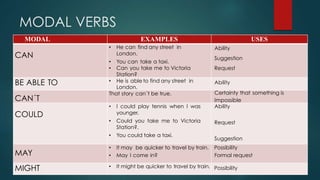
MODAL EXAMPLES USES
CAN
• He can find any street in
London.
• You can take a taxi.
• Can you take me to Victoria
Station?
Ability
Suggestion
Request
BE ABLE TO • He is able to find any street in
London.
Ability
CAN´T
That story can´t be true. Certainty that something is
Impossible
COULD
• I could play tennis when I was
younger.
• Could you take me to Victoria
Station?.
• You could take a taxi.
Ability
Request
Suggestion
MAY
• It may be quicker to travel by train.
• May I come in?
Possibility
Formal request
MIGHT • It might be quicker to travel by train. Possibility
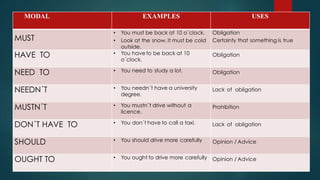
MODAL EXAMPLES USES
MUST
• You must be back at 10 o´clock.
• Look at the snow. It must be cold
outside.
Obligation
Certainty that something is true
HAVE TO • You have to be back at 10
o´clock.
Obligation
NEED TO • You need to study a lot. Obligation
NEEDN´T • You needn´t have a university
degree.
Lack of obligation
MUSTN´T • You mustn´t drive without a
licence.
Prohibition
DON´T HAVE TO • You don´t have to call a taxi. Lack of obligation
SHOULD • You should drive more carefully Opinion / Advice
OUGHT TO • You ought to drive more carefully Opinion / Advice
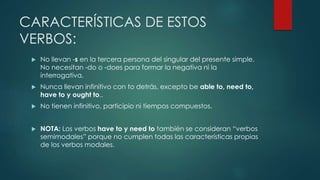
CARACTERÍSTICAS DE ESTOS
VERBOS:
 No llevan -s en la tercera persona del singular del presente simple.
No necesitan -do o -does para formar la negativa ni la
interrogativa.
 Nunca llevan infinitivo con to detrás, excepto be able to, need to,
have to y ought to..
 No tienen infinitivo, participio ni tiempos compuestos.
 NOTA: Los verbos have to y need to también se consideran “verbos
semimodales” porque no cumplen todas las características propias
de los verbos modales.
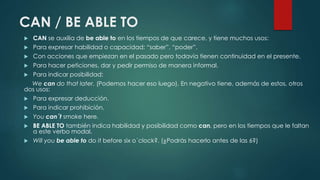
CAN / BE ABLE TO
 CAN se auxilia de be able to en los tiempos de que carece, y tiene muchos usos:
 Para expresar habilidad o capacidad: “saber”, “poder”.
 Con acciones que empiezan en el pasado pero todavía tienen continuidad en el presente.
 Para hacer peticiones, dar y pedir permiso de manera informal.
 Para indicar posibilidad:
We can do that later. (Podemos hacer eso luego). En negativo tiene, además de estos, otros
dos usos:
 Para expresar deducción.
 Para indicar prohibición.
 You can´t smoke here.
 BE ABLE TO también indica habilidad y posibilidad como can, pero en los tiempos que le faltan
a este verbo modal.
 Will you be able to do it before six o´clock?. (¿Podrás hacerlo antes de las 6?)
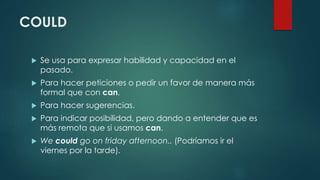
COULD
 Se usa para expresar habilidad y capacidad en el
pasado.
 Para hacer peticiones o pedir un favor de manera más
formal que con can.
 Para hacer sugerencias.
 Para indicar posibilidad, pero dando a entender que es
más remota que si usamos can.
 We could go on friday afternoon.. (Podríamos ir el
viernes por la tarde).
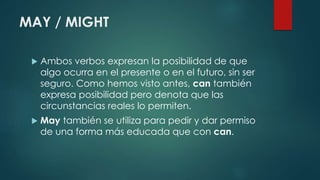
MAY / MIGHT
 Ambos verbos expresan la posibilidad de que
algo ocurra en el presente o en el futuro, sin ser
seguro. Como hemos visto antes, can también
expresa posibilidad pero denota que las
circunstancias reales lo permiten.
 May también se utiliza para pedir y dar permiso
de una forma más educada que con can.
MUST / HAVE TO
 Must sólo tiene presente, así que para el resto de los
tiempos se usa have to.
Los dos verbos expresan necesidad y obligación, pero con
must la necesidad es más fuerte.
Cuando queremos suavizar la frase utilizamos have to.
You must take a decision as soon as possible. (Debes
tomar una decisión lo antes posible)
She has to work tomorrow. (Tiene que trabajar mañana)
 Must sirve para expresar una conclusión lógica.
NEED TO / NEEDN´T
 Need to expresa obligación o necesidad.
 Needn´t indica ausencia de obligación o
necesidad.
MUSTN´T / DON´T HAVE TO
 Mustn´t indica prohibición.
 Don´t have to tiene un valor totalmente distinto
pues significa ausencia de necesidad, igual que
needn´t.
You don´t have to wash the dishes. (No tienes por
qué lavar los platos / no es necesario).
SHOULD / OUGHT TO
 Se pueden utilizar indistintamente para
dar consejos y hacer recomendaciones,
aunque should es mucho más frecuente.
Ought to apenas se usa en negativa e
interrogativa.
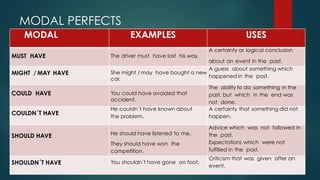
MODAL EXAMPLES USES
MUST HAVE The driver must have lost his way.
A certainty or logical conclusion
about an event in the past.
MIGHT / MAY HAVE She might / may have bought a new
car.
A guess about something which
happened in the past.
COULD HAVE You could have avoided that
accident.
The ability to do something in the
past, but which in the end was
not done.
COULDN´T HAVE
He couldn´t have known about
the problem.
A certainty that something did not
happen.
SHOULD HAVE He should have listened to me.
They should have won the
competition.
Advice which was not followed in
the past.
Expectations which were not
fulfilled in the past.
SHOULDN´T HAVE You shouldn´t have gone on foot.
Criticism that was given after an
event.
MODAL PERFECTS
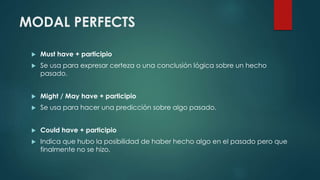
MODAL PERFECTS
 Must have + participio
 Se usa para expresar certeza o una conclusión lógica sobre un hecho
pasado.
 Might / May have + participio
 Se usa para hacer una predicción sobre algo pasado.
 Could have + participio
 Indica que hubo la posibilidad de haber hecho algo en el pasado pero que
finalmente no se hizo.
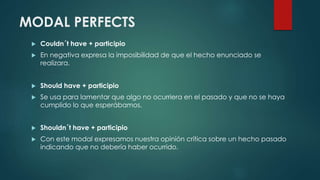
MODAL PERFECTS
 Couldn´t have + participio
 En negativa expresa la imposibilidad de que el hecho enunciado se
realizara.
 Should have + participio
 Se usa para lamentar que algo no ocurriera en el pasado y que no se haya
cumplido lo que esperábamos.
 Shouldn´t have + participio
 Con este modal expresamos nuestra opinión crítica sobre un hecho pasado
indicando que no debería haber ocurrido.

Modal verbs

  • 1.
    MODAL VERBS A modalverb is also known as a helping verb. It gives additional information about the main verb that follows it.
  • 2.
    MODAL VERBS MODAL EXAMPLESUSES CAN • He can find any street in London. • You can take a taxi. • Can you take me to Victoria Station? Ability Suggestion Request BE ABLE TO • He is able to find any street in London. Ability CAN´T That story can´t be true. Certainty that something is Impossible COULD • I could play tennis when I was younger. • Could you take me to Victoria Station?. • You could take a taxi. Ability Request Suggestion MAY • It may be quicker to travel by train. • May I come in? Possibility Formal request MIGHT • It might be quicker to travel by train. Possibility
  • 3.
    MODAL EXAMPLES USES MUST •You must be back at 10 o´clock. • Look at the snow. It must be cold outside. Obligation Certainty that something is true HAVE TO • You have to be back at 10 o´clock. Obligation NEED TO • You need to study a lot. Obligation NEEDN´T • You needn´t have a university degree. Lack of obligation MUSTN´T • You mustn´t drive without a licence. Prohibition DON´T HAVE TO • You don´t have to call a taxi. Lack of obligation SHOULD • You should drive more carefully Opinion / Advice OUGHT TO • You ought to drive more carefully Opinion / Advice
  • 4.
    CARACTERÍSTICAS DE ESTOS VERBOS: No llevan -s en la tercera persona del singular del presente simple. No necesitan -do o -does para formar la negativa ni la interrogativa.  Nunca llevan infinitivo con to detrás, excepto be able to, need to, have to y ought to..  No tienen infinitivo, participio ni tiempos compuestos.  NOTA: Los verbos have to y need to también se consideran “verbos semimodales” porque no cumplen todas las características propias de los verbos modales.
  • 5.
    CAN / BEABLE TO  CAN se auxilia de be able to en los tiempos de que carece, y tiene muchos usos:  Para expresar habilidad o capacidad: “saber”, “poder”.  Con acciones que empiezan en el pasado pero todavía tienen continuidad en el presente.  Para hacer peticiones, dar y pedir permiso de manera informal.  Para indicar posibilidad: We can do that later. (Podemos hacer eso luego). En negativo tiene, además de estos, otros dos usos:  Para expresar deducción.  Para indicar prohibición.  You can´t smoke here.  BE ABLE TO también indica habilidad y posibilidad como can, pero en los tiempos que le faltan a este verbo modal.  Will you be able to do it before six o´clock?. (¿Podrás hacerlo antes de las 6?)
  • 6.
    COULD  Se usapara expresar habilidad y capacidad en el pasado.  Para hacer peticiones o pedir un favor de manera más formal que con can.  Para hacer sugerencias.  Para indicar posibilidad, pero dando a entender que es más remota que si usamos can.  We could go on friday afternoon.. (Podríamos ir el viernes por la tarde).
  • 7.
    MAY / MIGHT Ambos verbos expresan la posibilidad de que algo ocurra en el presente o en el futuro, sin ser seguro. Como hemos visto antes, can también expresa posibilidad pero denota que las circunstancias reales lo permiten.  May también se utiliza para pedir y dar permiso de una forma más educada que con can.
  • 8.
    MUST / HAVETO  Must sólo tiene presente, así que para el resto de los tiempos se usa have to. Los dos verbos expresan necesidad y obligación, pero con must la necesidad es más fuerte. Cuando queremos suavizar la frase utilizamos have to. You must take a decision as soon as possible. (Debes tomar una decisión lo antes posible) She has to work tomorrow. (Tiene que trabajar mañana)  Must sirve para expresar una conclusión lógica.
  • 9.
    NEED TO /NEEDN´T  Need to expresa obligación o necesidad.  Needn´t indica ausencia de obligación o necesidad.
  • 10.
    MUSTN´T / DON´THAVE TO  Mustn´t indica prohibición.  Don´t have to tiene un valor totalmente distinto pues significa ausencia de necesidad, igual que needn´t. You don´t have to wash the dishes. (No tienes por qué lavar los platos / no es necesario).
  • 11.
    SHOULD / OUGHTTO  Se pueden utilizar indistintamente para dar consejos y hacer recomendaciones, aunque should es mucho más frecuente. Ought to apenas se usa en negativa e interrogativa.
  • 12.
    MODAL EXAMPLES USES MUSTHAVE The driver must have lost his way. A certainty or logical conclusion about an event in the past. MIGHT / MAY HAVE She might / may have bought a new car. A guess about something which happened in the past. COULD HAVE You could have avoided that accident. The ability to do something in the past, but which in the end was not done. COULDN´T HAVE He couldn´t have known about the problem. A certainty that something did not happen. SHOULD HAVE He should have listened to me. They should have won the competition. Advice which was not followed in the past. Expectations which were not fulfilled in the past. SHOULDN´T HAVE You shouldn´t have gone on foot. Criticism that was given after an event. MODAL PERFECTS
  • 13.
    MODAL PERFECTS  Musthave + participio  Se usa para expresar certeza o una conclusión lógica sobre un hecho pasado.  Might / May have + participio  Se usa para hacer una predicción sobre algo pasado.  Could have + participio  Indica que hubo la posibilidad de haber hecho algo en el pasado pero que finalmente no se hizo.
  • 14.
    MODAL PERFECTS  Couldn´thave + participio  En negativa expresa la imposibilidad de que el hecho enunciado se realizara.  Should have + participio  Se usa para lamentar que algo no ocurriera en el pasado y que no se haya cumplido lo que esperábamos.  Shouldn´t have + participio  Con este modal expresamos nuestra opinión crítica sobre un hecho pasado indicando que no debería haber ocurrido.