


MODAL VERBS
CARACTERÍSTICAS GENERALES
- Son verbos defectivos (tienen defectos).
- Son invariables; tienen la misma forma para
todas las personas.
- No necesitan del verbo auxiliar do para hacer la
negativa e interrogativa.
- Siempre van seguidos de un verbo en infinitivo
- Be able to y have to no cumplen todas estas
características pero sí algunos de sus usos
(habilidad, obligación). Estas dos formas verbales
suplen las formas de las que carecen can y
must.
MODALES SIMPLES
CAN, CAN'T, COULD,
   BE ABLE TO
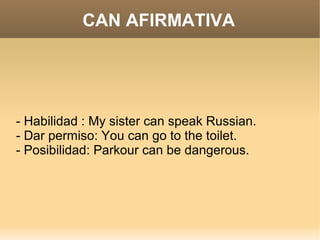
CAN AFIRMATIVA


- Habilidad : My sister can speak Russian.
- Dar permiso: You can go to the toilet.
- Posibilidad: Parkour can be dangerous.
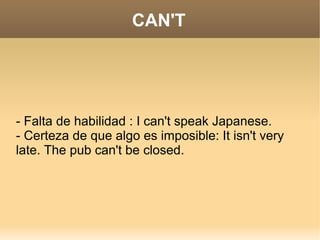
CAN'T


- Falta de habilidad : I can't speak Japanese.
- Certeza de que algo es imposible: It isn't very
late. The pub can't be closed.
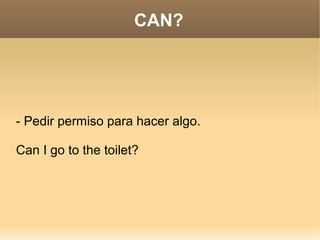
CAN?


- Pedir permiso para hacer algo.

Can I go to the toilet?
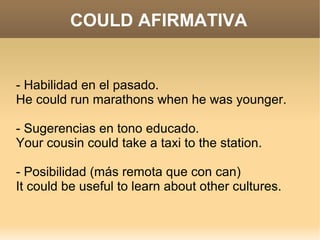
COULD AFIRMATIVA


- Habilidad en el pasado.
He could run marathons when he was younger.

- Sugerencias en tono educado.
Your cousin could take a taxi to the station.

- Posibilidad (más remota que con can)
It could be useful to learn about other cultures.
COULD?


- Peticiones educadas.

Could you help me with the homework?
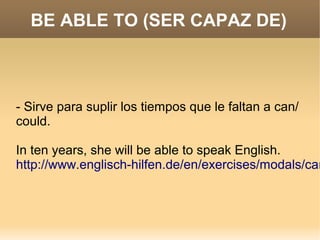
BE ABLE TO (SER CAPAZ DE)


- Sirve para suplir los tiempos que le faltan a can/
could.

In ten years, she will be able to speak English.
http://www.englisch-hilfen.de/en/exercises/modals/can
MUST, HAVE TO
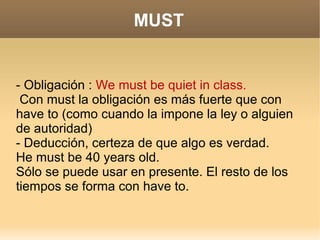
MUST


- Obligación : We must be quiet in class.
 Con must la obligación es más fuerte que con
have to (como cuando la impone la ley o alguien
de autoridad)
- Deducción, certeza de que algo es verdad.
He must be 40 years old.
Sólo se puede usar en presente. El resto de los
tiempos se forma con have to.
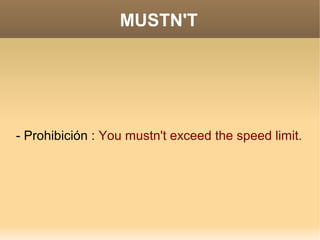
MUSTN'T


- Prohibición : You mustn't exceed the speed limit.
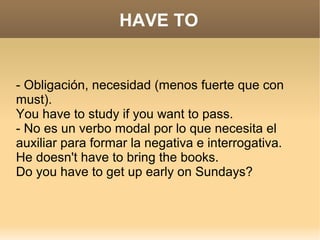
HAVE TO


- Obligación, necesidad (menos fuerte que con
must).
You have to study if you want to pass.
- No es un verbo modal por lo que necesita el
auxiliar para formar la negativa e interrogativa.
He doesn't have to bring the books.
Do you have to get up early on Sundays?
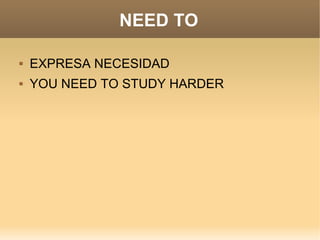
NEED TO

   EXPRESA NECESIDAD
   YOU NEED TO STUDY HARDER
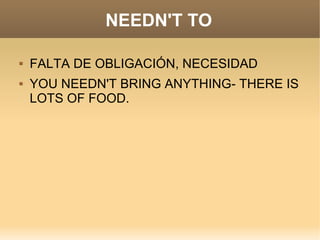
NEEDN'T TO

   FALTA DE OBLIGACIÓN, NECESIDAD
   YOU NEEDN'T BRING ANYTHING- THERE IS
    LOTS OF FOOD.
SHOULD/ OUGHT TO

   INDICAN CONSEJO
   MY FRIEND OUGHT TO IMPROVE HIS
    MANNERS.
   YOU SHOULD STUDY HARDER IF YOU
    WANT TO PASS.
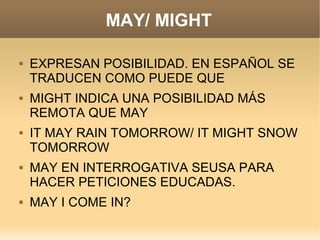
MAY/ MIGHT

   EXPRESAN POSIBILIDAD. EN ESPAÑOL SE
    TRADUCEN COMO PUEDE QUE
   MIGHT INDICA UNA POSIBILIDAD MÁS
    REMOTA QUE MAY
   IT MAY RAIN TOMORROW/ IT MIGHT SNOW
    TOMORROW
   MAY EN INTERROGATIVA SEUSA PARA
    HACER PETICIONES EDUCADAS.
   MAY I COME IN?
WOULD

   SE USA PARA HACER PETICIONES
    FORMALES Y OFRECIMIENTOS.
   WOULD YOU OPEN THE WINDOW, PLEASE?
   WOULD YOU LIKE SOMETHING TO DRINK?
ACTIVIDADES ON-LINE

   http://a4esl.org/q/h/0101/ig-modals.html
   http://www.englishexercises.org/makeagame/viewg
   http://www.englishexercises.org/makeagame/vi
    ewgame.asp?id=1793
MODALES PERFECTOS
COULD HAVE+ PARTICIPIO PASADO
   EXPRESA HABILIDAD PARA HABER HECHO
    ALGO EN EL PASADO PERO NO SE HIZO.
   IT WAS A STUPID THING TO DO. YOU
    COULD HAVE HURT YOURSELF
                  PARTICIPIO DE PASADO
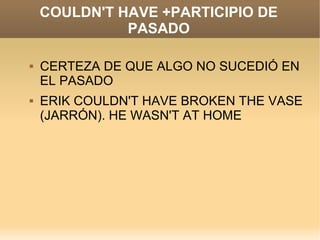
COULDN'T HAVE +PARTICIPIO DE
              PASADO

   CERTEZA DE QUE ALGO NO SUCEDIÓ EN
    EL PASADO
   ERIK COULDN'T HAVE BROKEN THE VASE
    (JARRÓN). HE WASN'T AT HOME
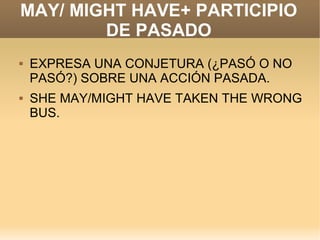
MAY/ MIGHT HAVE+ PARTICIPIO
        DE PASADO
   EXPRESA UNA CONJETURA (¿PASÓ O NO
    PASÓ?) SOBRE UNA ACCIÓN PASADA.
   SHE MAY/MIGHT HAVE TAKEN THE WRONG
    BUS.
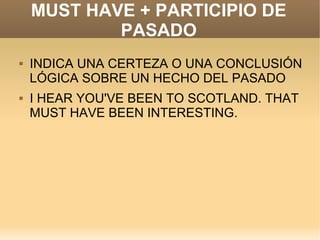
MUST HAVE + PARTICIPIO DE
            PASADO
   INDICA UNA CERTEZA O UNA CONCLUSIÓN
    LÓGICA SOBRE UN HECHO DEL PASADO
   I HEAR YOU'VE BEEN TO SCOTLAND. THAT
    MUST HAVE BEEN INTERESTING.

Modal verbs (2)

  • 1.
  • 2.
    CARACTERÍSTICAS GENERALES - Sonverbos defectivos (tienen defectos). - Son invariables; tienen la misma forma para todas las personas. - No necesitan del verbo auxiliar do para hacer la negativa e interrogativa. - Siempre van seguidos de un verbo en infinitivo - Be able to y have to no cumplen todas estas características pero sí algunos de sus usos (habilidad, obligación). Estas dos formas verbales suplen las formas de las que carecen can y must.
  • 3.
  • 4.
  • 5.
    CAN AFIRMATIVA - Habilidad: My sister can speak Russian. - Dar permiso: You can go to the toilet. - Posibilidad: Parkour can be dangerous.
  • 6.
    CAN'T - Falta dehabilidad : I can't speak Japanese. - Certeza de que algo es imposible: It isn't very late. The pub can't be closed.
  • 7.
    CAN? - Pedir permisopara hacer algo. Can I go to the toilet?
  • 8.
    COULD AFIRMATIVA - Habilidaden el pasado. He could run marathons when he was younger. - Sugerencias en tono educado. Your cousin could take a taxi to the station. - Posibilidad (más remota que con can) It could be useful to learn about other cultures.
  • 9.
    COULD? - Peticiones educadas. Couldyou help me with the homework?
  • 10.
    BE ABLE TO(SER CAPAZ DE) - Sirve para suplir los tiempos que le faltan a can/ could. In ten years, she will be able to speak English. http://www.englisch-hilfen.de/en/exercises/modals/can
  • 11.
  • 12.
    MUST - Obligación :We must be quiet in class. Con must la obligación es más fuerte que con have to (como cuando la impone la ley o alguien de autoridad) - Deducción, certeza de que algo es verdad. He must be 40 years old. Sólo se puede usar en presente. El resto de los tiempos se forma con have to.
  • 13.
    MUSTN'T - Prohibición :You mustn't exceed the speed limit.
  • 14.
    HAVE TO - Obligación,necesidad (menos fuerte que con must). You have to study if you want to pass. - No es un verbo modal por lo que necesita el auxiliar para formar la negativa e interrogativa. He doesn't have to bring the books. Do you have to get up early on Sundays?
  • 15.
    NEED TO  EXPRESA NECESIDAD  YOU NEED TO STUDY HARDER
  • 16.
    NEEDN'T TO  FALTA DE OBLIGACIÓN, NECESIDAD  YOU NEEDN'T BRING ANYTHING- THERE IS LOTS OF FOOD.
  • 17.
    SHOULD/ OUGHT TO  INDICAN CONSEJO  MY FRIEND OUGHT TO IMPROVE HIS MANNERS.  YOU SHOULD STUDY HARDER IF YOU WANT TO PASS.
  • 18.
    MAY/ MIGHT  EXPRESAN POSIBILIDAD. EN ESPAÑOL SE TRADUCEN COMO PUEDE QUE  MIGHT INDICA UNA POSIBILIDAD MÁS REMOTA QUE MAY  IT MAY RAIN TOMORROW/ IT MIGHT SNOW TOMORROW  MAY EN INTERROGATIVA SEUSA PARA HACER PETICIONES EDUCADAS.  MAY I COME IN?
  • 19.
    WOULD  SE USA PARA HACER PETICIONES FORMALES Y OFRECIMIENTOS.  WOULD YOU OPEN THE WINDOW, PLEASE?  WOULD YOU LIKE SOMETHING TO DRINK?
  • 20.
    ACTIVIDADES ON-LINE  http://a4esl.org/q/h/0101/ig-modals.html  http://www.englishexercises.org/makeagame/viewg  http://www.englishexercises.org/makeagame/vi ewgame.asp?id=1793
  • 21.
  • 22.
    COULD HAVE+ PARTICIPIOPASADO  EXPRESA HABILIDAD PARA HABER HECHO ALGO EN EL PASADO PERO NO SE HIZO.  IT WAS A STUPID THING TO DO. YOU COULD HAVE HURT YOURSELF PARTICIPIO DE PASADO
  • 23.
    COULDN'T HAVE +PARTICIPIODE PASADO  CERTEZA DE QUE ALGO NO SUCEDIÓ EN EL PASADO  ERIK COULDN'T HAVE BROKEN THE VASE (JARRÓN). HE WASN'T AT HOME
  • 24.
    MAY/ MIGHT HAVE+PARTICIPIO DE PASADO  EXPRESA UNA CONJETURA (¿PASÓ O NO PASÓ?) SOBRE UNA ACCIÓN PASADA.  SHE MAY/MIGHT HAVE TAKEN THE WRONG BUS.
  • 25.
    MUST HAVE +PARTICIPIO DE PASADO  INDICA UNA CERTEZA O UNA CONCLUSIÓN LÓGICA SOBRE UN HECHO DEL PASADO  I HEAR YOU'VE BEEN TO SCOTLAND. THAT MUST HAVE BEEN INTERESTING.