TEBAEV «HUILOAPAN»30ETH0310ZOSCAR CASTILLO SANTIAGOCAMPOS DORADOS: EL ESTER DE METILO DE LA COLZA, EL RME4º SEMESTRE GRUPO “A”WWW.OSCARBIOL.BLOGSPOT.COMNOGALES, VER.
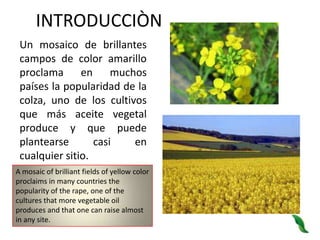
INTRODUCCIÒNUn mosaico de brillantes campos de color amarillo proclama en muchos países la popularidad de la colza, uno de los cultivos que más aceite vegetal produce y que puede plantearse casi en cualquier sitio.A mosaic of brilliant fields of yellow color proclaims in many countries the popularity of the rape, one of the cultures that more vegetable oil produces and that one can raise almost in any site.
La colza es de la familia de la mostaza. Su nombre científico es Brassicanapus, pero su nombre común viene de rapa, que es el termino latino que determina al nabo.The rape is of the family of the mustard. His scientific name is Brassicanapus, but his common name comes of it cuts, that is the Latin term that it determines to the turnip.
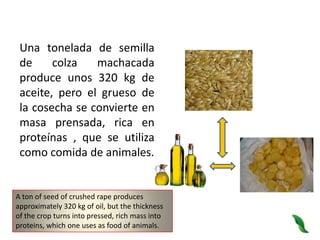
Una tonelada de semilla de colza machacada produce unos 320 kg de aceite, pero el grueso de la cosecha se convierte en masa prensada, rica en proteínas , que se utiliza como comida de animales.A ton of seed of crushed rape produces approximately 320 kg of oil, but the thickness of the crop turns into pressed, rich mass into proteins, which one uses as food of animals.
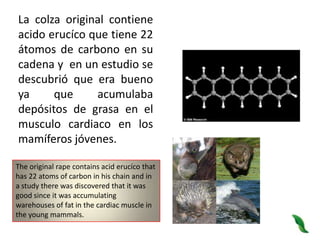
La colza original contiene acido erucíco que tiene 22 átomos de carbono en su cadena y  en un estudio se descubrió que era bueno ya que acumulaba depósitos de grasa en el musculo cardiaco en los mamíferos jóvenes.The original rape contains acid erucíco that has 22 atoms of carbon in his chain and in a study there was discovered that it was good since it was accumulating warehouses of fat in the cardiac muscle in the young mammals.
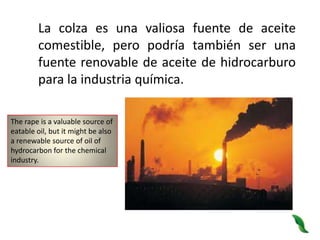
La colza es una valiosa fuente de aceite comestible, pero podría también ser una fuente renovable de aceite de hidrocarburo para la industria química.The rape is a valuable source of eatable oil, but it might be also a renewable source of oil of hydrocarbon for the chemical industry.
En los viejos tiempos (1572 aprox.) la colza se usaba  para hacer componentes de plástico, gomas sintéticas, jabón, lubricantes o se quemaba como combustible para la calefacción.In the old times (1572 Approximately) the rape was used to do components of plastic, synthetic rubbers, soap, lubricants or was burning as fuel for the heating.
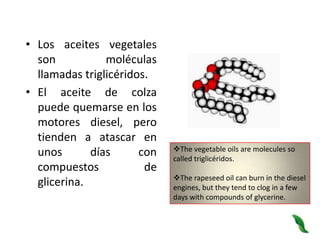
Los aceites vegetales son moléculas llamadas triglicéridos.El aceite de colza puede quemarse en los motores diesel, pero tienden a atascar en unos días con compuestos de glicerina.The vegetable oils are molecules so called triglicéridos.
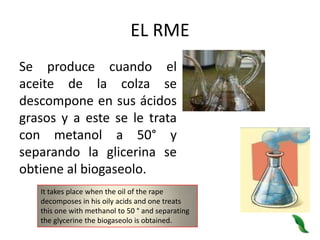
The rapeseed oil can burn in the diesel engines, but they tend to clog in a few days with compounds of glycerine.EL RMESe produce cuando el aceite de la colza se descompone en sus ácidos grasos y a este se le trata con metanol a 50° y separando la glicerina se obtiene al biogaseolo.It takes place when the oil of the rape decomposes in his oily acids and one treats this one with methanol to 50 ° and separating the glycerine the biogaseolo is obtained.
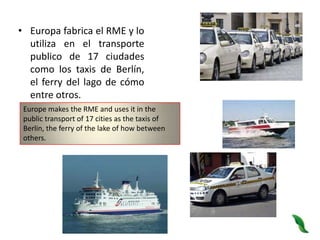
Europa fabrica el RME y lo utiliza en el transporte publico de 17 ciudades como los taxis de Berlín, el ferry del lago de cómo entre otros.Europe makes the RME and uses it in the public transport of 17 cities as the taxis of Berlin, the ferry of the lake of how between others.
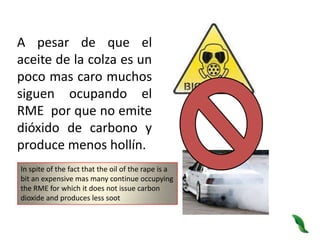
A pesar de que el aceite de la colza es un poco mas caro muchos siguen ocupando el RME  por que no emite dióxido de carbono y produce menos hollín.In spite of the fact that the oil of the rape is a bit an expensive mas many continue occupying the RME for which it does not issue carbon dioxide and produces less soot
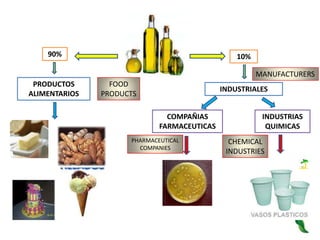
90%10%MANUFACTURERSFOODPRODUCTSPRODUCTOS ALIMENTARIOSINDUSTRIALESCOMPAÑIAS FARMACEUTICASINDUSTRIAS QUIMICASCHEMICALINDUSTRIESPHARMACEUTICALCOMPANIES
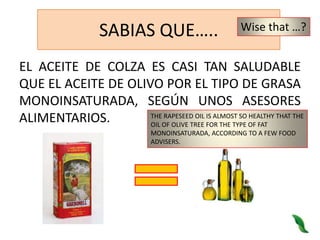
SABIAS QUE…..Wisethat …?EL ACEITE DE COLZA ES CASI TAN SALUDABLE QUE EL ACEITE DE OLIVO POR EL TIPO DE GRASA MONOINSATURADA, SEGÚN UNOS ASESORES ALIMENTARIOS.THE RAPESEED OIL IS ALMOST SO HEALTHY THAT THE OIL OF OLIVE TREE FOR THE TYPE OF FAT MONOINSATURADA, ACCORDING TO A FEW FOOD ADVISERS.
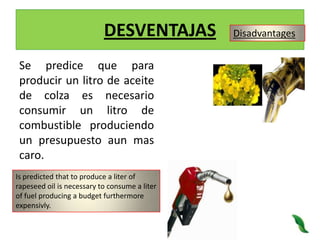
DESVENTAJASDisadvantagesSe predice que para producir un litro de aceite de colza es necesario consumir un litro de combustible produciendo un presupuesto aun mas caro.Is predicted that to produce a liter of rapeseed oil is necessary to consume a liter of fuel producing a budget furthermore expensivly.
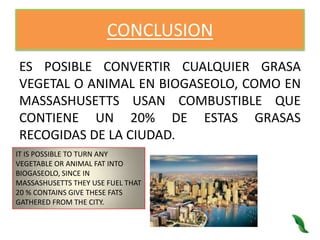
CONCLUSIONES POSIBLE CONVERTIR CUALQUIER GRASA VEGETAL O ANIMAL EN BIOGASEOLO, COMO EN MASSASHUSETTS USAN COMBUSTIBLE QUE CONTIENE UN 20% DE ESTAS GRASAS RECOGIDAS DE LA CIUDAD.IT IS POSSIBLE TO TURN ANY VEGETABLE OR ANIMAL FAT INTO BIOGASEOLO, SINCE IN MASSASHUSETTS THEY USE FUEL THAT 20 % CONTAINS GIVE THESE FATS GATHERED FROM THE CITY.
BIBLIOGRAFIAEmsley John, Moléculas en una exposición, retratos de materiales interesantes de la vida cotidiana, pág.. 258-263, edición península S. A. 200.http://www.google.com/search?um=1&hl=es&biw=1280&bih=630&tbm=isch&sa=1&q=colza&oq=colza&aq=f&aqi=g9&aql=undefined&gs_sm=e&gs_upl=5008l5572l0l2l2l0l0l0l0l316l561l2-1.1l2
BIBLIOGRAFIAhttp://www.google.com/search?um=1&hl=es&biw=1280&bih=630&tbm=isch&sa=1&q=aseite+de+colza&oq=aseite+de+colza&aq=f&aqi=&aql=undefined&gs_sm=e&gs_upl=22861l26115l0l15l12l0l2l0l0l381l2107l0.1.2.4l7http://www.google.com/search?um=1&hl=es&biw=1280&bih=630&tbm=isch&sa=1&q=panes+mantequilla&oq=panes+mantequilla&aq=f&aqi=&aql=undefined&gs_sm=e&gs_upl=14623l21477l0l21l18l0l4l1l0l503l1236l2-1.0.1.1l3
POR SU ATENCIONTHANK YOU FOR HIS ATTENTIONAutor: Oscar Castillo Santiago

Oscar castillo santiago

  • 1.
    TEBAEV «HUILOAPAN»30ETH0310ZOSCAR CASTILLOSANTIAGOCAMPOS DORADOS: EL ESTER DE METILO DE LA COLZA, EL RME4º SEMESTRE GRUPO “A”WWW.OSCARBIOL.BLOGSPOT.COMNOGALES, VER.
  • 2.
    INTRODUCCIÒNUn mosaico debrillantes campos de color amarillo proclama en muchos países la popularidad de la colza, uno de los cultivos que más aceite vegetal produce y que puede plantearse casi en cualquier sitio.A mosaic of brilliant fields of yellow color proclaims in many countries the popularity of the rape, one of the cultures that more vegetable oil produces and that one can raise almost in any site.
  • 3.
    La colza esde la familia de la mostaza. Su nombre científico es Brassicanapus, pero su nombre común viene de rapa, que es el termino latino que determina al nabo.The rape is of the family of the mustard. His scientific name is Brassicanapus, but his common name comes of it cuts, that is the Latin term that it determines to the turnip.
  • 4.
    Una tonelada desemilla de colza machacada produce unos 320 kg de aceite, pero el grueso de la cosecha se convierte en masa prensada, rica en proteínas , que se utiliza como comida de animales.A ton of seed of crushed rape produces approximately 320 kg of oil, but the thickness of the crop turns into pressed, rich mass into proteins, which one uses as food of animals.
  • 5.
    La colza originalcontiene acido erucíco que tiene 22 átomos de carbono en su cadena y en un estudio se descubrió que era bueno ya que acumulaba depósitos de grasa en el musculo cardiaco en los mamíferos jóvenes.The original rape contains acid erucíco that has 22 atoms of carbon in his chain and in a study there was discovered that it was good since it was accumulating warehouses of fat in the cardiac muscle in the young mammals.
  • 6.
    La colza esuna valiosa fuente de aceite comestible, pero podría también ser una fuente renovable de aceite de hidrocarburo para la industria química.The rape is a valuable source of eatable oil, but it might be also a renewable source of oil of hydrocarbon for the chemical industry.
  • 7.
    En los viejostiempos (1572 aprox.) la colza se usaba para hacer componentes de plástico, gomas sintéticas, jabón, lubricantes o se quemaba como combustible para la calefacción.In the old times (1572 Approximately) the rape was used to do components of plastic, synthetic rubbers, soap, lubricants or was burning as fuel for the heating.
  • 8.
    Los aceites vegetalesson moléculas llamadas triglicéridos.El aceite de colza puede quemarse en los motores diesel, pero tienden a atascar en unos días con compuestos de glicerina.The vegetable oils are molecules so called triglicéridos.
  • 9.
    The rapeseed oilcan burn in the diesel engines, but they tend to clog in a few days with compounds of glycerine.EL RMESe produce cuando el aceite de la colza se descompone en sus ácidos grasos y a este se le trata con metanol a 50° y separando la glicerina se obtiene al biogaseolo.It takes place when the oil of the rape decomposes in his oily acids and one treats this one with methanol to 50 ° and separating the glycerine the biogaseolo is obtained.
  • 10.
    Europa fabrica elRME y lo utiliza en el transporte publico de 17 ciudades como los taxis de Berlín, el ferry del lago de cómo entre otros.Europe makes the RME and uses it in the public transport of 17 cities as the taxis of Berlin, the ferry of the lake of how between others.
  • 11.
    A pesar deque el aceite de la colza es un poco mas caro muchos siguen ocupando el RME por que no emite dióxido de carbono y produce menos hollín.In spite of the fact that the oil of the rape is a bit an expensive mas many continue occupying the RME for which it does not issue carbon dioxide and produces less soot
  • 12.
  • 13.
    SABIAS QUE…..Wisethat …?ELACEITE DE COLZA ES CASI TAN SALUDABLE QUE EL ACEITE DE OLIVO POR EL TIPO DE GRASA MONOINSATURADA, SEGÚN UNOS ASESORES ALIMENTARIOS.THE RAPESEED OIL IS ALMOST SO HEALTHY THAT THE OIL OF OLIVE TREE FOR THE TYPE OF FAT MONOINSATURADA, ACCORDING TO A FEW FOOD ADVISERS.
  • 14.
    DESVENTAJASDisadvantagesSe predice quepara producir un litro de aceite de colza es necesario consumir un litro de combustible produciendo un presupuesto aun mas caro.Is predicted that to produce a liter of rapeseed oil is necessary to consume a liter of fuel producing a budget furthermore expensivly.
  • 15.
    CONCLUSIONES POSIBLE CONVERTIRCUALQUIER GRASA VEGETAL O ANIMAL EN BIOGASEOLO, COMO EN MASSASHUSETTS USAN COMBUSTIBLE QUE CONTIENE UN 20% DE ESTAS GRASAS RECOGIDAS DE LA CIUDAD.IT IS POSSIBLE TO TURN ANY VEGETABLE OR ANIMAL FAT INTO BIOGASEOLO, SINCE IN MASSASHUSETTS THEY USE FUEL THAT 20 % CONTAINS GIVE THESE FATS GATHERED FROM THE CITY.
  • 16.
    BIBLIOGRAFIAEmsley John, Moléculasen una exposición, retratos de materiales interesantes de la vida cotidiana, pág.. 258-263, edición península S. A. 200.http://www.google.com/search?um=1&hl=es&biw=1280&bih=630&tbm=isch&sa=1&q=colza&oq=colza&aq=f&aqi=g9&aql=undefined&gs_sm=e&gs_upl=5008l5572l0l2l2l0l0l0l0l316l561l2-1.1l2
  • 17.
  • 18.
    POR SU ATENCIONTHANKYOU FOR HIS ATTENTIONAutor: Oscar Castillo Santiago