SHOULD AND
SHOULDN´T
GIVING ADVICES
English departme
1. What´s should?
2. Shouldn´t (negative form)
3. Should I…? (Interrogative form)
Summary of the class.
CONTENTS
1. WHAT´S SHOULD?
Should is the second modal verb. It is really
important because is used frequently. We use it
to give advice or our opinion to someone.
Should es el segundo verbo modal. Es muy
importante porque es usado
frecuentemente. Lo usamos para
aconsejar o dar nuestra opinión a alguien.
Significa: DEBERÍAS, y siempre va
acompañado de un verbo
común!
Pronunciación: SHUD.
EXAMPLES
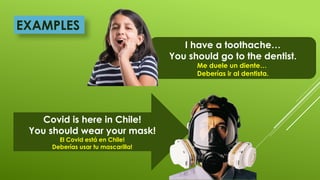
I have a toothache…
You should go to the dentist.
Me duele un diente…
Deberías ir al dentista.
Covid is here in Chile!
You should wear your mask!
El Covid está en Chile!
Deberías usar tu mascarilla!
2. Shouldn´t
(negative form)
Shouldn´t is the negative form of should. We
use it to give advice as well.
Shouldn´t es la forma negativa de should. Lo usamos
para aconsejar o advertir también.
Pronunciación: SHUDENT.
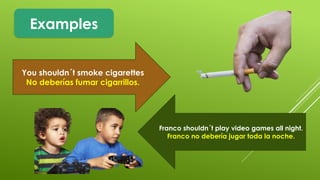
Examples
You shouldn´t smoke cigarettes
No deberías fumar cigarrillos.
Franco shouldn´t play video games all night.
Franco no debería jugar toda la noche.
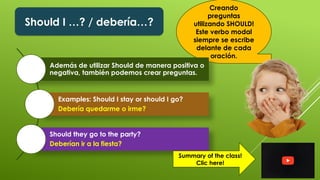
Should I …? / debería…?
Creando
preguntas
utilizando SHOULD!
Este verbo modal
siempre se escribe
delante de cada
oración.
Además de utilizar Should de manera positiva o
negativa, también podemos crear preguntas.
Examples: Should I stay or should I go?
Debería quedarme o irme?
Should they go to the party?
Deberían ir a la fiesta?
Summary of the class!
Clic here!
SHOULD /
SHOULDN´T
Write 10 sentences using SHOULD OR SHOULDN´T to give advices. Escribe 10 oraciones usando
SHOULD-SHOULDN´T para dar concejos.
You should study for the exam.
EXAMPLE
ESCRIBAMOS EN EL
PIZARRÓN!

presentacion modales should shouldnt.pptx

  • 1.
  • 2.
    1. What´s should? 2.Shouldn´t (negative form) 3. Should I…? (Interrogative form) Summary of the class. CONTENTS
  • 3.
    1. WHAT´S SHOULD? Shouldis the second modal verb. It is really important because is used frequently. We use it to give advice or our opinion to someone. Should es el segundo verbo modal. Es muy importante porque es usado frecuentemente. Lo usamos para aconsejar o dar nuestra opinión a alguien. Significa: DEBERÍAS, y siempre va acompañado de un verbo común! Pronunciación: SHUD.
  • 4.
    EXAMPLES I have atoothache… You should go to the dentist. Me duele un diente… Deberías ir al dentista. Covid is here in Chile! You should wear your mask! El Covid está en Chile! Deberías usar tu mascarilla!
  • 5.
    2. Shouldn´t (negative form) Shouldn´tis the negative form of should. We use it to give advice as well. Shouldn´t es la forma negativa de should. Lo usamos para aconsejar o advertir también. Pronunciación: SHUDENT.
  • 6.
    Examples You shouldn´t smokecigarettes No deberías fumar cigarrillos. Franco shouldn´t play video games all night. Franco no debería jugar toda la noche.
  • 7.
    Should I …?/ debería…? Creando preguntas utilizando SHOULD! Este verbo modal siempre se escribe delante de cada oración. Además de utilizar Should de manera positiva o negativa, también podemos crear preguntas. Examples: Should I stay or should I go? Debería quedarme o irme? Should they go to the party? Deberían ir a la fiesta? Summary of the class! Clic here!
  • 8.
    SHOULD / SHOULDN´T Write 10sentences using SHOULD OR SHOULDN´T to give advices. Escribe 10 oraciones usando SHOULD-SHOULDN´T para dar concejos. You should study for the exam. EXAMPLE ESCRIBAMOS EN EL PIZARRÓN!