El Pretérito
de los verbos


                1
El Pretérito:
• is a past tense (“-ed”)
• talks about what happened
• is a completed action


    I went to the store.
      I bought a shirt.
       I paid in cash.
                           2
The stem for regular verbs
in the pretérito is the
infinitive stem.
        Tomar    tom-
        Hablar   habl-
        Comer    com-
        Beber    beb-
        Abrir    abr-
        Salir     sal-
                         3
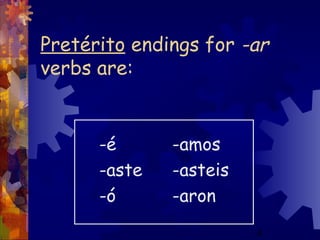
Pretérito endings for -ar
verbs are:


      -é      -amos
      -aste   -asteis
      -ó      -aron
                        4
Pretérito endings for –er / -ir
verbs are:


       -í      -imos
       -iste   -isteis
       -ió     -ieron
                         5
REMEMBER:


  • accents on the “yo” form
  and the “él / ella / Ud.” form
  •-ar / -ir “nosotros” form is
  the same in present and
  pretérito


                               6
Por ejemplo:
 (-ar verbs)


               tomé      tomamos
               tomaste   tomasteis
               tomó      tomaron
 tomar
                          7
Por ejemplo:
 (-ar verbs)


               hablé      hablamos
               hablaste   hablasteis
               habló      hablaron
 hablar
                           8
Por ejemplo:
 (-ar verbs)


            trabajé    trabajamos
            trabajaste trabajasteis
            trabajó    trabajaron
 trabajar
                          9
Por ejemplo:
(-er / -ir verbs)


               comí      comimos
               comiste   comisteis
               comió     comieron
   comer
                          10
Por ejemplo:
(-er / -ir verbs)


               volví      volvimos
               volviste   volvisteis
               volvió     volvieron
   volver
                           11
Por ejemplo:
(-er / -ir verbs)


               abrí      abrimos
               abriste   abristeis
               abrió     abrieron
   abrir
                          12
Por ejemplo:
(-er / -ir verbs)


              escribí    escribimos
              escribiste escribisteis
              escribió   escribieron
  escribir
                            13
Unos Irregulares:
Verbs ending in -car, -gar, and
-zar have a spelling change in
the “yo” form of the pretérito.

buscar   tocar   practicar
pagar    jugar   llegar
almorzar empezar comenzar

                             14
The “yo” form of the pretérito
changes to conserve the sound
of the infinitive:


  -car     “-qué”   “tocé”
  -gar     “-gué”   “jugé”
  -zar     “-cé”    “rezé”


                         15
Por ejemplo:
                        (-car verbs)


busqué     buscamos
buscaste   buscasteis
buscó      buscaron
                             buscar
                               16
Por ejemplo:
                      (-car verbs)


practiqué   practicamos
practicaste practicasteis
practicó    practicaron
                            practicar
                               17
Por ejemplo:
                      (-gar verbs)


pagué     pagamos
pagaste   pagasteis
pagó      pagaron
                            pagar
                             18
Por ejemplo:
                      (-gar verbs)


jugué     jugamos
jugaste   jugasteis
jugó      jugaron
                            jugar
                             19
Por ejemplo:
                    (-zar verbs)


almorcé    almorzamos
almorzaste almorzasteis
almorzó    almorzaron
                          almorzar
                            20
Por ejemplo:
                    (-zar verbs)


empecé      empezamos
empezaste   empezasteis
empezó      empezaron
                          empezar
                            21

Preterito1

  • 1.
  • 2.
    El Pretérito: • isa past tense (“-ed”) • talks about what happened • is a completed action I went to the store. I bought a shirt. I paid in cash. 2
  • 3.
    The stem forregular verbs in the pretérito is the infinitive stem. Tomar tom- Hablar habl- Comer com- Beber beb- Abrir abr- Salir sal- 3
  • 4.
    Pretérito endings for-ar verbs are: -é -amos -aste -asteis -ó -aron 4
  • 5.
    Pretérito endings for–er / -ir verbs are: -í -imos -iste -isteis -ió -ieron 5
  • 6.
    REMEMBER: •accents on the “yo” form and the “él / ella / Ud.” form •-ar / -ir “nosotros” form is the same in present and pretérito 6
  • 7.
    Por ejemplo: (-arverbs) tomé tomamos tomaste tomasteis tomó tomaron tomar 7
  • 8.
    Por ejemplo: (-arverbs) hablé hablamos hablaste hablasteis habló hablaron hablar 8
  • 9.
    Por ejemplo: (-arverbs) trabajé trabajamos trabajaste trabajasteis trabajó trabajaron trabajar 9
  • 10.
    Por ejemplo: (-er /-ir verbs) comí comimos comiste comisteis comió comieron comer 10
  • 11.
    Por ejemplo: (-er /-ir verbs) volví volvimos volviste volvisteis volvió volvieron volver 11
  • 12.
    Por ejemplo: (-er /-ir verbs) abrí abrimos abriste abristeis abrió abrieron abrir 12
  • 13.
    Por ejemplo: (-er /-ir verbs) escribí escribimos escribiste escribisteis escribió escribieron escribir 13
  • 14.
    Unos Irregulares: Verbs endingin -car, -gar, and -zar have a spelling change in the “yo” form of the pretérito. buscar tocar practicar pagar jugar llegar almorzar empezar comenzar 14
  • 15.
    The “yo” formof the pretérito changes to conserve the sound of the infinitive: -car “-qué” “tocé” -gar “-gué” “jugé” -zar “-cé” “rezé” 15
  • 16.
    Por ejemplo: (-car verbs) busqué buscamos buscaste buscasteis buscó buscaron buscar 16
  • 17.
    Por ejemplo: (-car verbs) practiqué practicamos practicaste practicasteis practicó practicaron practicar 17
  • 18.
    Por ejemplo: (-gar verbs) pagué pagamos pagaste pagasteis pagó pagaron pagar 18
  • 19.
    Por ejemplo: (-gar verbs) jugué jugamos jugaste jugasteis jugó jugaron jugar 19
  • 20.
    Por ejemplo: (-zar verbs) almorcé almorzamos almorzaste almorzasteis almorzó almorzaron almorzar 20
  • 21.
    Por ejemplo: (-zar verbs) empecé empezamos empezaste empezasteis empezó empezaron empezar 21