NATURAL SCIENCE
UNIT 1. THE HUMAN BODY - EL CUERPO HUMANO
BODY SYSTEMS - LOS SISTEMAS DEL CUERPO HUMANO
arteries veins
Circulatory system
The circulatory system moves blood through the
heart and around the body in the arteries and
veins. Blood gives us body nutrients and
oxygen.
El sistema circulatorio lleva la sangre a través
del corazón a todo el cuerpo en las arterias y
las venas. La sangre nos aporta nutrientes y
oxígeno.
heart
mouth nose lungs
Respiratory system
The respiratory system is a group of
organs that work together to help us
breathe. El sistema respiratorio es un
conjunto de órganos que trabajan juntos
para que podamos respirar.
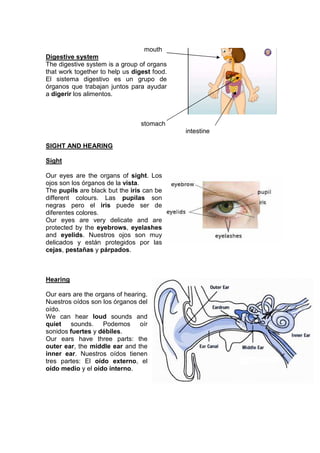
mouth
Digestive system
The digestive system is a group of organs
that work together to help us digest food.
El sistema digestivo es un grupo de
órganos que trabajan juntos para ayudar
a digerir los alimentos.
stomach
intestine
SIGHT AND HEARING
Sight
Our eyes are the organs of sight. Los
ojos son los órganos de la vista.
The pupils are black but the iris can be
different colours. Las pupilas son
negras pero el iris puede ser de
diferentes colores.
Our eyes are very delicate and are
protected by the eyebrows, eyelashes
and eyelids. Nuestros ojos son muy
delicados y están protegidos por las
cejas, pestañas y párpados.
Hearing
Our ears are the organs of hearing.
Nuestros oídos son los órganos del
oído.
We can hear loud sounds and
quiet sounds. Podemos oír
sonidos fuertes y débiles.
Our ears have three parts: the
outer ear, the middle ear and the
inner ear. Nuestros oídos tienen
tres partes: El oído externo, el
oído medio y el oído interno.
SMELL, TASTE AND TOUCH - OLFATO, GUSTO, TACTO
Our nose and tongue work together. Nuestra nariz y lengua trabajan juntas.
Smell - Olfato
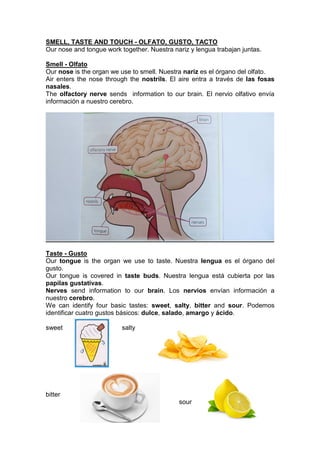
Our nose is the organ we use to smell. Nuestra nariz es el órgano del olfato.
Air enters the nose through the nostrils. El aire entra a través de las fosas
nasales.
The olfactory nerve sends information to our brain. El nervio olfativo envía
información a nuestro cerebro.
Taste - Gusto
Our tongue is the organ we use to taste. Nuestra lengua es el órgano del
gusto.
Our tongue is covered in taste buds. Nuestra lengua está cubierta por las
papilas gustativas.
Nerves send information to our brain. Los nervios envían información a
nuestro cerebro.
We can identify four basic tastes: sweet, salty, bitter and sour. Podemos
identificar cuatro gustos básicos: dulce, salado, amargo y ácido.
sweet salty
bitter
sour
Our skin - Nuestra piel
Touch - Tacto
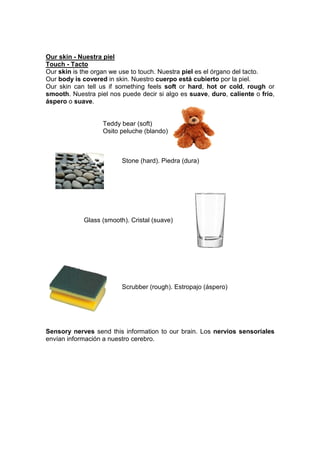
Our skin is the organ we use to touch. Nuestra piel es el órgano del tacto.
Our body is covered in skin. Nuestro cuerpo está cubierto por la piel.
Our skin can tell us if something feels soft or hard, hot or cold, rough or
smooth. Nuestra piel nos puede decir si algo es suave, duro, caliente o frío,
áspero o suave.
Teddy bear (soft)
Osito peluche (blando)
Stone (hard). Piedra (dura)
Glass (smooth). Cristal (suave)
Scrubber (rough). Estropajo (áspero)
Sensory nerves send this information to our brain. Los nervios sensoriales
envían información a nuestro cerebro.

Resumen unit 1. natural science 3º

  • 1.
    NATURAL SCIENCE UNIT 1.THE HUMAN BODY - EL CUERPO HUMANO BODY SYSTEMS - LOS SISTEMAS DEL CUERPO HUMANO arteries veins Circulatory system The circulatory system moves blood through the heart and around the body in the arteries and veins. Blood gives us body nutrients and oxygen. El sistema circulatorio lleva la sangre a través del corazón a todo el cuerpo en las arterias y las venas. La sangre nos aporta nutrientes y oxígeno. heart mouth nose lungs Respiratory system The respiratory system is a group of organs that work together to help us breathe. El sistema respiratorio es un conjunto de órganos que trabajan juntos para que podamos respirar.
  • 2.
    mouth Digestive system The digestivesystem is a group of organs that work together to help us digest food. El sistema digestivo es un grupo de órganos que trabajan juntos para ayudar a digerir los alimentos. stomach intestine SIGHT AND HEARING Sight Our eyes are the organs of sight. Los ojos son los órganos de la vista. The pupils are black but the iris can be different colours. Las pupilas son negras pero el iris puede ser de diferentes colores. Our eyes are very delicate and are protected by the eyebrows, eyelashes and eyelids. Nuestros ojos son muy delicados y están protegidos por las cejas, pestañas y párpados. Hearing Our ears are the organs of hearing. Nuestros oídos son los órganos del oído. We can hear loud sounds and quiet sounds. Podemos oír sonidos fuertes y débiles. Our ears have three parts: the outer ear, the middle ear and the inner ear. Nuestros oídos tienen tres partes: El oído externo, el oído medio y el oído interno.
  • 3.
    SMELL, TASTE ANDTOUCH - OLFATO, GUSTO, TACTO Our nose and tongue work together. Nuestra nariz y lengua trabajan juntas. Smell - Olfato Our nose is the organ we use to smell. Nuestra nariz es el órgano del olfato. Air enters the nose through the nostrils. El aire entra a través de las fosas nasales. The olfactory nerve sends information to our brain. El nervio olfativo envía información a nuestro cerebro. Taste - Gusto Our tongue is the organ we use to taste. Nuestra lengua es el órgano del gusto. Our tongue is covered in taste buds. Nuestra lengua está cubierta por las papilas gustativas. Nerves send information to our brain. Los nervios envían información a nuestro cerebro. We can identify four basic tastes: sweet, salty, bitter and sour. Podemos identificar cuatro gustos básicos: dulce, salado, amargo y ácido. sweet salty bitter sour
  • 4.
    Our skin -Nuestra piel Touch - Tacto Our skin is the organ we use to touch. Nuestra piel es el órgano del tacto. Our body is covered in skin. Nuestro cuerpo está cubierto por la piel. Our skin can tell us if something feels soft or hard, hot or cold, rough or smooth. Nuestra piel nos puede decir si algo es suave, duro, caliente o frío, áspero o suave. Teddy bear (soft) Osito peluche (blando) Stone (hard). Piedra (dura) Glass (smooth). Cristal (suave) Scrubber (rough). Estropajo (áspero) Sensory nerves send this information to our brain. Los nervios sensoriales envían información a nuestro cerebro.