Oscar ARANDA Mora
TEMARIO
 Introducción

 Briefing de Despegue

 Briefing de Aproximación

 Briefing de Aterrizaje
TEMARIO
 Introducción

 Briefing de Despegue

 Briefing de Aproximación

 Briefing de Aterrizaje
Introducción
    ¿POR QUÉ LOS BRIEFINGS?

   Definen Cursos de Acción

   Permiten verificar ítems

   Permiten asignar funciones

   Predisponen la mente
Introducción
              GENERALIDADES

Conducting effective briefings is an essential
part of flight preparation.
Without proper preparation, a crew will not
have the necessary situational awareness to
fly at maximum effectiveness and safety.
Briefings are necessary at various points in
the flight from before taxiing to the departure
runway through taxiing to the arrival gate.
Introducción
               GENERALIDADES
• Briefings should be adapted to the specific
  conditions of the flight and focus on the items
  that are relevant for the particular takeoff,
  departure, cruise or approach and landing.
• Briefings should be interactive and allow
  for dialogue between the PF, PNF and other
  crewmembers.
• Briefings should be conducted during low-
  workload periods.
Introducción
               GENERALIDADES
• Briefings should be conducted even if the
  crew has completed the same flight many
  times in the past. Vary the briefing approach
  or emphasis when on familiar routes to
  promote thinking and to avoid doing things
  by habit.
• Briefings should cover procedures for
  unexpected events.
• Pilots should not fixate on one particular
  aspect of information in a briefing, as other
  important information may be missed.
TEMARIO
 Introducción

 Briefing de Despegue

 Briefing de Aproximación

 Briefing de Aterrizaje
Briefing de Despegue
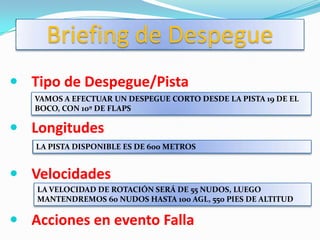
 Tipo de Despegue/Pista
   VAMOS A EFECTUAR UN DESPEGUE CORTO DESDE LA PISTA 19 DE EL
   BOCO, CON 10º DE FLAPS

 Longitudes
   LA PISTA DISPONIBLE ES DE 600 METROS


 Velocidades
   LA VELOCIDAD DE ROTACIÓN SERÁ DE 55 NUDOS, LUEGO
   MANTENDREMOS 60 NUDOS HASTA 100 AGL, 550 PIES DE ALTITUD

 Acciones en evento Falla
Briefing de Despegue
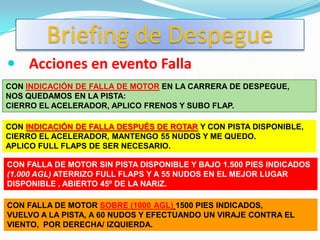
 Acciones en evento Falla
CON INDICACIÓN DE FALLA DE MOTOR EN LA CARRERA DE DESPEGUE,
NOS QUEDAMOS EN LA PISTA:
CIERRO EL ACELERADOR, APLICO FRENOS Y SUBO FLAP.

CON INDICACIÓN DE FALLA DESPUÉS DE ROTAR Y CON PISTA DISPONIBLE,
CIERRO EL ACELERADOR, MANTENGO 55 NUDOS Y ME QUEDO.
APLICO FULL FLAPS DE SER NECESARIO.

CON FALLA DE MOTOR SIN PISTA DISPONIBLE Y BAJO 1.500 PIES INDICADOS
(1.000 AGL) ATERRIZO FULL FLAPS Y A 55 NUDOS EN EL MEJOR LUGAR
DISPONIBLE , ABIERTO 45º DE LA NARIZ.

CON FALLA DE MOTOR SOBRE (1000 AGL) 1500 PIES INDICADOS,
VUELVO A LA PISTA, A 60 NUDOS Y EFECTUANDO UN VIRAJE CONTRA EL
VIENTO, POR DERECHA/ IZQUIERDA.
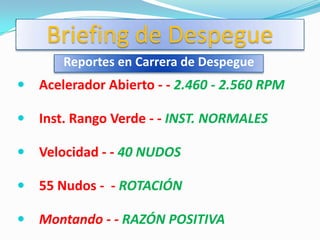
Briefing de Despegue
       Reportes en Carrera de Despegue
   Acelerador Abierto - - 2.460 - 2.560 RPM

   Inst. Rango Verde - - INST. NORMALES

   Velocidad - - 40 NUDOS

   55 Nudos - - ROTACIÓN

   Montando - - RAZÓN POSITIVA
TEMARIO
 Introducción

 Briefing de Despegue

 Briefing de Aproximación

 Briefing de Aterrizaje
TEMARIO
 Introducción

 Briefing de Despegue

 Briefing de Aproximación

 Briefing de Aterrizaje
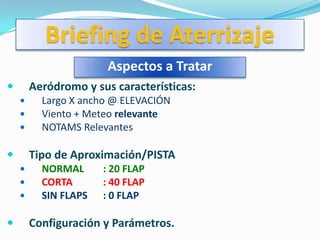
Briefing de Aterrizaje
                       Aspectos a Tratar
       Aeródromo y sus características:
         Largo X ancho @ ELEVACIÓN
         Viento + Meteo relevante
         NOTAMS Relevantes

       Tipo de Aproximación/PISTA
         NORMAL      : 20 FLAP
         CORTA       : 40 FLAP
         SIN FLAPS   : 0 FLAP

       Configuración y Parámetros.
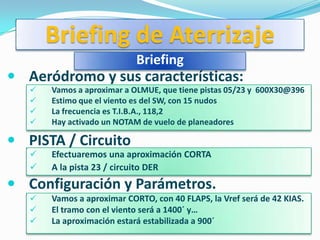
Briefing de Aterrizaje
                            Briefing
 Aeródromo y sus características:
      Vamos a aproximar a OLMUE, que tiene pistas 05/23 y 600X30@396
      Estimo que el viento es del SW, con 15 nudos
      La frecuencia es T.I.B.A., 118,2
      Hay activado un NOTAM de vuelo de planeadores

 PISTA / Circuito
      Efectuaremos una aproximación CORTA
      A la pista 23 / circuito DER
 Configuración y Parámetros.
      Vamos a aproximar CORTO, con 40 FLAPS, la Vref será de 42 KIAS.
      El tramo con el viento será a 1400´ y…
      La aproximación estará estabilizada a 900´
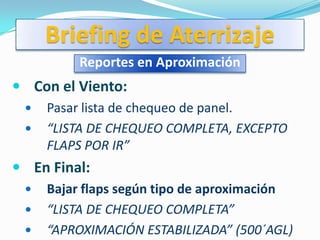
Briefing de Aterrizaje
          Reportes en Aproximación
 Con el Viento:
    Pasar lista de chequeo de panel.
    “LISTA DE CHEQUEO COMPLETA, EXCEPTO
     FLAPS POR IR”
 En Final:
    Bajar flaps según tipo de aproximación
    “LISTA DE CHEQUEO COMPLETA”
    “APROXIMACIÓN ESTABILIZADA” (500´AGL)
HAPPY
LANDINGS!

Briefings

  • 1.
  • 2.
    TEMARIO  Introducción  Briefingde Despegue  Briefing de Aproximación  Briefing de Aterrizaje
  • 3.
    TEMARIO  Introducción  Briefingde Despegue  Briefing de Aproximación  Briefing de Aterrizaje
  • 4.
    Introducción ¿POR QUÉ LOS BRIEFINGS?  Definen Cursos de Acción  Permiten verificar ítems  Permiten asignar funciones  Predisponen la mente
  • 5.
    Introducción GENERALIDADES Conducting effective briefings is an essential part of flight preparation. Without proper preparation, a crew will not have the necessary situational awareness to fly at maximum effectiveness and safety. Briefings are necessary at various points in the flight from before taxiing to the departure runway through taxiing to the arrival gate.
  • 6.
    Introducción GENERALIDADES • Briefings should be adapted to the specific conditions of the flight and focus on the items that are relevant for the particular takeoff, departure, cruise or approach and landing. • Briefings should be interactive and allow for dialogue between the PF, PNF and other crewmembers. • Briefings should be conducted during low- workload periods.
  • 7.
    Introducción GENERALIDADES • Briefings should be conducted even if the crew has completed the same flight many times in the past. Vary the briefing approach or emphasis when on familiar routes to promote thinking and to avoid doing things by habit. • Briefings should cover procedures for unexpected events. • Pilots should not fixate on one particular aspect of information in a briefing, as other important information may be missed.
  • 8.
    TEMARIO  Introducción  Briefingde Despegue  Briefing de Aproximación  Briefing de Aterrizaje
  • 9.
    Briefing de Despegue Tipo de Despegue/Pista VAMOS A EFECTUAR UN DESPEGUE CORTO DESDE LA PISTA 19 DE EL BOCO, CON 10º DE FLAPS  Longitudes LA PISTA DISPONIBLE ES DE 600 METROS  Velocidades LA VELOCIDAD DE ROTACIÓN SERÁ DE 55 NUDOS, LUEGO MANTENDREMOS 60 NUDOS HASTA 100 AGL, 550 PIES DE ALTITUD  Acciones en evento Falla
  • 10.
    Briefing de Despegue Acciones en evento Falla CON INDICACIÓN DE FALLA DE MOTOR EN LA CARRERA DE DESPEGUE, NOS QUEDAMOS EN LA PISTA: CIERRO EL ACELERADOR, APLICO FRENOS Y SUBO FLAP. CON INDICACIÓN DE FALLA DESPUÉS DE ROTAR Y CON PISTA DISPONIBLE, CIERRO EL ACELERADOR, MANTENGO 55 NUDOS Y ME QUEDO. APLICO FULL FLAPS DE SER NECESARIO. CON FALLA DE MOTOR SIN PISTA DISPONIBLE Y BAJO 1.500 PIES INDICADOS (1.000 AGL) ATERRIZO FULL FLAPS Y A 55 NUDOS EN EL MEJOR LUGAR DISPONIBLE , ABIERTO 45º DE LA NARIZ. CON FALLA DE MOTOR SOBRE (1000 AGL) 1500 PIES INDICADOS, VUELVO A LA PISTA, A 60 NUDOS Y EFECTUANDO UN VIRAJE CONTRA EL VIENTO, POR DERECHA/ IZQUIERDA.
  • 11.
    Briefing de Despegue Reportes en Carrera de Despegue  Acelerador Abierto - - 2.460 - 2.560 RPM  Inst. Rango Verde - - INST. NORMALES  Velocidad - - 40 NUDOS  55 Nudos - - ROTACIÓN  Montando - - RAZÓN POSITIVA
  • 12.
    TEMARIO  Introducción  Briefingde Despegue  Briefing de Aproximación  Briefing de Aterrizaje
  • 13.
    TEMARIO  Introducción  Briefingde Despegue  Briefing de Aproximación  Briefing de Aterrizaje
  • 14.
    Briefing de Aterrizaje Aspectos a Tratar  Aeródromo y sus características:  Largo X ancho @ ELEVACIÓN  Viento + Meteo relevante  NOTAMS Relevantes  Tipo de Aproximación/PISTA  NORMAL : 20 FLAP  CORTA : 40 FLAP  SIN FLAPS : 0 FLAP  Configuración y Parámetros.
  • 15.
    Briefing de Aterrizaje Briefing  Aeródromo y sus características:  Vamos a aproximar a OLMUE, que tiene pistas 05/23 y 600X30@396  Estimo que el viento es del SW, con 15 nudos  La frecuencia es T.I.B.A., 118,2  Hay activado un NOTAM de vuelo de planeadores  PISTA / Circuito  Efectuaremos una aproximación CORTA  A la pista 23 / circuito DER  Configuración y Parámetros.  Vamos a aproximar CORTO, con 40 FLAPS, la Vref será de 42 KIAS.  El tramo con el viento será a 1400´ y…  La aproximación estará estabilizada a 900´
  • 16.
    Briefing de Aterrizaje Reportes en Aproximación  Con el Viento:  Pasar lista de chequeo de panel.  “LISTA DE CHEQUEO COMPLETA, EXCEPTO FLAPS POR IR”  En Final:  Bajar flaps según tipo de aproximación  “LISTA DE CHEQUEO COMPLETA”  “APROXIMACIÓN ESTABILIZADA” (500´AGL)
  • 17.