Los verbos regulares  que terminan en -er  -ER VERBS
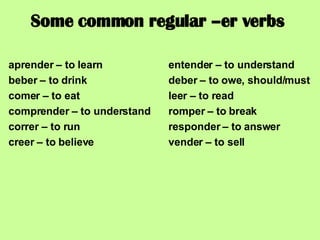
Some common regular –er verbs entender – to understand deber – to owe, should/must leer – to read romper – to break responder – to answer vender – to sell aprender – to learn beber – to drink comer – to eat comprender – to understand correr – to run creer – to believe
Let’s review the pronouns. Ellos  They  (m.) Ellas  They  (f.)   Ustedes  You all Él  He Ella  She Usted  You  (formal) Tú  You  (informal) Nosotros  We   Yo  I
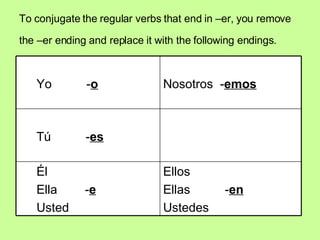
To conjugate the regular verbs that end in –er, you remove the –er ending and replace it with the following endings.  Ellos Ellas  - en Ustedes Él Ella  - e Usted Tú  - es Nosotros  - emos Yo  - o
Here is an example:   Let’s conjugate the verb  Comer   (to eat) You should remove the –er ending from the verb Com er  and add the correct ending for each subject. Ellos   (They eat) Ellas   com en   (They eat) Ustedes   (You all eat) Él   (He eats) Ella   com e   (She eats ) Usted  (You eat -formal) Tú  com es   (You eat) Nosotros   com emos (We eat) Yo   com o   (I eat)
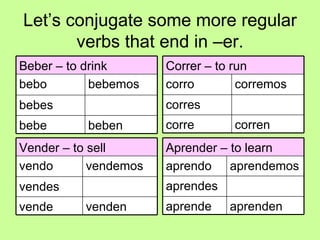
Let’s conjugate some more regular verbs that end in –er. Beber – to drink beben bebe bebes bebemos bebo Correr – to run corren corre corres corremos corro Vender – to sell venden vende vendes vendemos vendo Aprender – to learn aprenden aprende aprendes aprendemos aprendo
Actividad 1. Translate the following sentences. I eat fruits everyday. Yo como frutas todos los días. The boys read books in class. Los chicos leen libros en la clase. He runs along the beach. Él corre por la playa. You understand the homework.  Tú comprendes la tarea .
Actividad 2. Tell what each person drinks during lunch. Juan y Pablo / jugo de naranja. Juan y Pablo beben jugo de naranja. Yo / un refresco. Yo bebo un refresco. Tú / chocolate caliente. Tú bebes chocolate caliente. Mi hermana y yo / té frío.  Mi hermana y yo bebemos té frío.
Actividad 3. Tell what these people are doing. Jorge / correr en una carrera Jorge corre en una carrera. Tú y él / aprender el español. Tú y él aprenden el español. Mi hermano / comer la comida mexicana. Mi hermano come la comida mexicana. Yo / comprender el problema.  Yo comprendo el problema.
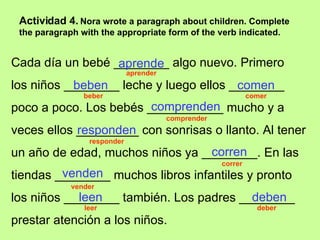
Actividad 4.  Nora wrote a paragraph about children. Complete the paragraph with the appropriate form of the verb indicated. Cada día un bebé ________ algo nuevo. Primero  los niños ________ leche y luego ellos ________  poco a poco. Los bebés ___________ mucho y a  veces ellos _________ con sonrisas o llanto. Al tener un año de edad, muchos niños ya ________. En las  tiendas ________ muchos libros infantiles y pronto  los niños ________ también. Los padres ________  prestar atención a los niños. aprender beber comer comprender responder correr vender deber leer aprende beben comen responden venden comprenden corren leen deben

Verbs that end in -er

  • 1.
    Los verbos regulares que terminan en -er -ER VERBS
  • 2.
    Some common regular–er verbs entender – to understand deber – to owe, should/must leer – to read romper – to break responder – to answer vender – to sell aprender – to learn beber – to drink comer – to eat comprender – to understand correr – to run creer – to believe
  • 3.
    Let’s review thepronouns. Ellos They (m.) Ellas They (f.) Ustedes You all Él He Ella She Usted You (formal) Tú You (informal) Nosotros We Yo I
  • 4.
    To conjugate theregular verbs that end in –er, you remove the –er ending and replace it with the following endings. Ellos Ellas - en Ustedes Él Ella - e Usted Tú - es Nosotros - emos Yo - o
  • 5.
    Here is anexample: Let’s conjugate the verb Comer (to eat) You should remove the –er ending from the verb Com er and add the correct ending for each subject. Ellos (They eat) Ellas com en (They eat) Ustedes (You all eat) Él (He eats) Ella com e (She eats ) Usted (You eat -formal) Tú com es (You eat) Nosotros com emos (We eat) Yo com o (I eat)
  • 6.
    Let’s conjugate somemore regular verbs that end in –er. Beber – to drink beben bebe bebes bebemos bebo Correr – to run corren corre corres corremos corro Vender – to sell venden vende vendes vendemos vendo Aprender – to learn aprenden aprende aprendes aprendemos aprendo
  • 7.
    Actividad 1. Translatethe following sentences. I eat fruits everyday. Yo como frutas todos los días. The boys read books in class. Los chicos leen libros en la clase. He runs along the beach. Él corre por la playa. You understand the homework. Tú comprendes la tarea .
  • 8.
    Actividad 2. Tellwhat each person drinks during lunch. Juan y Pablo / jugo de naranja. Juan y Pablo beben jugo de naranja. Yo / un refresco. Yo bebo un refresco. Tú / chocolate caliente. Tú bebes chocolate caliente. Mi hermana y yo / té frío. Mi hermana y yo bebemos té frío.
  • 9.
    Actividad 3. Tellwhat these people are doing. Jorge / correr en una carrera Jorge corre en una carrera. Tú y él / aprender el español. Tú y él aprenden el español. Mi hermano / comer la comida mexicana. Mi hermano come la comida mexicana. Yo / comprender el problema. Yo comprendo el problema.
  • 10.
    Actividad 4. Nora wrote a paragraph about children. Complete the paragraph with the appropriate form of the verb indicated. Cada día un bebé ________ algo nuevo. Primero los niños ________ leche y luego ellos ________ poco a poco. Los bebés ___________ mucho y a veces ellos _________ con sonrisas o llanto. Al tener un año de edad, muchos niños ya ________. En las tiendas ________ muchos libros infantiles y pronto los niños ________ también. Los padres ________ prestar atención a los niños. aprender beber comer comprender responder correr vender deber leer aprende beben comen responden venden comprenden corren leen deben