   Imperfect
   Preterite
    ›   -car, -gar, -zar
    ›   Spock Verbs
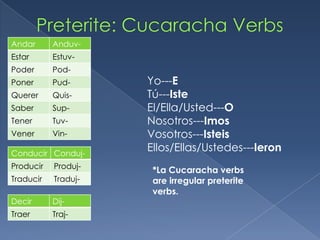
    ›   Cucaracha Verbs
    ›   Snake/Snakey
   Modal Verbs
   Adverbs
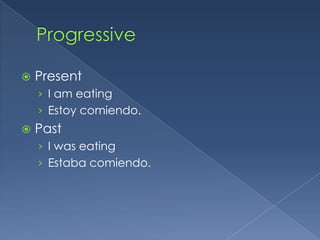
   Progressive
    ›   Present
    ›   Past
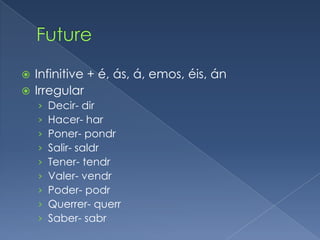
   Future
    ›   Irregular
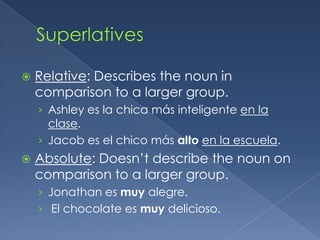
   Superlatives
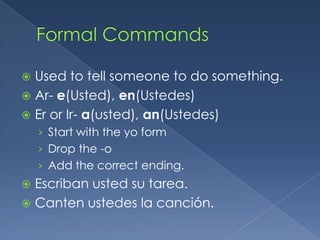
   Formal Commands
   Prepositions
   Conditional
   Demonstrative
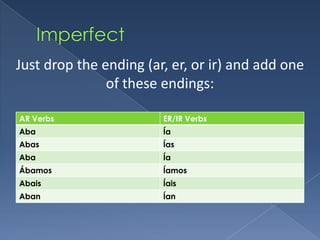
Just drop the ending (ar, er, or ir) and add one
               of these endings:

AR Verbs                ER/IR Verbs
Aba                     Ía
Abas                    Ías
Aba                     Ía
Ábamos                  Íamos
Abais                   Íais
Aban                    Ían
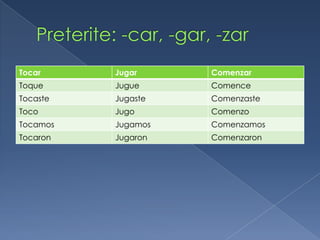
Tocar     Jugar     Comenzar
Toque     Jugue     Comence
Tocaste   Jugaste   Comenzaste
Toco      Jugo      Comenzo
Tocamos   Jugamos   Comenzamos
Tocaron   Jugaron   Comenzaron
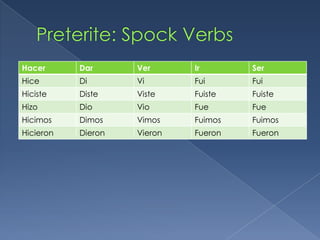
Hacer      Dar      Ver      Ir       Ser
Hice       Di       Vi       Fui      Fui
Hiciste    Diste    Viste    Fuiste   Fuiste
Hizo       Dio      Vio      Fue      Fue
Hicimos    Dimos    Vimos    Fuimos   Fuimos
Hicieron   Dieron   Vieron   Fueron   Fueron
Andar      Anduv-
Estar      Estuv-
Poder      Pod-
Poner      Pud-      Yo---E
Querer     Quis-     Tú---Iste
Saber      Sup-      El/Ella/Usted---O
Tener      Tuv-      Nosotros---Imos
Vener      Vin-      Vosotros---Isteis
Conducir Conduj-
                     Ellos/Ellas/Ustedes---Ieron
Producir   Produj-
                      *La Cucaracha verbs
Traducir   Traduj-    are irregular preterite
                      verbs.
Decir      Dij-
Traer      Traj-
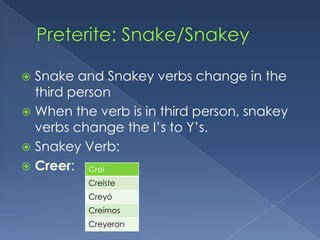
 Snake and Snakey verbs change in the
  third person
 When the verb is in third person, snakey
  verbs change the I’s to Y’s.
 Snakey Verb:
 Creer: Creí
          Creíste
          Creyó
          Creímos
          Creyeron
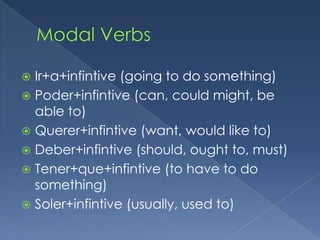
 Ir+a+infintive (going to do something)
 Poder+infintive (can, could might, be
  able to)
 Querer+infintive (want, would like to)
 Deber+infintive (should, ought to, must)
 Tener+que+infintive (to have to do
  something)
 Soler+infintive (usually, used to)
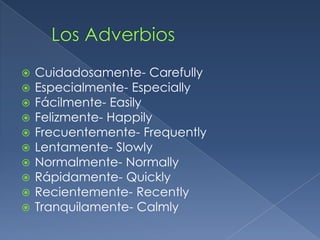
   Cuidadosamente- Carefully
   Especialmente- Especially
   Fácilmente- Easily
   Felizmente- Happily
   Frecuentemente- Frequently
   Lentamente- Slowly
   Normalmente- Normally
   Rápidamente- Quickly
   Recientemente- Recently
   Tranquilamente- Calmly
   Present
    › I am eating
    › Estoy comiendo.
   Past
    › I was eating
    › Estaba comiendo.
 Infinitive + é, ás, á, emos, éis, án
 Irregular
    ›   Decir- dir
    ›   Hacer- har
    ›   Poner- pondr
    ›   Salir- saldr
    ›   Tener- tendr
    ›   Valer- vendr
    ›   Poder- podr
    ›   Querrer- querr
    ›   Saber- sabr
   Relative: Describes the noun in
    comparison to a larger group.
    › Ashley es la chica más inteligente en la
      clase.
    › Jacob es el chico más alto en la escuela.
   Absolute: Doesn’t describe the noun on
    comparison to a larger group.
    › Jonathan es muy alegre.
    › El chocolate es muy delicioso.
 Used to tell someone to do something.
 Ar- e(Usted), en(Ustedes)
 Er or Ir- a(usted), an(Ustedes)
    › Start with the yo form
    › Drop the -o
    › Add the correct ending.
 Escriban usted su tarea.
 Canten ustedes la canción.
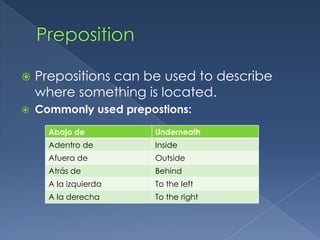
   Prepositions can be used to describe
    where something is located.
   Commonly used prepostions:
      Abajo de         Underneath
      Adentro de       Inside
      Afuera de        Outside
      Atrás de         Behind
      A la izquierda   To the left
      A la derecha     To the right
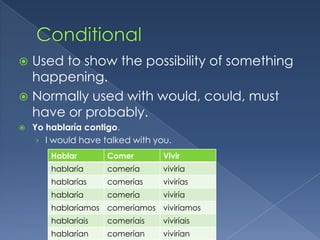
 Used to show the possibility of something
  happening.
 Normally used with would, could, must
  have or probably.
   Yo hablaría contigo.
     › I would have talked with you.
        Hablar       Comer        Vivir
        hablaría     comería      viviría
        hablarías    comerías     vivirías
        hablaría     comería      viviría
        hablaríamos comeríamos viviríamos
        hablaríais   comeríais    viviríais
        hablarían    comerían     vivirían
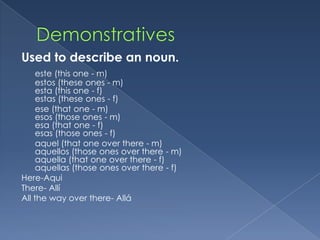
Used to describe an noun.
     este (this one - m)
     estos (these ones - m)
     esta (this one - f)
     estas (these ones - f)
     ese (that one - m)
     esos (those ones - m)
     esa (that one - f)
     esas (those ones - f)
     aquel (that one over there - m)
     aquellos (those ones over there - m)
     aquella (that one over there - f)
     aquellas (those ones over there - f)
Here-Aqui
There- Allí
All the way over there- Allá
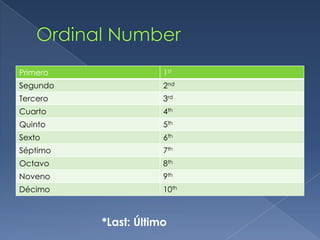
Primero               1st
Segundo               2nd
Tercero               3rd
Cuarto                4th
Quinto                5th
Sexto                 6th
Séptimo               7th
Octavo                8th
Noveno                9th
Décimo                10th


          *Last: Último

Grammar book 2

  • 2.
    Imperfect  Preterite › -car, -gar, -zar › Spock Verbs › Cucaracha Verbs › Snake/Snakey  Modal Verbs  Adverbs  Progressive › Present › Past  Future › Irregular  Superlatives  Formal Commands  Prepositions  Conditional  Demonstrative
  • 3.
    Just drop theending (ar, er, or ir) and add one of these endings: AR Verbs ER/IR Verbs Aba Ía Abas Ías Aba Ía Ábamos Íamos Abais Íais Aban Ían
  • 4.
    Tocar Jugar Comenzar Toque Jugue Comence Tocaste Jugaste Comenzaste Toco Jugo Comenzo Tocamos Jugamos Comenzamos Tocaron Jugaron Comenzaron
  • 5.
    Hacer Dar Ver Ir Ser Hice Di Vi Fui Fui Hiciste Diste Viste Fuiste Fuiste Hizo Dio Vio Fue Fue Hicimos Dimos Vimos Fuimos Fuimos Hicieron Dieron Vieron Fueron Fueron
  • 6.
    Andar Anduv- Estar Estuv- Poder Pod- Poner Pud- Yo---E Querer Quis- Tú---Iste Saber Sup- El/Ella/Usted---O Tener Tuv- Nosotros---Imos Vener Vin- Vosotros---Isteis Conducir Conduj- Ellos/Ellas/Ustedes---Ieron Producir Produj- *La Cucaracha verbs Traducir Traduj- are irregular preterite verbs. Decir Dij- Traer Traj-
  • 7.
     Snake andSnakey verbs change in the third person  When the verb is in third person, snakey verbs change the I’s to Y’s.  Snakey Verb:  Creer: Creí Creíste Creyó Creímos Creyeron
  • 8.
     Ir+a+infintive (goingto do something)  Poder+infintive (can, could might, be able to)  Querer+infintive (want, would like to)  Deber+infintive (should, ought to, must)  Tener+que+infintive (to have to do something)  Soler+infintive (usually, used to)
  • 9.
    Cuidadosamente- Carefully  Especialmente- Especially  Fácilmente- Easily  Felizmente- Happily  Frecuentemente- Frequently  Lentamente- Slowly  Normalmente- Normally  Rápidamente- Quickly  Recientemente- Recently  Tranquilamente- Calmly
  • 10.
    Present › I am eating › Estoy comiendo.  Past › I was eating › Estaba comiendo.
  • 11.
     Infinitive +é, ás, á, emos, éis, án  Irregular › Decir- dir › Hacer- har › Poner- pondr › Salir- saldr › Tener- tendr › Valer- vendr › Poder- podr › Querrer- querr › Saber- sabr
  • 12.
    Relative: Describes the noun in comparison to a larger group. › Ashley es la chica más inteligente en la clase. › Jacob es el chico más alto en la escuela.  Absolute: Doesn’t describe the noun on comparison to a larger group. › Jonathan es muy alegre. › El chocolate es muy delicioso.
  • 13.
     Used totell someone to do something.  Ar- e(Usted), en(Ustedes)  Er or Ir- a(usted), an(Ustedes) › Start with the yo form › Drop the -o › Add the correct ending.  Escriban usted su tarea.  Canten ustedes la canción.
  • 14.
    Prepositions can be used to describe where something is located.  Commonly used prepostions: Abajo de Underneath Adentro de Inside Afuera de Outside Atrás de Behind A la izquierda To the left A la derecha To the right
  • 15.
     Used toshow the possibility of something happening.  Normally used with would, could, must have or probably.  Yo hablaría contigo. › I would have talked with you. Hablar Comer Vivir hablaría comería viviría hablarías comerías vivirías hablaría comería viviría hablaríamos comeríamos viviríamos hablaríais comeríais viviríais hablarían comerían vivirían
  • 16.
    Used to describean noun. este (this one - m) estos (these ones - m) esta (this one - f) estas (these ones - f) ese (that one - m) esos (those ones - m) esa (that one - f) esas (those ones - f) aquel (that one over there - m) aquellos (those ones over there - m) aquella (that one over there - f) aquellas (those ones over there - f) Here-Aqui There- Allí All the way over there- Allá
  • 17.
    Primero 1st Segundo 2nd Tercero 3rd Cuarto 4th Quinto 5th Sexto 6th Séptimo 7th Octavo 8th Noveno 9th Décimo 10th *Last: Último