Republica Bolivariana de Venezuela 
Ministerio del poder popular para la educación superior 
Universidad Yacambu 
Cabudare-Edo. Lara
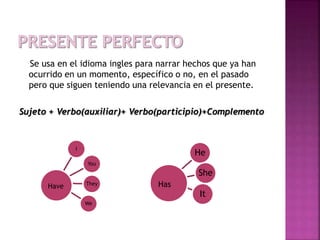
Se usa en el idioma ingles para narrar hechos que ya han 
ocurrido en un momento, específico o no, en el pasado 
pero que siguen teniendo una relevancia en el presente. 
Sujeto + Verbo(auxiliar)+ Verbo(participio)+Complemento 
I 
You 
They 
We 
Have 
He 
She 
It 
Has
Ejemplos: 
You have gone to the pool. 
You have talked to your friend. 
You have washed the dishes. 
Negación del presente perfecto 
Sujeto + Verbo(auxiliar)+ not+ Verbo(participio)+ Complemento 
You have not gone to the pool. 
You have not talked to your friend. 
You have not washed the dishes.
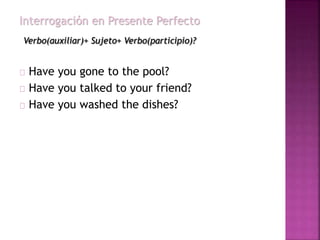
Interrogación en Presente Perfecto 
Verbo(auxiliar)+ Sujeto+ Verbo(participio)? 
Have you gone to the pool? 
Have you talked to your friend? 
Have you washed the dishes?
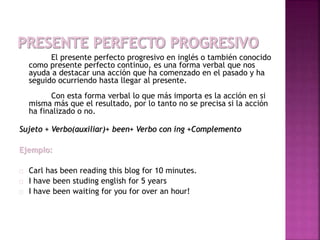
El presente perfecto progresivo en inglés o también conocido 
como presente perfecto continuo, es una forma verbal que nos 
ayuda a destacar una acción que ha comenzado en el pasado y ha 
seguido ocurriendo hasta llegar al presente. 
Con esta forma verbal lo que más importa es la acción en si 
misma más que el resultado, por lo tanto no se precisa si la acción 
ha finalizado o no. 
Sujeto + Verbo(auxiliar)+ been+ Verbo con ing +Complemento 
Ejemplo: 
Carl has been reading this blog for 10 minutes. 
I have been studing english for 5 years 
I have been waiting for you for over an hour!
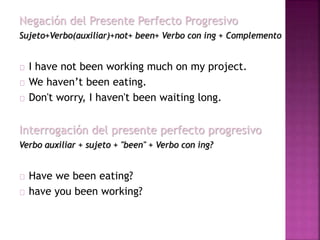
Negación del Presente Perfecto Progresivo 
Sujeto+Verbo(auxiliar)+not+ been+ Verbo con ing + Complemento 
I have not been working much on my project. 
We haven’t been eating. 
Don't worry, I haven't been waiting long. 
Interrogación del presente perfecto progresivo 
Verbo auxiliar + sujeto + "been" + Verbo con ing? 
Have we been eating? 
have you been working?
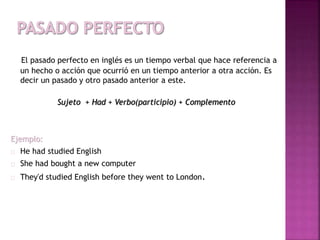
El pasado perfecto en inglés es un tiempo verbal que hace referencia a 
un hecho o acción que ocurrió en un tiempo anterior a otra acción. Es 
decir un pasado y otro pasado anterior a este. 
Sujeto + Had + Verbo(participio) + Complemento 
Ejemplo: 
He had studied English 
She had bought a new computer 
They'd studied English before they went to London.
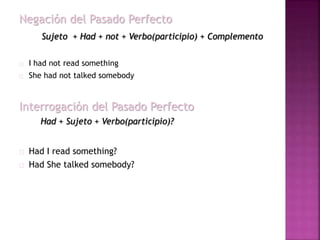
Negación del Pasado Perfecto 
Sujeto + Had + not + Verbo(participio) + Complemento 
I had not read something 
She had not talked somebody 
Interrogación del Pasado Perfecto 
Had + Sujeto + Verbo(participio)? 
Had I read something? 
Had She talked somebody?
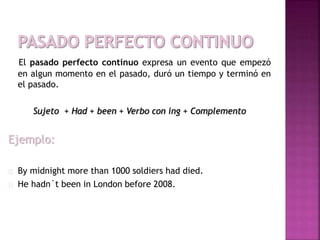
El pasado perfecto continuo expresa un evento que empezó 
en algun momento en el pasado, duró un tiempo y terminó en 
el pasado. 
Sujeto + Had + been + Verbo con ing + Complemento 
Ejemplo: 
By midnight more than 1000 soldiers had died. 
He hadn´t been in London before 2008.
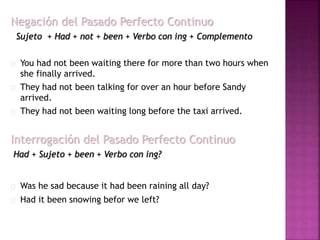
Negación del Pasado Perfecto Continuo 
Sujeto + Had + not + been + Verbo con ing + Complemento 
You had not been waiting there for more than two hours when 
she finally arrived. 
They had not been talking for over an hour before Sandy 
arrived. 
They had not been waiting long before the taxi arrived. 
Interrogación del Pasado Perfecto Continuo 
Had + Sujeto + been + Verbo con ing? 
Was he sad because it had been raining all day? 
Had it been snowing befor we left?
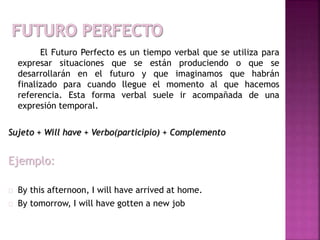
El Futuro Perfecto es un tiempo verbal que se utiliza para 
expresar situaciones que se están produciendo o que se 
desarrollarán en el futuro y que imaginamos que habrán 
finalizado para cuando llegue el momento al que hacemos 
referencia. Esta forma verbal suele ir acompañada de una 
expresión temporal. 
Sujeto + Will have + Verbo(participio) + Complemento 
Ejemplo: 
By this afternoon, I will have arrived at home. 
By tomorrow, I will have gotten a new job
Negación del Futuro Perfecto 
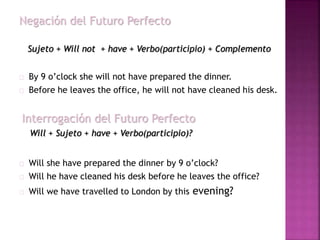
Sujeto + Will not + have + Verbo(participio) + Complemento 
By 9 o’clock she wiIl not have prepared the dinner. 
Before he leaves the office, he will not have cleaned his desk. 
Interrogación del Futuro Perfecto 
Will + Sujeto + have + Verbo(participio)? 
Will she have prepared the dinner by 9 o’clock? 
Will he have cleaned his desk before he leaves the office? 
Will we have travelled to London by this evening?
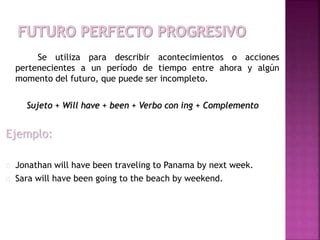
Se utiliza para describir acontecimientos o acciones 
pertenecientes a un período de tiempo entre ahora y algún 
momento del futuro, que puede ser incompleto. 
Sujeto + Will have + been + Verbo con ing + Complemento 
Ejemplo: 
Jonathan will have been traveling to Panama by next week. 
Sara will have been going to the beach by weekend.
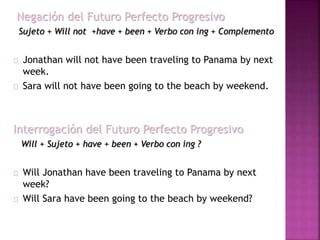
Negación del Futuro Perfecto Progresivo 
Sujeto + Will not +have + been + Verbo con ing + Complemento 
Jonathan will not have been traveling to Panama by next 
week. 
Sara will not have been going to the beach by weekend. 
Interrogación del Futuro Perfecto Progresivo 
Will + Sujeto + have + been + Verbo con ing ? 
Will Jonathan have been traveling to Panama by next 
week? 
Will Sara have been going to the beach by weekend?

Tiempos perfectos

  • 1.
    Republica Bolivariana deVenezuela Ministerio del poder popular para la educación superior Universidad Yacambu Cabudare-Edo. Lara
  • 2.
    Se usa enel idioma ingles para narrar hechos que ya han ocurrido en un momento, específico o no, en el pasado pero que siguen teniendo una relevancia en el presente. Sujeto + Verbo(auxiliar)+ Verbo(participio)+Complemento I You They We Have He She It Has
  • 3.
    Ejemplos: You havegone to the pool. You have talked to your friend. You have washed the dishes. Negación del presente perfecto Sujeto + Verbo(auxiliar)+ not+ Verbo(participio)+ Complemento You have not gone to the pool. You have not talked to your friend. You have not washed the dishes.
  • 4.
    Interrogación en PresentePerfecto Verbo(auxiliar)+ Sujeto+ Verbo(participio)? Have you gone to the pool? Have you talked to your friend? Have you washed the dishes?
  • 5.
    El presente perfectoprogresivo en inglés o también conocido como presente perfecto continuo, es una forma verbal que nos ayuda a destacar una acción que ha comenzado en el pasado y ha seguido ocurriendo hasta llegar al presente. Con esta forma verbal lo que más importa es la acción en si misma más que el resultado, por lo tanto no se precisa si la acción ha finalizado o no. Sujeto + Verbo(auxiliar)+ been+ Verbo con ing +Complemento Ejemplo: Carl has been reading this blog for 10 minutes. I have been studing english for 5 years I have been waiting for you for over an hour!
  • 6.
    Negación del PresentePerfecto Progresivo Sujeto+Verbo(auxiliar)+not+ been+ Verbo con ing + Complemento I have not been working much on my project. We haven’t been eating. Don't worry, I haven't been waiting long. Interrogación del presente perfecto progresivo Verbo auxiliar + sujeto + "been" + Verbo con ing? Have we been eating? have you been working?
  • 7.
    El pasado perfectoen inglés es un tiempo verbal que hace referencia a un hecho o acción que ocurrió en un tiempo anterior a otra acción. Es decir un pasado y otro pasado anterior a este. Sujeto + Had + Verbo(participio) + Complemento Ejemplo: He had studied English She had bought a new computer They'd studied English before they went to London.
  • 8.
    Negación del PasadoPerfecto Sujeto + Had + not + Verbo(participio) + Complemento I had not read something She had not talked somebody Interrogación del Pasado Perfecto Had + Sujeto + Verbo(participio)? Had I read something? Had She talked somebody?
  • 9.
    El pasado perfectocontinuo expresa un evento que empezó en algun momento en el pasado, duró un tiempo y terminó en el pasado. Sujeto + Had + been + Verbo con ing + Complemento Ejemplo: By midnight more than 1000 soldiers had died. He hadn´t been in London before 2008.
  • 10.
    Negación del PasadoPerfecto Continuo Sujeto + Had + not + been + Verbo con ing + Complemento You had not been waiting there for more than two hours when she finally arrived. They had not been talking for over an hour before Sandy arrived. They had not been waiting long before the taxi arrived. Interrogación del Pasado Perfecto Continuo Had + Sujeto + been + Verbo con ing? Was he sad because it had been raining all day? Had it been snowing befor we left?
  • 11.
    El Futuro Perfectoes un tiempo verbal que se utiliza para expresar situaciones que se están produciendo o que se desarrollarán en el futuro y que imaginamos que habrán finalizado para cuando llegue el momento al que hacemos referencia. Esta forma verbal suele ir acompañada de una expresión temporal. Sujeto + Will have + Verbo(participio) + Complemento Ejemplo: By this afternoon, I will have arrived at home. By tomorrow, I will have gotten a new job
  • 12.
    Negación del FuturoPerfecto Sujeto + Will not + have + Verbo(participio) + Complemento By 9 o’clock she wiIl not have prepared the dinner. Before he leaves the office, he will not have cleaned his desk. Interrogación del Futuro Perfecto Will + Sujeto + have + Verbo(participio)? Will she have prepared the dinner by 9 o’clock? Will he have cleaned his desk before he leaves the office? Will we have travelled to London by this evening?
  • 13.
    Se utiliza paradescribir acontecimientos o acciones pertenecientes a un período de tiempo entre ahora y algún momento del futuro, que puede ser incompleto. Sujeto + Will have + been + Verbo con ing + Complemento Ejemplo: Jonathan will have been traveling to Panama by next week. Sara will have been going to the beach by weekend.
  • 14.
    Negación del FuturoPerfecto Progresivo Sujeto + Will not +have + been + Verbo con ing + Complemento Jonathan will not have been traveling to Panama by next week. Sara will not have been going to the beach by weekend. Interrogación del Futuro Perfecto Progresivo Will + Sujeto + have + been + Verbo con ing ? Will Jonathan have been traveling to Panama by next week? Will Sara have been going to the beach by weekend?