Will vs going to
Planes futuros
Going to
  To be going to + infinitivo se utiliza para expresar
  acciones futuras ya planeadas (excepto las que
  forman parte de un horario o programa):
 I’m going to buy a new car next week.
 They‘re going to move house.
 She’s going to have a baby.
 We’re going to get married next summer.
 Linda’s going to learn Italian.
Will
   El futuro simple (will), sin embargo, se usa cuando
  tomamos la decisión de hacer algo en el momento de
  hablar, sin haber hecho ningún plan previo:
 The phone is ringing. I ll get it.
 I’ll take my umbrella because it s very cloudy.
 I’ll have a cup of tea.
 We’ll go for a walk if you want.
También se utiliza cuando se habla de acciones que
  forman parte de un horario o programa:
 The train to Liverpool will leave from platform 11.
 The conference will start in half an hour.
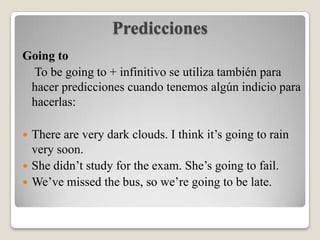
Predicciones
Going to
 To be going to + infinitivo se utiliza también para
 hacer predicciones cuando tenemos algún indicio para
 hacerlas:

 There are very dark clouds. I think it’s going to rain
  very soon.
 She didn’t study for the exam. She’s going to fail.
 We’ve missed the bus, so we’re going to be late.
Will
  El futuro simple (will) se utiliza para hacer
 predicciones, pero cuando no hay indicios de
 ellas, sino que son fruto de la opinión del hablante:

 Buy her that book. She’ll like it a lot.
 I think England will lose.
 It’ll be cold tonight.

Will vs going to

  • 1.
  • 2.
    Planes futuros Going to To be going to + infinitivo se utiliza para expresar acciones futuras ya planeadas (excepto las que forman parte de un horario o programa):  I’m going to buy a new car next week.  They‘re going to move house.  She’s going to have a baby.  We’re going to get married next summer.  Linda’s going to learn Italian.
  • 3.
    Will El futuro simple (will), sin embargo, se usa cuando tomamos la decisión de hacer algo en el momento de hablar, sin haber hecho ningún plan previo:  The phone is ringing. I ll get it.  I’ll take my umbrella because it s very cloudy.  I’ll have a cup of tea.  We’ll go for a walk if you want. También se utiliza cuando se habla de acciones que forman parte de un horario o programa:  The train to Liverpool will leave from platform 11.  The conference will start in half an hour.
  • 4.
    Predicciones Going to Tobe going to + infinitivo se utiliza también para hacer predicciones cuando tenemos algún indicio para hacerlas:  There are very dark clouds. I think it’s going to rain very soon.  She didn’t study for the exam. She’s going to fail.  We’ve missed the bus, so we’re going to be late.
  • 5.
    Will Elfuturo simple (will) se utiliza para hacer predicciones, pero cuando no hay indicios de ellas, sino que son fruto de la opinión del hablante:  Buy her that book. She’ll like it a lot.  I think England will lose.  It’ll be cold tonight.