ENGLISH DEPARTMENT / IES FRANCISCO DE QUEVEDO


                                CONDITIONAL SENTENCES
                                Las Oraciones Condicionales


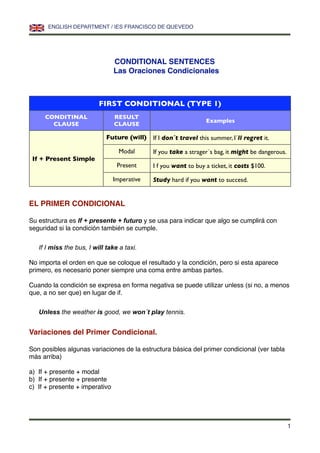
                          FIRST CONDITIONAL (TYPE 1)
     CONDITINAL                 RESULT
                                                                 Examples
       CLAUSE                   CLAUSE

                             Future (will)   If I don´t travel this summer, I´ll regret it.

                                  Modal      If you take a strager´s bag, it might be dangerous.
 If + Present Simple
                                 Present     I f you want to buy a ticket, it costs $100.

                                Imperative   Study hard if you want to succesd.


EL PRIMER CONDICIONAL

Su estructura es If + presente + futuro y se usa para indicar que algo se cumplirá con
seguridad si la condición también se cumple.


   If I miss the bus, I will take a taxi.

No importa el orden en que se coloque el resultado y la condición, pero si esta aparece
primero, es necesario poner siempre una coma entre ambas partes.

Cuando la condición se expresa en forma negativa se puede utilizar unless (si no, a menos
que, a no ser que) en lugar de if.


   Unless the weather is good, we won´t play tennis.


Variaciones del Primer Condicional.

Son posibles algunas variaciones de la estructura básica del primer condicional (ver tabla
más arriba)

a) If + presente + modal
b) If + presente + presente
c) If + presente + imperativo


                                                                                                   1
ENGLISH DEPARTMENT / IES FRANCISCO DE QUEVEDO


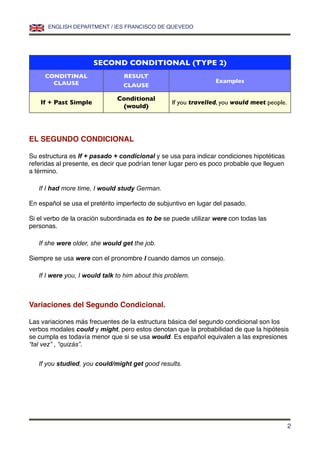
                       SECOND CONDITIONAL (TYPE 2)
     CONDITINAL                  RESULT
       CLAUSE                                                    Examples
                                 CLAUSE

                               Conditional
    If + Past Simple                              If you travelled, you would meet people.
                                (would)


EL SEGUNDO CONDICIONAL

Su estructura es If + pasado + condicional y se usa para indicar condiciones hipotéticas
referidas al presente, es decir que podrían tener lugar pero es poco probable que lleguen
a término.

   If I had more time, I would study German.

En español se usa el pretérito imperfecto de subjuntivo en lugar del pasado.

Si el verbo de la oración subordinada es to be se puede utilizar were con todas las
personas.

   If she were older, she would get the job.

Siempre se usa were con el pronombre I cuando damos un consejo.

   If I were you, I would talk to him about this problem.


Variaciones del Segundo Condicional.

Las variaciones más frecuentes de la estructura básica del segundo condicional son los
verbos modales could y might, pero estos denotan que la probabilidad de que la hipótesis
se cumpla es todavía menor que si se usa would. Es español equivalen a las expresiones
“tal vez” , “quizás”.


   If you studied, you could/might get good results.


                                                                                             2
ENGLISH DEPARTMENT / IES FRANCISCO DE QUEVEDO


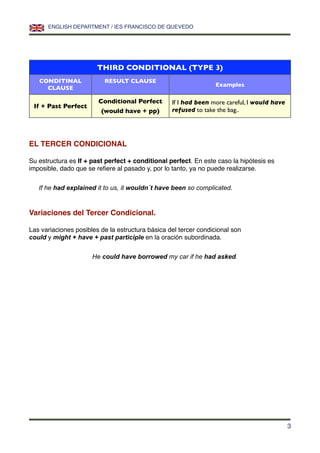
                        THIRD CONDITIONAL (TYPE 3)
   CONDITINAL             RESULT CLAUSE
                                                                 Examples
     CLAUSE

                        Conditional Perfect       If I had been more careful, I would have
 If + Past Perfect
                         (would have + pp)        refused to take the bag..


EL TERCER CONDICIONAL

Su estructura es If + past perfect + conditional perfect. En este caso la hipótesis es
imposible, dado que se refiere al pasado y, por lo tanto, ya no puede realizarse.


   If he had explained it to us, it wouldn´t have been so complicated.


Variaciones del Tercer Condicional.

Las variaciones posibles de la estructura básica del tercer condicional son
could y might + have + past participle en la oración subordinada.


                      He could have borrowed my car if he had asked.


                                                                                             3
ENGLISH DEPARTMENT / IES FRANCISCO DE QUEVEDO


                                  TIME CLAUSES
                               Las Oraciones Temporales


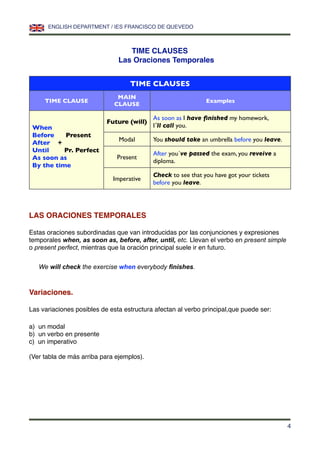
                                   TIME CLAUSES
                              MAIN
     TIME CLAUSE                                              Examples
                             CLAUSE

                                           As soon as I have finished my homework,
                           Future (will)
 When                                      I´ll call you.
 Before    Present
                               Modal       You should take an umbrella before you leave.
 After +
 Until     Pr. Perfect                     After you´ve passed the exam, you reveive a
 As soon as                   Present
                                           diploma.
 By the time
                                           Check to see that you have got your tickets
                             Imperative
                                           before you leave.


LAS ORACIONES TEMPORALES

Estas oraciones subordinadas que van introducidas por las conjunciones y expresiones
temporales when, as soon as, before, after, until, etc. Llevan el verbo en present simple
o present perfect, mientras que la oración principal suele ir en futuro.


   We will check the exercise when everybody finishes.


Variaciones.

Las variaciones posibles de esta estructura afectan al verbo principal,que puede ser:

a) un modal
b) un verbo en presente
c) un imperativo

(Ver tabla de más arriba para ejemplos).


                                                                                            4

1° condicional

  • 1.
    ENGLISH DEPARTMENT /IES FRANCISCO DE QUEVEDO CONDITIONAL SENTENCES Las Oraciones Condicionales FIRST CONDITIONAL (TYPE 1) CONDITINAL RESULT Examples CLAUSE CLAUSE Future (will) If I don´t travel this summer, I´ll regret it. Modal If you take a strager´s bag, it might be dangerous. If + Present Simple Present I f you want to buy a ticket, it costs $100. Imperative Study hard if you want to succesd. EL PRIMER CONDICIONAL Su estructura es If + presente + futuro y se usa para indicar que algo se cumplirá con seguridad si la condición también se cumple. If I miss the bus, I will take a taxi. No importa el orden en que se coloque el resultado y la condición, pero si esta aparece primero, es necesario poner siempre una coma entre ambas partes. Cuando la condición se expresa en forma negativa se puede utilizar unless (si no, a menos que, a no ser que) en lugar de if. Unless the weather is good, we won´t play tennis. Variaciones del Primer Condicional. Son posibles algunas variaciones de la estructura básica del primer condicional (ver tabla más arriba) a) If + presente + modal b) If + presente + presente c) If + presente + imperativo 1
  • 2.
    ENGLISH DEPARTMENT /IES FRANCISCO DE QUEVEDO SECOND CONDITIONAL (TYPE 2) CONDITINAL RESULT CLAUSE Examples CLAUSE Conditional If + Past Simple If you travelled, you would meet people. (would) EL SEGUNDO CONDICIONAL Su estructura es If + pasado + condicional y se usa para indicar condiciones hipotéticas referidas al presente, es decir que podrían tener lugar pero es poco probable que lleguen a término. If I had more time, I would study German. En español se usa el pretérito imperfecto de subjuntivo en lugar del pasado. Si el verbo de la oración subordinada es to be se puede utilizar were con todas las personas. If she were older, she would get the job. Siempre se usa were con el pronombre I cuando damos un consejo. If I were you, I would talk to him about this problem. Variaciones del Segundo Condicional. Las variaciones más frecuentes de la estructura básica del segundo condicional son los verbos modales could y might, pero estos denotan que la probabilidad de que la hipótesis se cumpla es todavía menor que si se usa would. Es español equivalen a las expresiones “tal vez” , “quizás”. If you studied, you could/might get good results. 2
  • 3.
    ENGLISH DEPARTMENT /IES FRANCISCO DE QUEVEDO THIRD CONDITIONAL (TYPE 3) CONDITINAL RESULT CLAUSE Examples CLAUSE Conditional Perfect If I had been more careful, I would have If + Past Perfect (would have + pp) refused to take the bag.. EL TERCER CONDICIONAL Su estructura es If + past perfect + conditional perfect. En este caso la hipótesis es imposible, dado que se refiere al pasado y, por lo tanto, ya no puede realizarse. If he had explained it to us, it wouldn´t have been so complicated. Variaciones del Tercer Condicional. Las variaciones posibles de la estructura básica del tercer condicional son could y might + have + past participle en la oración subordinada. He could have borrowed my car if he had asked. 3
  • 4.
    ENGLISH DEPARTMENT /IES FRANCISCO DE QUEVEDO TIME CLAUSES Las Oraciones Temporales TIME CLAUSES MAIN TIME CLAUSE Examples CLAUSE As soon as I have finished my homework, Future (will) When I´ll call you. Before Present Modal You should take an umbrella before you leave. After + Until Pr. Perfect After you´ve passed the exam, you reveive a As soon as Present diploma. By the time Check to see that you have got your tickets Imperative before you leave. LAS ORACIONES TEMPORALES Estas oraciones subordinadas que van introducidas por las conjunciones y expresiones temporales when, as soon as, before, after, until, etc. Llevan el verbo en present simple o present perfect, mientras que la oración principal suele ir en futuro. We will check the exercise when everybody finishes. Variaciones. Las variaciones posibles de esta estructura afectan al verbo principal,que puede ser: a) un modal b) un verbo en presente c) un imperativo (Ver tabla de más arriba para ejemplos). 4