Tema III:
Condicionales
PROFESOR: ALUMNO:
ROSA CONTRAMAESTRE LULIBETHZY ADNALOY CI:23.512.412
BARCELONA 15 DE OCTUBRE DEL 2017
REPÚBLICA BOLIVARIANA DE VENEZUELA
INSTITUTO UNIVERSITARIO POLITÉCNICO
“SANTIAGO MARIÑO”
SEDE BARCELONA
BARCELONA ESTADO ANZOÁTEGUI
¿Qué es una condicional?
 Una condicional es una oración o parte de una oración que expresa una
condición. Normalmente empieza con las palabras "when," "if" y "unless."
Una condición es lo que debe ocurrir antes de que pueda ocurrir otra
cosa.
Uso y tipos de condicionales
 Primer condicional
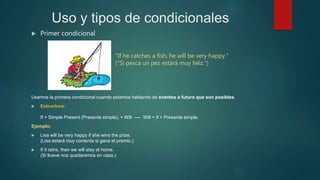
"If he catches a fish, he will be very happy."
("Si pesca un pez estará muy feliz.")
Usamos la primera condicional cuando estamos hablando de eventos a futuro que son posibles.
 Estructura:
If + Simple Present (Presente simple), + Will ---- Will + If + Presente simple.
Ejemplo:
 Lisa will be very happy if she wins the prize.
(Lisa estará muy contenta si gana el premio.)
 If it rains, then we will stay at home.
(Si llueve nos quedaremos en casa.)
 Segunda condicional
"If I met a genie, I would ask for infinite wealth..."
("Si conociera un genio le pediría riqueza infinita...")
Usamos la segunda condicional cuando hablamos de eventos a futuro que no son probables.
 Estructura:
If + Simple Past (Pasado simple), + Would + Forma básica ---- Would + Forma básica + If + Pasado simple.
Ejemplo:
 If I won a million dollars, I would travel around the world.
(Si ganara un millón de dólares viajaría por el mundo.)
 If I met him again, I would tell him the truth.
(Si lo volviera a ver le contaría la verdad.)
 Tercera Condicional
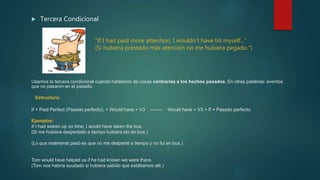
 "If I had paid more attention, I wouldn't have hit myself...“
(Si hubiera prestado más atención no me hubiera pegado.“)
Usamos la tercera condicional cuando hablamos de cosas contrarias a los hechos pasados. En otras palabras: eventos
que no pasaron en el pasado.
Estructura:
If + Past Perfect (Pasado perfecto), + Would have + V3 -------- Would have + V3 + If + Pasado perfecto.
Ejemplos:
If I had woken up on time, I would have taken the bus.
(Si me hubiera despertado a tiempo hubiera ido en bus.)
(Lo que realmente pasó es que no me desperté a tiempo y no fui en bus.)
Tom would have helped us if he had known we were there.
(Tom nos habría ayudado si hubiera sabido que estábamos allí.)
 Condicional Cero
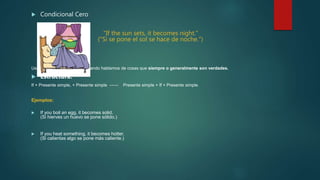
"If the sun sets, it becomes night."
("Si se pone el sol se hace de noche.")
Usamos la condicional cero cuando hablamos de cosas que siempre o generalmente son verdades.
 Estructura:
If + Presente simple, + Presente simple ------ Presente simple + If + Presente simple.
Ejemplos:
 If you boil an egg, it becomes solid.
(Si hierves un huevo se pone sólido.)
 If you heat something, it becomes hotter.
(Si calientas algo se pone más caliente.)
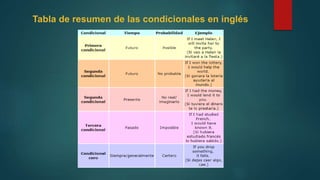
Tabla de resumen de las condicionales en inglés

Condicionales luli

  • 1.
    Tema III: Condicionales PROFESOR: ALUMNO: ROSACONTRAMAESTRE LULIBETHZY ADNALOY CI:23.512.412 BARCELONA 15 DE OCTUBRE DEL 2017 REPÚBLICA BOLIVARIANA DE VENEZUELA INSTITUTO UNIVERSITARIO POLITÉCNICO “SANTIAGO MARIÑO” SEDE BARCELONA BARCELONA ESTADO ANZOÁTEGUI
  • 2.
    ¿Qué es unacondicional?  Una condicional es una oración o parte de una oración que expresa una condición. Normalmente empieza con las palabras "when," "if" y "unless." Una condición es lo que debe ocurrir antes de que pueda ocurrir otra cosa.
  • 3.
    Uso y tiposde condicionales  Primer condicional "If he catches a fish, he will be very happy." ("Si pesca un pez estará muy feliz.") Usamos la primera condicional cuando estamos hablando de eventos a futuro que son posibles.  Estructura: If + Simple Present (Presente simple), + Will ---- Will + If + Presente simple. Ejemplo:  Lisa will be very happy if she wins the prize. (Lisa estará muy contenta si gana el premio.)  If it rains, then we will stay at home. (Si llueve nos quedaremos en casa.)
  • 4.
     Segunda condicional "IfI met a genie, I would ask for infinite wealth..." ("Si conociera un genio le pediría riqueza infinita...") Usamos la segunda condicional cuando hablamos de eventos a futuro que no son probables.  Estructura: If + Simple Past (Pasado simple), + Would + Forma básica ---- Would + Forma básica + If + Pasado simple. Ejemplo:  If I won a million dollars, I would travel around the world. (Si ganara un millón de dólares viajaría por el mundo.)  If I met him again, I would tell him the truth. (Si lo volviera a ver le contaría la verdad.)
  • 5.
     Tercera Condicional "If I had paid more attention, I wouldn't have hit myself...“ (Si hubiera prestado más atención no me hubiera pegado.“) Usamos la tercera condicional cuando hablamos de cosas contrarias a los hechos pasados. En otras palabras: eventos que no pasaron en el pasado. Estructura: If + Past Perfect (Pasado perfecto), + Would have + V3 -------- Would have + V3 + If + Pasado perfecto. Ejemplos: If I had woken up on time, I would have taken the bus. (Si me hubiera despertado a tiempo hubiera ido en bus.) (Lo que realmente pasó es que no me desperté a tiempo y no fui en bus.) Tom would have helped us if he had known we were there. (Tom nos habría ayudado si hubiera sabido que estábamos allí.)
  • 6.
     Condicional Cero "Ifthe sun sets, it becomes night." ("Si se pone el sol se hace de noche.") Usamos la condicional cero cuando hablamos de cosas que siempre o generalmente son verdades.  Estructura: If + Presente simple, + Presente simple ------ Presente simple + If + Presente simple. Ejemplos:  If you boil an egg, it becomes solid. (Si hierves un huevo se pone sólido.)  If you heat something, it becomes hotter. (Si calientas algo se pone más caliente.)
  • 7.
    Tabla de resumende las condicionales en inglés