Liliana Smoot
      3rd
    Linares
E-IE                       O-UE                          E-I

         Queiro         Queremos            Cuento    Contamos           Pido      Pedimos


                                   Contar
Querer


         Quieras        Quereìs             Cuentas    Contaìs           Pides       Pedìs


                                                                 Pedir
         Quiere         Quieren             Cuenta    Cuentan            Pide        Piden

         Pienso         Pensamos             Puedo    Podemos            Sirvo     Servimos
Pensar


                                   Poder
         Piensas         Pensaìs            Puedes     Podeìs            Sirves      Servìs
         Piensa         Piensan              Puede    Pueden             Sirve      Sirven

         Vengo          Venimos             Vuelvo    Volvemos
                                   Volver


         Vienes          Venìs              Vuelves    Volveìs      Notice the “we” form and the
Venir


                                                                    “you all” form do not change.
         Viene           Vienen             Vuelve    Vuelven

         Tengo          Tenemos             Duermo    Dormimos
                                                                    In the “yo” form of venir and
                                   Dormir
Tener


         Tienes          Teneìs             Duermes    Dormìs       tener, a G is added.
         Tiene           Tienen             Duerme    Duermen
This form is really only used in Spain. In
other Spanish speaking countries, you
would drop down and use “le”.
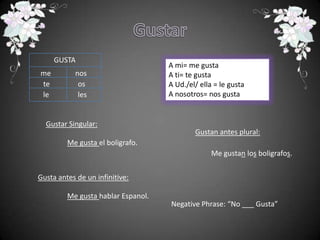
GUSTA
                                    A mi= me gusta
me         nos                      A ti= te gusta
te          os                      A Ud./el/ ella = le gusta
le          les                     A nosotros= nos gusta


  Gustar Singular:
                                            Gustan antes plural:
         Me gusta el boligrafo.
                                                  Me gustan los boligrafos.


Gusta antes de un infinitive:

         Me gusta hablar Espanol.
                                    Negative Phrase: “No ___ Gusta”
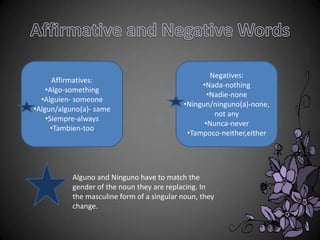
Negatives:
      Affirmatives:
                                                 •Nada-nothing
    •Algo-something
                                                   •Nadie-none
  •Alguien- someone
                                            •Ningun/ninguno(a)-none,
•Algun/alguno(a)- same
                                                     not any
    •Siempre-always
                                                  •Nunca-never
      •Tambien-too
                                             •Tampoco-neither,either


           Alguno and Ninguno have to match the
           gender of the noun they are replacing. In
           the masculine form of a singular noun, they
           change.
Malo<malìsimo
                          Muchas<muchìsimas
                          Difìcil<defìsimo

                                              Rico<riquìsimo
Joven<jovencìsimo                             Larga<larguìsima
                                   -ìsimo
Trabajador<trabajadorcìsimo                   Feliz<felicìsmo
                                  -ìsimos
                                   -ìsima
                                  -ìsimas


                              C,g,zqu,gu,c
                              N,rcìsimo
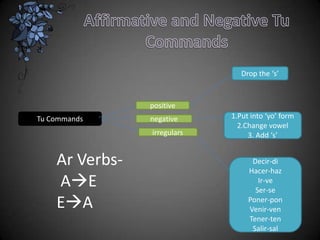
Drop the ‘s’


                positive
Tu Commands     negative     1.Put into ‘yo’ form
                               2.Change vowel
                irregulars        3. Add ‘s’


    Ar Verbs-                      Decir-di
                                  Hacer-haz
    AE                              Ir-ve
                                    Ser-se
    EA                           Poner-pon
                                  Venir-ven
                                  Tener-ten
                                   Salir-sal
Spanish Word   English Translation
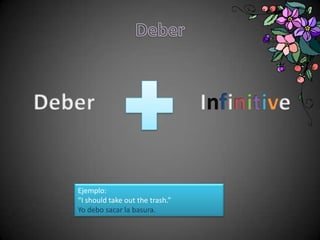
Ejemplo:
“I should take out the trash.”
Yo debo sacar la basura.
Second verb is not conjugated, as it is left   You wouldn’t say “no puedo nado,” but
in the infinitive.                             you WOULD say “No puedo nadar”.
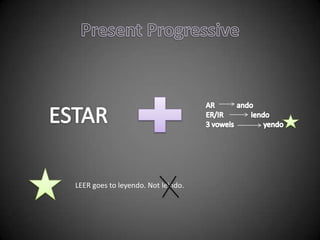
LEER goes to leyendo. Not leindo.
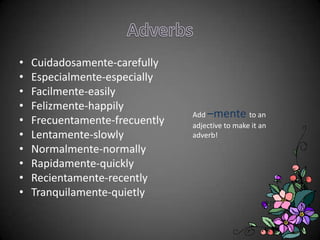
•   Cuidadosamente-carefully
•   Especialmente-especially
•   Facilmente-easily
•   Felizmente-happily
                                Add –mente to an
•   Frecuentamente-frecuently   adjective to make it an
•   Lentamente-slowly           adverb!
•   Normalmente-normally
•   Rapidamente-quickly
•   Recientamente-recently
•   Tranquilamente-quietly
Only in YO form of the Preterite!!!

Grammar book

  • 1.
    Liliana Smoot 3rd Linares
  • 4.
    E-IE O-UE E-I Queiro Queremos Cuento Contamos Pido Pedimos Contar Querer Quieras Quereìs Cuentas Contaìs Pides Pedìs Pedir Quiere Quieren Cuenta Cuentan Pide Piden Pienso Pensamos Puedo Podemos Sirvo Servimos Pensar Poder Piensas Pensaìs Puedes Podeìs Sirves Servìs Piensa Piensan Puede Pueden Sirve Sirven Vengo Venimos Vuelvo Volvemos Volver Vienes Venìs Vuelves Volveìs Notice the “we” form and the Venir “you all” form do not change. Viene Vienen Vuelve Vuelven Tengo Tenemos Duermo Dormimos In the “yo” form of venir and Dormir Tener Tienes Teneìs Duermes Dormìs tener, a G is added. Tiene Tienen Duerme Duermen
  • 5.
    This form isreally only used in Spain. In other Spanish speaking countries, you would drop down and use “le”.
  • 6.
    GUSTA A mi= me gusta me nos A ti= te gusta te os A Ud./el/ ella = le gusta le les A nosotros= nos gusta Gustar Singular: Gustan antes plural: Me gusta el boligrafo. Me gustan los boligrafos. Gusta antes de un infinitive: Me gusta hablar Espanol. Negative Phrase: “No ___ Gusta”
  • 7.
    Negatives: Affirmatives: •Nada-nothing •Algo-something •Nadie-none •Alguien- someone •Ningun/ninguno(a)-none, •Algun/alguno(a)- same not any •Siempre-always •Nunca-never •Tambien-too •Tampoco-neither,either Alguno and Ninguno have to match the gender of the noun they are replacing. In the masculine form of a singular noun, they change.
  • 8.
    Malo<malìsimo Muchas<muchìsimas Difìcil<defìsimo Rico<riquìsimo Joven<jovencìsimo Larga<larguìsima -ìsimo Trabajador<trabajadorcìsimo Feliz<felicìsmo -ìsimos -ìsima -ìsimas C,g,zqu,gu,c N,rcìsimo
  • 9.
    Drop the ‘s’ positive Tu Commands negative 1.Put into ‘yo’ form 2.Change vowel irregulars 3. Add ‘s’ Ar Verbs- Decir-di Hacer-haz AE Ir-ve Ser-se EA Poner-pon Venir-ven Tener-ten Salir-sal
  • 11.
    Spanish Word English Translation
  • 12.
    Ejemplo: “I should takeout the trash.” Yo debo sacar la basura.
  • 13.
    Second verb isnot conjugated, as it is left You wouldn’t say “no puedo nado,” but in the infinitive. you WOULD say “No puedo nadar”.
  • 14.
    LEER goes toleyendo. Not leindo.
  • 15.
    Cuidadosamente-carefully • Especialmente-especially • Facilmente-easily • Felizmente-happily Add –mente to an • Frecuentamente-frecuently adjective to make it an • Lentamente-slowly adverb! • Normalmente-normally • Rapidamente-quickly • Recientamente-recently • Tranquilamente-quietly
  • 16.
    Only in YOform of the Preterite!!!