By: Lindsey Davis
1. Nacionalidades
2. Stem Changing Verbs
3. Para
4. Indirect Object pronouns
5. Object Pronoun Placement
6. Gustar
7. Affirmative and Negative Words
8. Superlatives
9. Reflexives
10. Affirmative tu commands + irregulars + pronoun placement
11. Negative tu commands + irregulars + pronoun placement
12. Sequencing events
yo                                   (e  ie)
           nosotros
 tú        vosotros
                                  pienso    pensamos
El,        Ellos,
                                  piensas   penáis
ella,      ellas,
usted      ustedes
                                  piene     piensan


              (o  ue)                                   (e  i)


        almuerzo      almorzamos                       pido        pensamos

        almuerzas     almorzaís                       pides        pedís

        almuerza      almuerzan                        pide        piden
•Means ‘for’ and ‘to be
able to’
•Para is a preposition
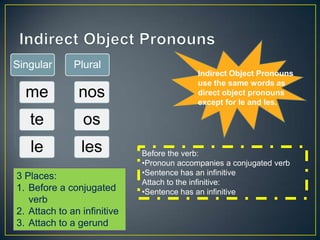
Singular      Plural
                                           Indirect Object Pronouns
                                           use the same words as
  me           nos                         direct object pronouns
                                           except for le and les.

   te           os
   le           les          Before the verb:
                             •Pronoun accompanies a conjugated verb
3 Places:                    •Sentence has an infinitive
                             Attach to the infinitive:
1. Before a conjugated       •Sentence has an infinitive
   verb
2. Attach to an infinitive
3. Attach to a gerund
¡Do it!         hacer          ¡hazlo!

                                    Attach the pronoun to the
                                             infinitive

                                     Attach the pronoun to a
    Indirect Object Pronouns                 gerund
    use the same words as
    direct object pronouns
    except for le and les.           Attach the pronoun to an
                                       affirmative command

                                    Place the pronoun before
                                       a conjugated verb
Use these
                                 phrases with
                                 an infinitive

                                                 Singular
me gusta    nos gusta
te gusta    os gusta               me gusta la idea    nos gusta la idea

                                   te gusta la idea       os gusta la idea
 le gusta   les gusta
                                    le gusta la idea      les gusta la idea


                                                 Plural

                Form of Gustar       me gustan las     nos gustan las
                matches the          personas          personas
                noun, NOT the                             os gustan las
                                     te gustan las
                speaker.                                  personas
                                     personas

                                     le gustan las        les gustan las
                                     personas             personas
Affirmative Words:                              Negative Words:
•Algo                                           •Nada
•Alguien                                        •Nadie
•Algún                                          •Ningún/ Ninguno
•Siempre                                        •Nunca
•También                                        •Tampoco

Alguno must match the gender   Ninguno must match the gender
of the noun it replaces.       of the noun it replaces.
Alguno  Algún                 Ninguno  Ningún

                                If no proceeds the verb a
                                double negative is required.
        When alguien or         •No quiero nada.
        nadie is the object
        verb it is after the    If a negative word proceeds the
        personal a.             verb a second negative is not
                                needed
When the last
                                     consonant is c, g, or
                                     z, spelling changes
                                     are required.
                                     Adjective and adverb
Suffix: -ísimo, -ísimos, -ísima, -
                                     endings change.
ísimas
                                     •C  qu
       Adds meaning extremely        •G  gu
       or very to the word.          •Z  c
       •Malo  malísimo
                                          Rico  riquísimo
       To add emphasis to a               Larga  larguísima
       word drop the final vowel          Feliz  felicísimo
       and add ísimo. It must
       agree in gender and
       number with the noun it is
       modifying.
                                      La idea de Rosa es
Adjectives ending                     interesantísima.
in n or r form by
adding císimo/a

        Joven  jovencísimo
Me levanto    Nos levantamos

                                           Te levantas   Os levantáis
•Subject is also object
•A person does and receives                 Se levanta   Se levantan
the action
•Subject, pronoun, verb are all
same form.
                                       Attached to a gerund:
     Yo me levanto a las                 Estoy acostándome ahora mismo.
     ocho de la mañana.


In front of a conjugated verb:
  Me acuesto a las diez de la noche.


Attach to an infinitive:
   Voy a acostarme ahora mismo.
Even though it is a tú
command, it ends in
the usted form.                 Irregulars
Caminar      Comer
•¡Camina!    •¡Come!
Abrir                                          When you use
                                               a pronoun
•¡Abre!
                                               with an
                         Decir  di
                                               affirmative
                         Hacer  haz
                                               command, the
                         Ir  ve
                                               pronoun
                         Poner  pon
                                               attaches to
                         Salir  sal
                                               the command.
                         Ser sé
                         Tener  ten     Cruza el parque 
                         Venir  ven     ¡Cruzalo!
Formed by using the
present tense, dropping
the o, and adding the                   Irregulars
appropriate ending.

    Hablo  ¡No hables!

    Vuelvo  ¡No vuelvas!   None of the yo           Object
                            forms end in –o.         pronoun
                                                     come
                            Dar (doy)                before the
                            Estar (estoy)            verb just
                            Ir (voy)                 like other
       Irregular yo         Ser (soy)                conjugated
       form                                          verbs.
•Primero- first
•Entonces- then
•Luego/ Después- after
•Por fin- last
•Antes de/ Después de- before/ after
•Por la mañana/ tarde/ noche- in during the…
•Los lunes(etc.)- has to do with that day

Grammar book

  • 1.
  • 2.
    1. Nacionalidades 2. StemChanging Verbs 3. Para 4. Indirect Object pronouns 5. Object Pronoun Placement 6. Gustar 7. Affirmative and Negative Words 8. Superlatives 9. Reflexives 10. Affirmative tu commands + irregulars + pronoun placement 11. Negative tu commands + irregulars + pronoun placement 12. Sequencing events
  • 4.
    yo (e  ie) nosotros tú vosotros pienso pensamos El, Ellos, piensas penáis ella, ellas, usted ustedes piene piensan (o  ue) (e  i) almuerzo almorzamos pido pensamos almuerzas almorzaís pides pedís almuerza almuerzan pide piden
  • 5.
    •Means ‘for’ and‘to be able to’ •Para is a preposition
  • 6.
    Singular Plural Indirect Object Pronouns use the same words as me nos direct object pronouns except for le and les. te os le les Before the verb: •Pronoun accompanies a conjugated verb 3 Places: •Sentence has an infinitive Attach to the infinitive: 1. Before a conjugated •Sentence has an infinitive verb 2. Attach to an infinitive 3. Attach to a gerund
  • 7.
    ¡Do it! hacer ¡hazlo! Attach the pronoun to the infinitive Attach the pronoun to a Indirect Object Pronouns gerund use the same words as direct object pronouns except for le and les. Attach the pronoun to an affirmative command Place the pronoun before a conjugated verb
  • 8.
    Use these phrases with an infinitive Singular me gusta nos gusta te gusta os gusta me gusta la idea nos gusta la idea te gusta la idea os gusta la idea le gusta les gusta le gusta la idea les gusta la idea Plural Form of Gustar me gustan las nos gustan las matches the personas personas noun, NOT the os gustan las te gustan las speaker. personas personas le gustan las les gustan las personas personas
  • 9.
    Affirmative Words: Negative Words: •Algo •Nada •Alguien •Nadie •Algún •Ningún/ Ninguno •Siempre •Nunca •También •Tampoco Alguno must match the gender Ninguno must match the gender of the noun it replaces. of the noun it replaces. Alguno  Algún Ninguno  Ningún If no proceeds the verb a double negative is required. When alguien or •No quiero nada. nadie is the object verb it is after the If a negative word proceeds the personal a. verb a second negative is not needed
  • 10.
    When the last consonant is c, g, or z, spelling changes are required. Adjective and adverb Suffix: -ísimo, -ísimos, -ísima, - endings change. ísimas •C  qu Adds meaning extremely •G  gu or very to the word. •Z  c •Malo  malísimo Rico  riquísimo To add emphasis to a Larga  larguísima word drop the final vowel Feliz  felicísimo and add ísimo. It must agree in gender and number with the noun it is modifying. La idea de Rosa es Adjectives ending interesantísima. in n or r form by adding císimo/a Joven  jovencísimo
  • 11.
    Me levanto Nos levantamos Te levantas Os levantáis •Subject is also object •A person does and receives Se levanta Se levantan the action •Subject, pronoun, verb are all same form. Attached to a gerund: Yo me levanto a las Estoy acostándome ahora mismo. ocho de la mañana. In front of a conjugated verb: Me acuesto a las diez de la noche. Attach to an infinitive: Voy a acostarme ahora mismo.
  • 12.
    Even though itis a tú command, it ends in the usted form. Irregulars Caminar Comer •¡Camina! •¡Come! Abrir When you use a pronoun •¡Abre! with an Decir  di affirmative Hacer  haz command, the Ir  ve pronoun Poner  pon attaches to Salir  sal the command. Ser sé Tener  ten Cruza el parque  Venir  ven ¡Cruzalo!
  • 13.
    Formed by usingthe present tense, dropping the o, and adding the Irregulars appropriate ending. Hablo  ¡No hables! Vuelvo  ¡No vuelvas! None of the yo Object forms end in –o. pronoun come Dar (doy) before the Estar (estoy) verb just Ir (voy) like other Irregular yo Ser (soy) conjugated form verbs.
  • 14.
    •Primero- first •Entonces- then •Luego/Después- after •Por fin- last •Antes de/ Después de- before/ after •Por la mañana/ tarde/ noche- in during the… •Los lunes(etc.)- has to do with that day