MODAL

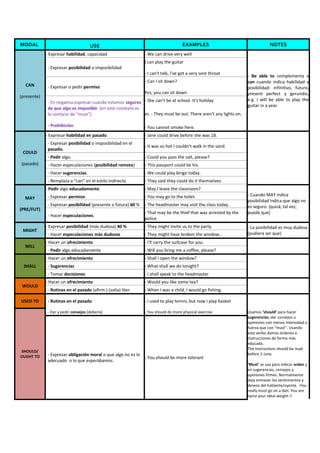
- Expresar habilidad, capacidad
- Expresar posibilidad o imposibilidad
CAN
(presente)

EXAMPLES

USE

- Expresar o pedir permiso

- We can drive very well
I can play the guitar
- I can't talk, I've got a very sore throat
- Can I sit down?
Yes, you can sit down

- En negativa expresar cuando estamos seguros - She can't be at school. It's holiday
de que algo es imposible (en este contexto es
vs. - They must be out. There aren’t any lights on.
lo contario de “must”)
- Prohibición.
- Expresar habilidad en pasado.

- Jane could drive before she was 18.

- Expresar posibilidad o imposibilidad en el
pasado.

- It was so hot I couldn't walk in the sand.

- Pedir algo.

- Could you pass the salt, please?

- Hacer especulaciones (posibilidad remota)

- This passport could be his.
- We could play bingo today.

- Remplaza a “can” en el estilo indirecto

(pasado)

- They said they could do it themselves.

- Pedir algo educadamente.

- May I leave the classroom?

(PRE/FUT)

MIGHT
WILL

- Expresar permiso.

- You may go to the toilet.

- Expresar posibilidad (presente o futura) 60 %

- The headmaster may visit the class today.

- Hacer especulaciones.

MAY

- That may be the thief that was arrested by the
police.

- Expresar posibilidad (más dudosa) 40 %
- Hacer especulaciones más dudosas
- Hacer un ofrecimiento
- Pedir algo educadamente
- Hacer un ofrecimiento

SHALL

- They might invite us to the party.
- They might have broken the window…

SHOULD/
OUGHT TO

- La posibilidad es muy dudosa
(pudiera ser que)

- Will you bring me a coffee, please?
- Shall I open the window?

- Sugerencias

- What shall we do tonight?
- I shall speak to the headmaster

- Hacer un ofrecimiento

- Would you like some tea?

- Rutinas en el pasado (afirm.) (solía) liter.

- When I was a child, I would go fishing.

- Rutinas en el pasado

- I used to play tennis, but now I play basket

- Dar y pedir consejos (debería)

USED TO

- Cuando MAY indica
posibilidad indica que algo no
es seguro. (quizá, tal vez,
puede que)

- I'll carry the suitcase for you.

- Tomar decisiones
WOULD

- Be able to complementa a
can cuando indica habilidad y
posibilidad: infinitivo, futuro,
present perfect y gerundio,
e.g. I will be able to play the
guitar in a year.

- You cannot smoke here.

- Hacer sugerencias.

COULD

NOTES

- You should do more physical exercise

- Expresar obligación moral o que algo no es lo
- You should be more tolerant
adecuado o lo que esperábamos.

Usamos ‘should’ para hacer
sugerencias, dar consejos u
opiniones con menos intensidad o
fuerza que con “must”. Usando
este verbo damos órdenes e
instrucciones de forma más
educada.
The instructions should be read
before 2 June.
‘Must’ se usa para indicar orden y
en sugerencias, consejos y
opiniones firmes. Normalmente
deja entrever los sentimientos y
deseos del hablante/oyente. -You
really must go on a diet. You are
twice your ideal weight.!!
- En negativa: expre sar prohibición

- Expresar deducción (afirmativa)

- You mustn't smoke in hospitals

- They must be out. There aren’t any lights on.

MUST
- Recomendación.

- You must see that film- it´s fantastic.

- Expresar obligación / necesidad

(presente)

- You must go to school

HAVE (GOT) - Expresar obligación externa (ley, norma)
TO
DON´T
/DOESN´T
HAVE TO
NEED
NEEDN´T

- En negativa: ausencia de obligación

- You don't have to wear a uniform in this school

- Expresar necesidad

Must y Have to tienen un
significado similar
- Have to es más común en
obligaciones generales o
externas, por ejemplo reglas o
leyes. I have to wear a tie at
work (It´s a rule in this
company)
- Must es más común en
obligaciones concretas (en una
occasion en particular) o
personales.I must buy a new
tie ( Es mi decision)
Have got to se use en vez de
have to en ingles hablado.
e.g. I´ve got to go now. It´s
very late.

- Need we go now?

- Con sentido pasivo

- The trees need pruning.

- En negativa: ausencia de obligación = don't
- You needn't get up early at weekends
have to

HAD BETTER - Dar consejos o sugerencia (sería mejor)
- +base: preferir algo 2 sujetos iguales
WOULD
RATHER

- You have to be 18 to drive a car

- HAVE TO complementa a
MUST en los tiempos que este
carece, e.g. She had to get up
early yesterday.

- + Oración en pasado simple: (preferiría)
sujetos diferentes
- + base + than + infinitivo

- It's getting dark, we'd better go home now
- I'd rather stay at home (prefiero)
- I'd rather she studied harder
- I'd rather listen to music than dance

MODALES PERFECTOS:
- Se refieren al pasado: expresan conclusiones, suposiciones y conjeturas que hacemos sobre
hechos pasados.
- Se forman con un modal + have + participio.
•

MUST + HAVE + PARTICIPIO → conclusiones lógicas en el pasado, e.g. Sheila was
absent yesterday. She must have been ill.(Debe haber estado enferma)

•

COULD + HAVE + PARTICIPIO
→ indica que hubo posibilidad de hacer algo en el pasado pero realmente no se
hizo, e.g. He could have helped us, but he came too late.(Podía habernos
ayudado)
→ para hacer una suposición en el pasado, e.g. She didn't come to the party. She
could have been ill.(Puede que estuviera enferma)
→ en negativa, expresa la incredulidad de que lo ocurrido sea cierto, e.g. She
couldn't have said those words. (No ha podido decir esas palabras)
•

MAY / MIGHT + HAVE + PARTICIPIO → expresan una suposición sobre el pasado,
e.g. Call her again. She may / might not have heard you the first time. (Puede que no
te haya oido)

•

SHOULD / OUGHT TO + HAVE + PARTICIPIO
→ para lamentar que no se siguió un consejo en el pasado, e.g. She looks
worse. She should / ought to have seen a doctor last week. (Debió haber ido
al médico)
→ para lamentar que no se haya cumplido lo que esperábamos, e.g. They
should have been home by now. (Deberían haber llegado a asa)
→ en negativa demuestran nuestra opinión crítica sobre algo que no
debería haber ocurrido, e.g. I'm very angry with her. She shouldn't have been
so rude.

•

NEEDN´T HAVE + PARTICIPIO
→ expresa que no existía necesidad ni obligación de llevar a cabo algo que ya
se ha hecho. e.g.I needn't have arrived so early. (No tenia que haber llegado
tan temprano.)

Modals outline

  • 1.
    MODAL - Expresar habilidad,capacidad - Expresar posibilidad o imposibilidad CAN (presente) EXAMPLES USE - Expresar o pedir permiso - We can drive very well I can play the guitar - I can't talk, I've got a very sore throat - Can I sit down? Yes, you can sit down - En negativa expresar cuando estamos seguros - She can't be at school. It's holiday de que algo es imposible (en este contexto es vs. - They must be out. There aren’t any lights on. lo contario de “must”) - Prohibición. - Expresar habilidad en pasado. - Jane could drive before she was 18. - Expresar posibilidad o imposibilidad en el pasado. - It was so hot I couldn't walk in the sand. - Pedir algo. - Could you pass the salt, please? - Hacer especulaciones (posibilidad remota) - This passport could be his. - We could play bingo today. - Remplaza a “can” en el estilo indirecto (pasado) - They said they could do it themselves. - Pedir algo educadamente. - May I leave the classroom? (PRE/FUT) MIGHT WILL - Expresar permiso. - You may go to the toilet. - Expresar posibilidad (presente o futura) 60 % - The headmaster may visit the class today. - Hacer especulaciones. MAY - That may be the thief that was arrested by the police. - Expresar posibilidad (más dudosa) 40 % - Hacer especulaciones más dudosas - Hacer un ofrecimiento - Pedir algo educadamente - Hacer un ofrecimiento SHALL - They might invite us to the party. - They might have broken the window… SHOULD/ OUGHT TO - La posibilidad es muy dudosa (pudiera ser que) - Will you bring me a coffee, please? - Shall I open the window? - Sugerencias - What shall we do tonight? - I shall speak to the headmaster - Hacer un ofrecimiento - Would you like some tea? - Rutinas en el pasado (afirm.) (solía) liter. - When I was a child, I would go fishing. - Rutinas en el pasado - I used to play tennis, but now I play basket - Dar y pedir consejos (debería) USED TO - Cuando MAY indica posibilidad indica que algo no es seguro. (quizá, tal vez, puede que) - I'll carry the suitcase for you. - Tomar decisiones WOULD - Be able to complementa a can cuando indica habilidad y posibilidad: infinitivo, futuro, present perfect y gerundio, e.g. I will be able to play the guitar in a year. - You cannot smoke here. - Hacer sugerencias. COULD NOTES - You should do more physical exercise - Expresar obligación moral o que algo no es lo - You should be more tolerant adecuado o lo que esperábamos. Usamos ‘should’ para hacer sugerencias, dar consejos u opiniones con menos intensidad o fuerza que con “must”. Usando este verbo damos órdenes e instrucciones de forma más educada. The instructions should be read before 2 June. ‘Must’ se usa para indicar orden y en sugerencias, consejos y opiniones firmes. Normalmente deja entrever los sentimientos y deseos del hablante/oyente. -You really must go on a diet. You are twice your ideal weight.!!
  • 2.
    - En negativa:expre sar prohibición - Expresar deducción (afirmativa) - You mustn't smoke in hospitals - They must be out. There aren’t any lights on. MUST - Recomendación. - You must see that film- it´s fantastic. - Expresar obligación / necesidad (presente) - You must go to school HAVE (GOT) - Expresar obligación externa (ley, norma) TO DON´T /DOESN´T HAVE TO NEED NEEDN´T - En negativa: ausencia de obligación - You don't have to wear a uniform in this school - Expresar necesidad Must y Have to tienen un significado similar - Have to es más común en obligaciones generales o externas, por ejemplo reglas o leyes. I have to wear a tie at work (It´s a rule in this company) - Must es más común en obligaciones concretas (en una occasion en particular) o personales.I must buy a new tie ( Es mi decision) Have got to se use en vez de have to en ingles hablado. e.g. I´ve got to go now. It´s very late. - Need we go now? - Con sentido pasivo - The trees need pruning. - En negativa: ausencia de obligación = don't - You needn't get up early at weekends have to HAD BETTER - Dar consejos o sugerencia (sería mejor) - +base: preferir algo 2 sujetos iguales WOULD RATHER - You have to be 18 to drive a car - HAVE TO complementa a MUST en los tiempos que este carece, e.g. She had to get up early yesterday. - + Oración en pasado simple: (preferiría) sujetos diferentes - + base + than + infinitivo - It's getting dark, we'd better go home now - I'd rather stay at home (prefiero) - I'd rather she studied harder - I'd rather listen to music than dance MODALES PERFECTOS: - Se refieren al pasado: expresan conclusiones, suposiciones y conjeturas que hacemos sobre hechos pasados. - Se forman con un modal + have + participio. • MUST + HAVE + PARTICIPIO → conclusiones lógicas en el pasado, e.g. Sheila was absent yesterday. She must have been ill.(Debe haber estado enferma) • COULD + HAVE + PARTICIPIO → indica que hubo posibilidad de hacer algo en el pasado pero realmente no se hizo, e.g. He could have helped us, but he came too late.(Podía habernos ayudado)
  • 3.
    → para haceruna suposición en el pasado, e.g. She didn't come to the party. She could have been ill.(Puede que estuviera enferma) → en negativa, expresa la incredulidad de que lo ocurrido sea cierto, e.g. She couldn't have said those words. (No ha podido decir esas palabras) • MAY / MIGHT + HAVE + PARTICIPIO → expresan una suposición sobre el pasado, e.g. Call her again. She may / might not have heard you the first time. (Puede que no te haya oido) • SHOULD / OUGHT TO + HAVE + PARTICIPIO → para lamentar que no se siguió un consejo en el pasado, e.g. She looks worse. She should / ought to have seen a doctor last week. (Debió haber ido al médico) → para lamentar que no se haya cumplido lo que esperábamos, e.g. They should have been home by now. (Deberían haber llegado a asa) → en negativa demuestran nuestra opinión crítica sobre algo que no debería haber ocurrido, e.g. I'm very angry with her. She shouldn't have been so rude. • NEEDN´T HAVE + PARTICIPIO → expresa que no existía necesidad ni obligación de llevar a cabo algo que ya se ha hecho. e.g.I needn't have arrived so early. (No tenia que haber llegado tan temprano.)