

MARIA CAMILA DORADO
ANGELA VELILLA
LUIS JOSE BENITEZ
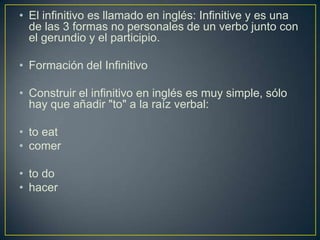
• El infinitivo es llamado en inglés: Infinitive y es una
de las 3 formas no personales de un verbo junto con
el gerundio y el participio.
• Formación del Infinitivo
• Construir el infinitivo en inglés es muy simple, sólo
hay que añadir "to" a la raíz verbal:
• to eat
• comer
• to do
• hacer
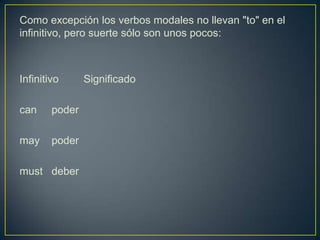
Como excepción los verbos modales no llevan "to" en el
infinitivo, pero suerte sólo son unos pocos:
Infinitivo Significado
can poder
may poder
must deber
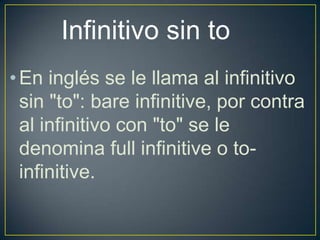
Infinitivo sin to
•En inglés se le llama al infinitivo
sin "to": bare infinitive, por contra
al infinitivo con "to" se le
denomina full infinitive o to-
infinitive.
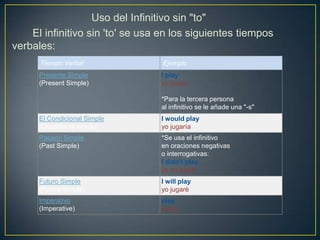
Uso del Infinitivo sin "to"
El infinitivo sin 'to' se usa en los siguientes tiempos
verbales:
Tiempo Verbal Ejemplo
Presente Simple
(Present Simple)
I play
yo juego
*Para la tercera persona
al infinitivo se le añade una "-s"
El Condicional Simple
(Conditional simple)
I would play
yo jugaría
Pasado Simple
(Past Simple)
*Se usa el infinitivo
en oraciones negativas
o interrogativas:
I didn't play
yo no jugué
Futuro Simple
(Future Simple)
I will play
yo jugaré
Imperativo
(Imperative)
play
juega
Uso del Infinitivo con "to"
• El infinitivo con 'to' se usa en el siguiente tiempo verbal:
Futuro going to
(Future going to)
I am going to play
yo voy a ir a jugar
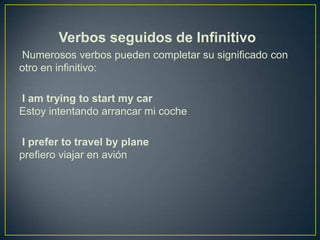
Verbos seguidos de Infinitivo
Numerosos verbos pueden completar su significado con
otro en infinitivo:
I am trying to start my car
Estoy intentando arrancar mi coche
I prefer to travel by plane
prefiero viajar en avión
Verbo Significado
agree estar de acuerdo
aim aspirar
appear aparecer
arrange organizar
ask* preguntar
attempt intentar
be able ser capaz de
beg* mendigar
care cuidar
claim reclamar
consent consentir
decide decidir
demand exigir
deserve merecer
expect* esperar
fail fallar
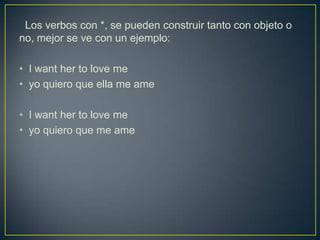
Los verbos con *, se pueden construir tanto con objeto o
no, mejor se ve con un ejemplo:
• I want her to love me
• yo quiero que ella me ame
• I want her to love me
• yo quiero que me ame
Verbos seguidos de un objeto más
Infinitivo
• Hay verbos que adicionalmente al infinitivo, siempre
necesitan un objeto:
• we don't allow our boys to play with guns
nosotros no permitimos a nuestros chicos jugar con
pistolas
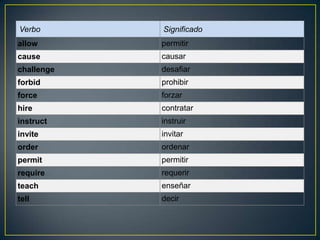
Verbo Significado
allow permitir
cause causar
challenge desafiar
forbid prohibir
force forzar
hire contratar
instruct instruir
invite invitar
order ordenar
permit permitir
require requerir
teach enseñar
tell decir
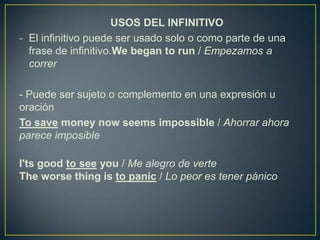
USOS DEL INFINITIVO
- El infinitivo puede ser usado solo o como parte de una
frase de infinitivo.We began to run / Empezamos a
correr
- Puede ser sujeto o complemento en una expresión u
oración
To save money now seems impossible / Ahorrar ahora
parece imposible
I'ts good to see you / Me alegro de verte
The worse thing is to panic / Lo peor es tener pánico
Puede expresar un deber u obligación cuando sigue al
verbo to be
You are not to smoke here / No debe fumar aquí
- Puede expresar un propósito o la razón por la que
alguien hace algo.
He went to England to learn English / Fueron a Inglaterra
a aprender inglés.
Craig went to the supermarket to buy some chocolate.
Craig fue al supermercado a comprar chocolate.
NOT ( for to buy / for buying / for buy )
Puede ser el complemento u objeto de un verbo, nombre o
adjectivo.
She wants to pay / Ella quiere pagar
His plan is to keep us in suspense / Su plan es
mantenernos en suspense
I had the privilege to work with Mr. Taggart / Tuve el
privilegio de trabajar con el señor Taggart
I'm very pleased to meet you / Encantado de conocerle
Craig's very fortunate to have such good friends / Craig
tiene mucha suerte de tener tan buenos amigos
- Puede ser usado (sin 'to') después de 'do' o de un
verbo modal auxiliar como 'must', 'may', 'might', etc.
Do you live alone? / ¿Vives solo?
I might go to the pub after dinner / Quizás vaya al pub
después de la cena
Hay verbos en inglés que pueden tener detrás el objeto y luego un
verbo en infinitivo (con ‘to’).
Tell
I told you to wash your hands. NOT I told you that you wash your
hands.
Invite
She invited me to go to her party. NOT She invited me that I go to her
party.
Allow
They didn’t allow us to smoke in their office. NOT They didn’t allow that
we smoke in their office.
A continuación os indicamos algunos de los verbos y expresiones que
utilizan este patrón:
advise / ask can’t bear / cause / encourage / expect / forbid / force / get
/ help / leave / need
order / persuade / remind / teach / warn / beg / would like / would prefer
thanks!

The infinitive

  • 1.
    MARIA CAMILA DORADO ANGELAVELILLA LUIS JOSE BENITEZ
  • 2.
    • El infinitivoes llamado en inglés: Infinitive y es una de las 3 formas no personales de un verbo junto con el gerundio y el participio. • Formación del Infinitivo • Construir el infinitivo en inglés es muy simple, sólo hay que añadir "to" a la raíz verbal: • to eat • comer • to do • hacer
  • 3.
    Como excepción losverbos modales no llevan "to" en el infinitivo, pero suerte sólo son unos pocos: Infinitivo Significado can poder may poder must deber
  • 4.
    Infinitivo sin to •Eninglés se le llama al infinitivo sin "to": bare infinitive, por contra al infinitivo con "to" se le denomina full infinitive o to- infinitive.
  • 5.
    Uso del Infinitivosin "to" El infinitivo sin 'to' se usa en los siguientes tiempos verbales: Tiempo Verbal Ejemplo Presente Simple (Present Simple) I play yo juego *Para la tercera persona al infinitivo se le añade una "-s" El Condicional Simple (Conditional simple) I would play yo jugaría Pasado Simple (Past Simple) *Se usa el infinitivo en oraciones negativas o interrogativas: I didn't play yo no jugué Futuro Simple (Future Simple) I will play yo jugaré Imperativo (Imperative) play juega
  • 6.
    Uso del Infinitivocon "to" • El infinitivo con 'to' se usa en el siguiente tiempo verbal: Futuro going to (Future going to) I am going to play yo voy a ir a jugar
  • 7.
    Verbos seguidos deInfinitivo Numerosos verbos pueden completar su significado con otro en infinitivo: I am trying to start my car Estoy intentando arrancar mi coche I prefer to travel by plane prefiero viajar en avión
  • 8.
    Verbo Significado agree estarde acuerdo aim aspirar appear aparecer arrange organizar ask* preguntar attempt intentar be able ser capaz de beg* mendigar care cuidar claim reclamar consent consentir decide decidir demand exigir deserve merecer expect* esperar fail fallar
  • 9.
    Los verbos con*, se pueden construir tanto con objeto o no, mejor se ve con un ejemplo: • I want her to love me • yo quiero que ella me ame • I want her to love me • yo quiero que me ame
  • 10.
    Verbos seguidos deun objeto más Infinitivo • Hay verbos que adicionalmente al infinitivo, siempre necesitan un objeto: • we don't allow our boys to play with guns nosotros no permitimos a nuestros chicos jugar con pistolas
  • 11.
    Verbo Significado allow permitir causecausar challenge desafiar forbid prohibir force forzar hire contratar instruct instruir invite invitar order ordenar permit permitir require requerir teach enseñar tell decir
  • 12.
    USOS DEL INFINITIVO -El infinitivo puede ser usado solo o como parte de una frase de infinitivo.We began to run / Empezamos a correr - Puede ser sujeto o complemento en una expresión u oración To save money now seems impossible / Ahorrar ahora parece imposible I'ts good to see you / Me alegro de verte The worse thing is to panic / Lo peor es tener pánico
  • 13.
    Puede expresar undeber u obligación cuando sigue al verbo to be You are not to smoke here / No debe fumar aquí - Puede expresar un propósito o la razón por la que alguien hace algo. He went to England to learn English / Fueron a Inglaterra a aprender inglés. Craig went to the supermarket to buy some chocolate. Craig fue al supermercado a comprar chocolate. NOT ( for to buy / for buying / for buy )
  • 14.
    Puede ser elcomplemento u objeto de un verbo, nombre o adjectivo. She wants to pay / Ella quiere pagar His plan is to keep us in suspense / Su plan es mantenernos en suspense I had the privilege to work with Mr. Taggart / Tuve el privilegio de trabajar con el señor Taggart I'm very pleased to meet you / Encantado de conocerle Craig's very fortunate to have such good friends / Craig tiene mucha suerte de tener tan buenos amigos - Puede ser usado (sin 'to') después de 'do' o de un verbo modal auxiliar como 'must', 'may', 'might', etc. Do you live alone? / ¿Vives solo? I might go to the pub after dinner / Quizás vaya al pub después de la cena
  • 15.
    Hay verbos eninglés que pueden tener detrás el objeto y luego un verbo en infinitivo (con ‘to’). Tell I told you to wash your hands. NOT I told you that you wash your hands. Invite She invited me to go to her party. NOT She invited me that I go to her party. Allow They didn’t allow us to smoke in their office. NOT They didn’t allow that we smoke in their office. A continuación os indicamos algunos de los verbos y expresiones que utilizan este patrón: advise / ask can’t bear / cause / encourage / expect / forbid / force / get / help / leave / need order / persuade / remind / teach / warn / beg / would like / would prefer
  • 16.