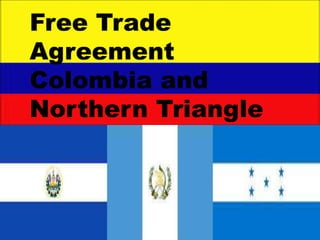
Free Trade 
Agreement 
Colombia and 
Northern Triangle
Importance of the 
agreement for Colombia 
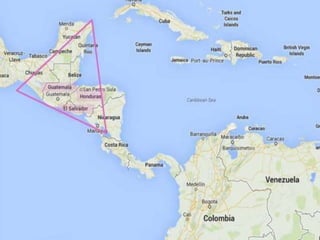
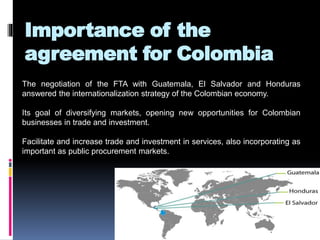
The negotiation of the FTA with Guatemala, El Salvador and Honduras 
answered the internationalization strategy of the Colombian economy. 
Its goal of diversifying markets, opening new opportunities for Colombian 
businesses in trade and investment. 
Facilitate and increase trade and investment in services, also incorporating as 
important as public procurement markets.
Importance of the 
agreement for Colombia 
This Agreement provides stability, transparency and predictability, should become the 
main tool for attracting FDI contributes to: 
• The generation of employment 
• Access to new technologies 
• Growth and development of the four participating countries. 
Existing and future investments will be covered by FTA when it enters into force, 
being protected under international standards of non-discrimination, protection 
and treatment in respect of investment.
Important Dates: 
 June 2006: Colombia's President and Guatemala’s President agreed to 
negotiate a FTA that contributes to the complimentarily of the economies of 
both countries. 
 June 5 to 9, 2006 in Bogota, Colombia. The topics covered were: 
 Market Access 
 Non-agricultural goods 
 Trade Remedies 
 Services 
 Trade facilitation 
 Sanitary Measures 
 Phytosanitary 
 Institutional Affairs 
 Dispute 
Technical Barriers to Trade 
 Rules of Origin 
 Agriculture 
 Procurement 
 Investment
Important Dates: 
 June 5, 2006: Colombia and Guatemala signed agreement 
and promotion and protection of investments. 
 July 11 to 14, 2006: Balance II round Colombia free trade agreements with 
Central America's Northern Triangle which concluded in Guatemala. 
 August 18, 2006: III round of negotiations with Northern Triangle of Central 
America concluded in Medellin, Colombia.
Important Dates: 
 September 11, 2006 in Colombia: Conforming Measures (services and 
investment) 
 September 22 to 29, 2006 in Tegucigalpa, Honduras IV Round of 
negotiations with Colombia. 
 November 3, 2006 in San Salvador, El Salvador. V Round of negotiations 
with Colombia. 
The Bureau of Industry achieve to agree on immediate, about 40% of the 
tariff.
Important Dates: 
 December 8, 2006 in Antigua, Guatemala. The balance of the sixth round 
of negotiations. 
 February 19 to 23, 2007 in Medellin, Colombia. 
 The comprehensive progress of negotiations reached 90%. 
 The remaining 10% is the hardest, because it is where the greatest 
sensitivity to the parties, especially market access in both agriculture and 
industry and rules of origin.
Important Dates: 
 March 16, 2007 in Sonsonate, El Salvador. Completion of negotiations after 
six rounds of negotiations and two meetings of the working groups of 
market access was achieved: 
 The agreement in 72%of the products of the tariff in the agricultural field. 
 In the industrial field, the treaty included more than 75%of the tariff. 
 Premiered 'Evolutionary clause' which allows subsequent Treaty revisions 
to inclusion of new products.
Important Dates: 
 August 9, 2007 - Colombia and the North triangle subscribe TLC. 
 The ministers of the signatory countries expressed that in the short term, 
which could be added the other CentralAmerican countries. 
 Within trade policy that advances the Colombian Government is moving 
towards the establishment of a continental free trade area. 
http://www.sice.oas.org/
In Force 
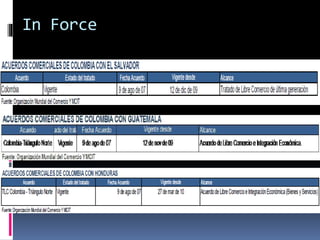
 The Government of Colombia sent the senate the text of the FTA with 
Colombia and northern triangle on February 20, 2008. 
 The committees of the senate and house of representatives of Colombia 
approved the deal on 07 May and 4 June 2008, respectively. 
 The legislative assembly of El Salvador approved the FTA on August 21, 
2008. In September 2009, the Congress of Guatemala ratified the FTA. 
 Two months later, on November 13, 2009, entered into force between 
Guatemala and Colombia FTA. 
 For El Salvador and Colombia, the treaty begins its effect on February 1, 
2010. 
 The March 27, 2010, becomes effective the FTA between Honduras and 
Colombia. 
http://www.sice.oas.org/
In Force
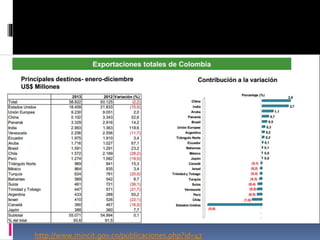
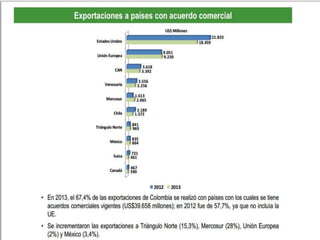
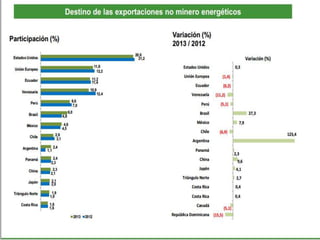
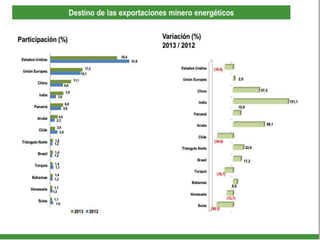
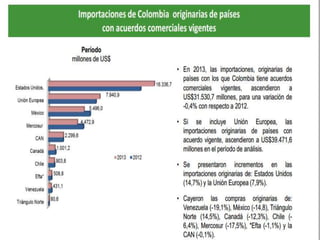
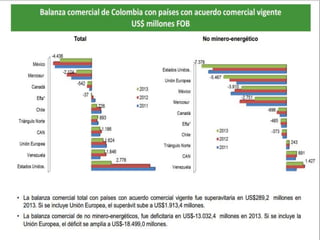
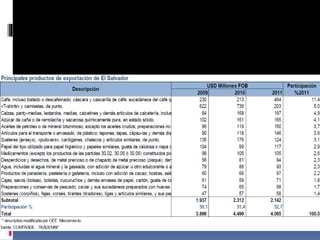
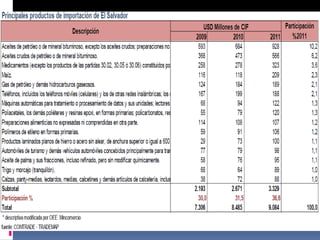
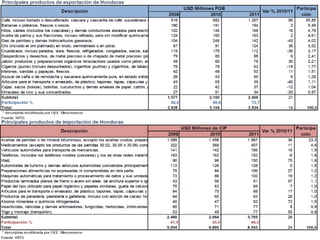
Commercial Exchange 
Import and Export 
http://www.mincit.gov.co/publicaciones.php?id=47
Colombian principal exports 
products
 Pork 
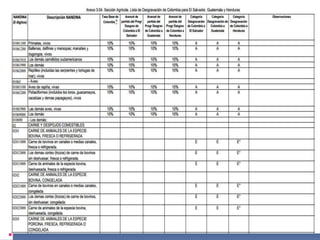
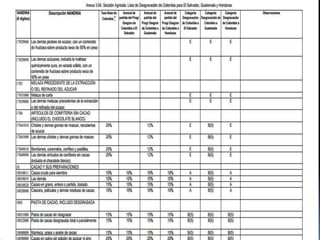
Reduction Tariff Schedule in 
the partner country
 Rice
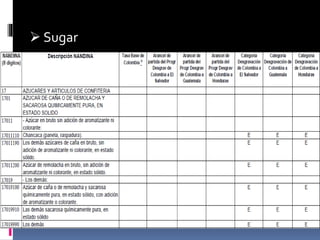
 Sugar
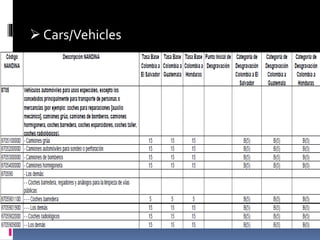
 Cars/Vehicles
 LeatherManufacturing
Reduction Tariff 
Rice for Salvador and Honduras 
Category (a) 5% base rate now 
Guatemala for category (e): excluding of the reduction program (the base 
rate is not consolidate) 
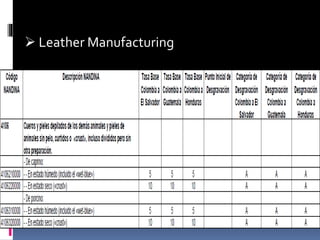
 Leather Manufacturing 
Category (B5) 
BASE RATE Year1 Year2 Year3 Year 4 Year 5 
15% 12% 9% 6% 3% 0% 
Sugar and Pork 
Category (e): Be exempt from any tariff reduction commitmen
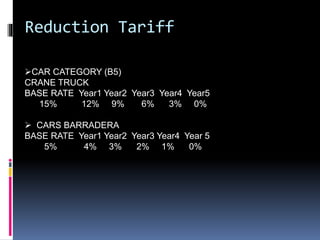
Reduction Tariff 
CAR CATEGORY (B5) 
CRANE TRUCK 
BASE RATE Year1 Year2 Year3 Year4 Year5 
15% 12% 9% 6% 3% 0% 
 CARS BARRADERA 
BASE RATE Year1 Year2 Year3 Year4 Year 5 
5% 4% 3% 2% 1% 0%
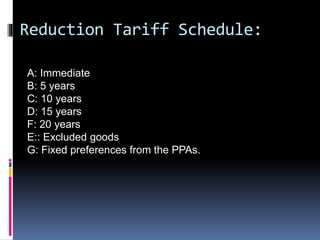
Reduction Tariff Schedule: 
A: Immediate 
B: 5 years 
C: 10 years 
D: 15 years 
F: 20 years 
E:: Excluded goods 
G: Fixed preferences from the PPAs.
Agricultural Tariff Elimination 
Immediate: About 53% of the products. 
Up to 5 years: About 67% of products. 
Up to 10 years: About 86% of the products. 
http://www.tlc.gov.co/publicaciones.php?id=6845
Industrial Tariff Elimination 
Immediate: 53% duty-free access to El Salvador and Guatemala. Honduras 
will be the 55% in textile sector. 
Up to 5 years: 63%products duty-free access in El Salvador and Guatemala. 
79%in Honduras. 
Up to 10 years: About 70% tariff free in Guatemala and El Salvador. In 
Honduras about 87%. 
http://www.tlc.gov.co/publicaciones.php?id=6845
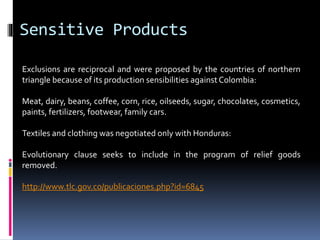
Sensitive Products 
Exclusions are reciprocal and were proposed by the countries of northern 
triangle because of its production sensibilities against Colombia: 
Meat, dairy, beans, coffee, corn, rice, oilseeds, sugar, chocolates, cosmetics, 
paints, fertilizers, footwear, family cars. 
Textiles and clothing was negotiated only with Honduras: 
Evolutionary clause seeks to include in the program of relief goods 
removed. 
http://www.tlc.gov.co/publicaciones.php?id=6845
Thanks

TLC Colombia - Triangulo Norte

  • 1.
    Free Trade Agreement Colombia and Northern Triangle
  • 3.
    Importance of the agreement for Colombia The negotiation of the FTA with Guatemala, El Salvador and Honduras answered the internationalization strategy of the Colombian economy. Its goal of diversifying markets, opening new opportunities for Colombian businesses in trade and investment. Facilitate and increase trade and investment in services, also incorporating as important as public procurement markets.
  • 4.
    Importance of the agreement for Colombia This Agreement provides stability, transparency and predictability, should become the main tool for attracting FDI contributes to: • The generation of employment • Access to new technologies • Growth and development of the four participating countries. Existing and future investments will be covered by FTA when it enters into force, being protected under international standards of non-discrimination, protection and treatment in respect of investment.
  • 5.
    Important Dates: June 2006: Colombia's President and Guatemala’s President agreed to negotiate a FTA that contributes to the complimentarily of the economies of both countries.  June 5 to 9, 2006 in Bogota, Colombia. The topics covered were:  Market Access  Non-agricultural goods  Trade Remedies  Services  Trade facilitation  Sanitary Measures  Phytosanitary  Institutional Affairs  Dispute Technical Barriers to Trade  Rules of Origin  Agriculture  Procurement  Investment
  • 6.
    Important Dates: June 5, 2006: Colombia and Guatemala signed agreement and promotion and protection of investments.  July 11 to 14, 2006: Balance II round Colombia free trade agreements with Central America's Northern Triangle which concluded in Guatemala.  August 18, 2006: III round of negotiations with Northern Triangle of Central America concluded in Medellin, Colombia.
  • 7.
    Important Dates: September 11, 2006 in Colombia: Conforming Measures (services and investment)  September 22 to 29, 2006 in Tegucigalpa, Honduras IV Round of negotiations with Colombia.  November 3, 2006 in San Salvador, El Salvador. V Round of negotiations with Colombia. The Bureau of Industry achieve to agree on immediate, about 40% of the tariff.
  • 8.
    Important Dates: December 8, 2006 in Antigua, Guatemala. The balance of the sixth round of negotiations.  February 19 to 23, 2007 in Medellin, Colombia.  The comprehensive progress of negotiations reached 90%.  The remaining 10% is the hardest, because it is where the greatest sensitivity to the parties, especially market access in both agriculture and industry and rules of origin.
  • 9.
    Important Dates: March 16, 2007 in Sonsonate, El Salvador. Completion of negotiations after six rounds of negotiations and two meetings of the working groups of market access was achieved:  The agreement in 72%of the products of the tariff in the agricultural field.  In the industrial field, the treaty included more than 75%of the tariff.  Premiered 'Evolutionary clause' which allows subsequent Treaty revisions to inclusion of new products.
  • 10.
    Important Dates: August 9, 2007 - Colombia and the North triangle subscribe TLC.  The ministers of the signatory countries expressed that in the short term, which could be added the other CentralAmerican countries.  Within trade policy that advances the Colombian Government is moving towards the establishment of a continental free trade area. http://www.sice.oas.org/
  • 11.
    In Force The Government of Colombia sent the senate the text of the FTA with Colombia and northern triangle on February 20, 2008.  The committees of the senate and house of representatives of Colombia approved the deal on 07 May and 4 June 2008, respectively.  The legislative assembly of El Salvador approved the FTA on August 21, 2008. In September 2009, the Congress of Guatemala ratified the FTA.  Two months later, on November 13, 2009, entered into force between Guatemala and Colombia FTA.  For El Salvador and Colombia, the treaty begins its effect on February 1, 2010.  The March 27, 2010, becomes effective the FTA between Honduras and Colombia. http://www.sice.oas.org/
  • 12.
  • 13.
    Commercial Exchange Importand Export http://www.mincit.gov.co/publicaciones.php?id=47
  • 19.
  • 23.
     Pork ReductionTariff Schedule in the partner country
  • 24.
  • 25.
  • 26.
  • 27.
  • 28.
    Reduction Tariff Ricefor Salvador and Honduras Category (a) 5% base rate now Guatemala for category (e): excluding of the reduction program (the base rate is not consolidate)  Leather Manufacturing Category (B5) BASE RATE Year1 Year2 Year3 Year 4 Year 5 15% 12% 9% 6% 3% 0% Sugar and Pork Category (e): Be exempt from any tariff reduction commitmen
  • 29.
    Reduction Tariff CARCATEGORY (B5) CRANE TRUCK BASE RATE Year1 Year2 Year3 Year4 Year5 15% 12% 9% 6% 3% 0%  CARS BARRADERA BASE RATE Year1 Year2 Year3 Year4 Year 5 5% 4% 3% 2% 1% 0%
  • 30.
    Reduction Tariff Schedule: A: Immediate B: 5 years C: 10 years D: 15 years F: 20 years E:: Excluded goods G: Fixed preferences from the PPAs.
  • 31.
    Agricultural Tariff Elimination Immediate: About 53% of the products. Up to 5 years: About 67% of products. Up to 10 years: About 86% of the products. http://www.tlc.gov.co/publicaciones.php?id=6845
  • 32.
    Industrial Tariff Elimination Immediate: 53% duty-free access to El Salvador and Guatemala. Honduras will be the 55% in textile sector. Up to 5 years: 63%products duty-free access in El Salvador and Guatemala. 79%in Honduras. Up to 10 years: About 70% tariff free in Guatemala and El Salvador. In Honduras about 87%. http://www.tlc.gov.co/publicaciones.php?id=6845
  • 33.
    Sensitive Products Exclusionsare reciprocal and were proposed by the countries of northern triangle because of its production sensibilities against Colombia: Meat, dairy, beans, coffee, corn, rice, oilseeds, sugar, chocolates, cosmetics, paints, fertilizers, footwear, family cars. Textiles and clothing was negotiated only with Honduras: Evolutionary clause seeks to include in the program of relief goods removed. http://www.tlc.gov.co/publicaciones.php?id=6845
  • 37.