El Imperfecto
• “used to”
• “ was/were doing”
• Descriptions, feelings, emotions in the past
• Age/time/date in the past
• How you were, what you were like in the past
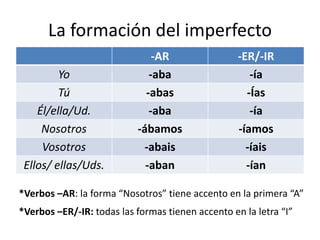
La formación del imperfecto
-AR -ER/-IR
Yo -aba -ía
Tú -abas -Ías
Él/ella/Ud. -aba -ía
Nosotros -ábamos -íamos
Vosotros -abais -íais
Ellos/ ellas/Uds. -aban -ían
*Verbos –AR: la forma “Nosotros” tiene accento en la primera “A”
*Verbos –ER/-IR: todas las formas tienen accento en la letra “I”
Los verbos irregulares
SER IR VER
Yo era iba veía
Tú eras ibas veías
Él/ella/Ud. era iba veía
Nosotros éramos íbamos veíamos
Vosotros erais ibais veíais
Ellos/ellas/U
ds.
eran iban veían
*IR y SER tienen accentos solo en la forma NOSOTROS.
*VER tiene accentos en todas formas en la letra “I”
Ejemplos
• WAS/WERE ___ing
– Caminábamos a la escuela cuando vimos a Juan.
– We were walking to school when we saw Juan.
• TIME
– Eran las ocho. --It was eight o’clock.
• WEATHER
– Hacía sol. --It was sunny.
• AGE
– Tenía ocho años. --I was 8 years old.
Ejemplos
• Simultaneous Actions
– Escuchaba música y cantaba.
– I was listening to music and singing.
• Background Descriptions
– Mi vestido era rosado.
– My dress was pink.
• Used to / habitual actions
– Iba a la escuela cada día.
– I used to go to school every day.
– I went to school every day.
Ejemplos
• Mental activities
– Me gustaba leer.
– I liked to read.
– I used to like to read.
• Physical states/descriptions
– Juan estaba enfermo.
– Juan was feeling sick.
Palabras y frases del imperfecto
Words that commonly indicate need for IMPERFECT tense.
A veces Sometimes
Cada año / cada día Every year / every day
De vez en cuando Once in a while
Todos los días Everyday
Muchas veces Many times
Mucho Much
Siempre Always
Generalmente Generally
Frecuentemente Frequently
Usualmente Usually

Imperfecto

  • 1.
    El Imperfecto • “usedto” • “ was/were doing” • Descriptions, feelings, emotions in the past • Age/time/date in the past • How you were, what you were like in the past
  • 2.
    La formación delimperfecto -AR -ER/-IR Yo -aba -ía Tú -abas -Ías Él/ella/Ud. -aba -ía Nosotros -ábamos -íamos Vosotros -abais -íais Ellos/ ellas/Uds. -aban -ían *Verbos –AR: la forma “Nosotros” tiene accento en la primera “A” *Verbos –ER/-IR: todas las formas tienen accento en la letra “I”
  • 3.
    Los verbos irregulares SERIR VER Yo era iba veía Tú eras ibas veías Él/ella/Ud. era iba veía Nosotros éramos íbamos veíamos Vosotros erais ibais veíais Ellos/ellas/U ds. eran iban veían *IR y SER tienen accentos solo en la forma NOSOTROS. *VER tiene accentos en todas formas en la letra “I”
  • 4.
    Ejemplos • WAS/WERE ___ing –Caminábamos a la escuela cuando vimos a Juan. – We were walking to school when we saw Juan. • TIME – Eran las ocho. --It was eight o’clock. • WEATHER – Hacía sol. --It was sunny. • AGE – Tenía ocho años. --I was 8 years old.
  • 5.
    Ejemplos • Simultaneous Actions –Escuchaba música y cantaba. – I was listening to music and singing. • Background Descriptions – Mi vestido era rosado. – My dress was pink. • Used to / habitual actions – Iba a la escuela cada día. – I used to go to school every day. – I went to school every day.
  • 6.
    Ejemplos • Mental activities –Me gustaba leer. – I liked to read. – I used to like to read. • Physical states/descriptions – Juan estaba enfermo. – Juan was feeling sick.
  • 7.
    Palabras y frasesdel imperfecto Words that commonly indicate need for IMPERFECT tense. A veces Sometimes Cada año / cada día Every year / every day De vez en cuando Once in a while Todos los días Everyday Muchas veces Many times Mucho Much Siempre Always Generalmente Generally Frecuentemente Frequently Usualmente Usually