REPÚBLICA BOLIVARIANA DE VENEZUELA
MINISTERIO DE PODER PARA LA EDUCACIÓN SUPERIOR
INSTITUTO UNIVERSITARIO TECNOLÓGICO “ANTONIO JOSÉ DE SUCRE”
BARQUISIMETO-ESTADO-LARA
YOLIMAR ZERPA
25.753.817
CARRERA:
RIESGOS Y SEGUROS
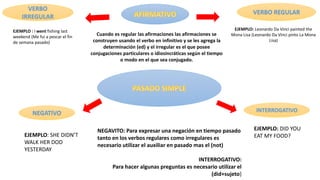
VERBO
IRREGULAR
EJEMPLO : I went fishing last
weekend (Me fui a pescar el fin
de semana pasado)
VERBO REGULAR
EJEMPLO: Leonardo Da Vinci painted the
Mona Lisa (Leonardo Da Vinci pinto La Mona
Lisa)
Cuando es regular las afirmaciones las afirmaciones se
construyen usando el verbo en infinitivo y se les agrega la
determinación (ed) y el irregular es el que posee
conjugaciones particulares o idiosincráticas según el tiempo
o modo en el que sea conjugado.
NEGATIVO INTERROGATIVO
NEGAVITO: Para expresar una negación en tiempo pasado
tanto en los verbos regulares como irregulares es
necesario utilizar el auxiliar en pasado mas el (not)
INTERROGATIVO:
Para hacer algunas preguntas es necesario utilizar el
(did+sujeto)
EJEMPLO: DID YOU
EAT MY FOOD?EJEMPLO: SHE DIDN’T
WALK HER DOD
YESTERDAY
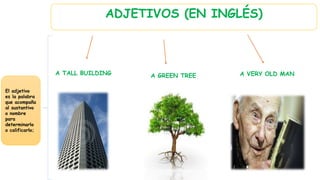
ADJETIVOS (EN INGLÉS)
El adjetivo
es la palabra
que acompaña
al sustantivo
o nombre
para
determinarlo
o calificarlo;
A TALL BUILDING A GREEN TREE A VERY OLD MAN

MAPA CONCEPTUAL INGLES

  • 1.
    REPÚBLICA BOLIVARIANA DEVENEZUELA MINISTERIO DE PODER PARA LA EDUCACIÓN SUPERIOR INSTITUTO UNIVERSITARIO TECNOLÓGICO “ANTONIO JOSÉ DE SUCRE” BARQUISIMETO-ESTADO-LARA YOLIMAR ZERPA 25.753.817 CARRERA: RIESGOS Y SEGUROS
  • 2.
    VERBO IRREGULAR EJEMPLO : Iwent fishing last weekend (Me fui a pescar el fin de semana pasado) VERBO REGULAR EJEMPLO: Leonardo Da Vinci painted the Mona Lisa (Leonardo Da Vinci pinto La Mona Lisa) Cuando es regular las afirmaciones las afirmaciones se construyen usando el verbo en infinitivo y se les agrega la determinación (ed) y el irregular es el que posee conjugaciones particulares o idiosincráticas según el tiempo o modo en el que sea conjugado. NEGATIVO INTERROGATIVO NEGAVITO: Para expresar una negación en tiempo pasado tanto en los verbos regulares como irregulares es necesario utilizar el auxiliar en pasado mas el (not) INTERROGATIVO: Para hacer algunas preguntas es necesario utilizar el (did+sujeto) EJEMPLO: DID YOU EAT MY FOOD?EJEMPLO: SHE DIDN’T WALK HER DOD YESTERDAY
  • 3.
    ADJETIVOS (EN INGLÉS) Eladjetivo es la palabra que acompaña al sustantivo o nombre para determinarlo o calificarlo; A TALL BUILDING A GREEN TREE A VERY OLD MAN