Aprendizaje Móvil y Redes Sociales
¿Cómo ha sido tu experiencia?
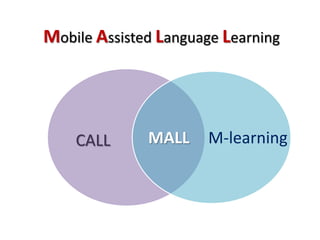
CALL M-learningMALL
Mobile Assisted Language Learning
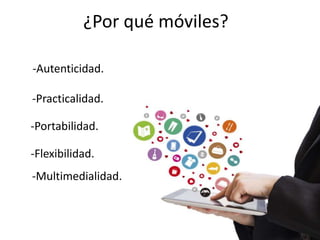
-Autenticidad.
-Practicalidad.
-Portabilidad.
-Flexibilidad.
-Multimedialidad.
¿Por qué móviles?
Gracias a la web 2.0, la
tecnología se ha vuelto
más accesible y los
estudiantes tienen
acceso a fuentes de
información y contenido
multimedia para
complementar su
proceso de aprendizaje.
De esta forma, los estudiantes pueden aprender donde y como
quieran, y pueden cambiar de un contexto informal a uno formal
con la ayuda de sus dispositivos
(Chan et al., 2006; Sharpe et al., 2008).
Los estudiantes parecen estar más que cómodos y
motivados con la idea de utilizar sus dispositivos móviles
para hacer valer su voz, expresar sus pensamientos,
resumir ideas, dar opiniones, y aplicar conocimientos de
la cultura popular en su vida diaria (Sharpe et al., 2008).
Esto, gracias, en parte, a que pasan una gran parte de su
tiempo buscando información en línea, compartiendo,
comentando y publicando en sus redes sociales y apps
móviles
Los dispositivos móviles pueden ser utilizados para:
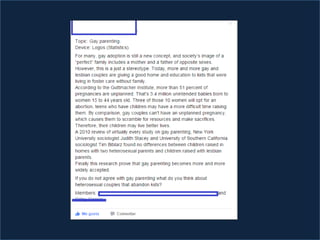
Leer y discutir el material de clases
Comparar/contrastar información
Corroborar información
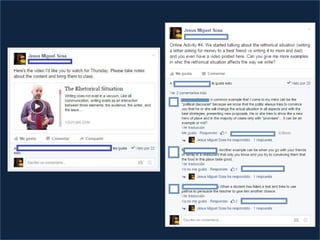
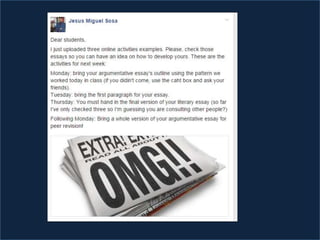
Publicar actividades
Proveer feedback
Búsqueda de vocabulario
BYOD
Búsqueda de acontecimientos/celebraciones
Show and tell
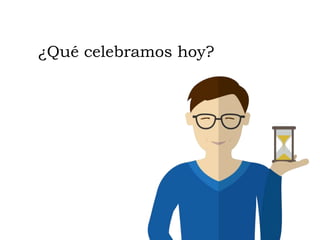
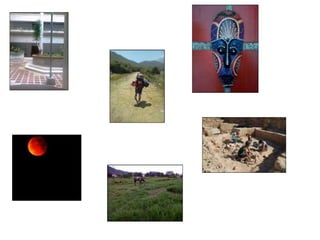
¿Qué celebramos hoy?
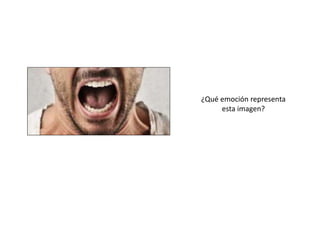
¿Qué emoción representa
esta imagen?
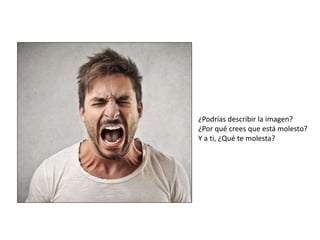
¿Podrías describir la imagen?
¿Por qué crees que está molesto?
Y a ti, ¿Qué te molesta?
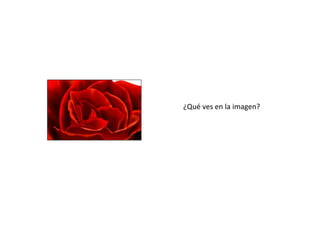
¿Qué ves en la imagen?
¿Puedes describir la rosa?
¿Cuántas rosas ves?
¿Te gusta esta flor ?
¿Cuál es tu flor favorita?
A weird reality
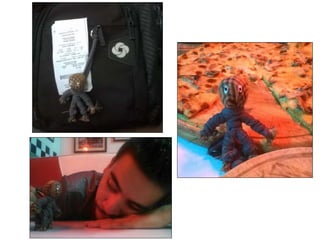
My name is John. I study History at ULA. I’ve been researching about Kyojins,
a lost civilization which lived in 1090 – 2000 B.C. I’m fascinated with their
cultural background, so I’m running an investigation about their beliefs and
rituals. They worshiped horses, and sometimes made human sacrifices. They
also had an oracle, who predicted the explosion that would eradicate them,
but nobody believes this. I’d like to prove it, so I’m going to interview
professor Howard Archer, the paleontologist in charge of the new
explorations. He sent me a mask so I can start my own investigations.
I’ve spend all the afternoon at the library of my faculty, studying the
hieroglyphs carved on the mask, but it’s late and I have to go home. I put my
things in my bag and the mask in a box. I leave the building, but things look
so different of what I see every day. There’s like a vale, with trees and grass. I
rub my eyes but everything is still here. I walk down trying to find the way
out, but I can’t find any exit. It’s like a dream, all this reminds me the old city
of Krane, where Kyojins lived, but this has no logical explanation. I keep
walking until I found an entrance, and I come in just because I need to find a
refuge.
I hear many voices crying out at the same time. I follow the sounds down a
hall, until I reach its end. A light hits my face, and I cover my eyes. The voices
finish abruptly, and when I open my eyes, I see thousands of people staring
at me. Suddenly, someone puts something in my head, at the same time
someone else pulls off my bag. I turn back and I see two little kids, they chest
are painted with the symbols I’ve seen during my research. I don’t
understand what is happening, but I feel this is not going to end up well.
“The time has come!” says a voice. “The prophecy has fulfilled tonight with
the awakening of the moon of blood, and with this sacrifice, our gods will
give us the power to arise from the ashes!”
The people started to cheer. My hands are wrapped, and one of the kids
leads me to the altar of sacrifice with a spear. I want to scream for help but I
can’t find my voice. I’m lifted and put in the altar. I see the Chief using the
mask they took away from me and raising a knife. He is about to kill me. I
want to scape but I can’t move; I can only close my eyes and wait for my
death.
“For the gods!” is the last thing I hear before everything ends.
When I wake up, I’m still at the library. I breathe relieved, understanding that
everything was just a dream. I put my things in my bag and stand up. Then,
my blood chills.
The mask is missing.
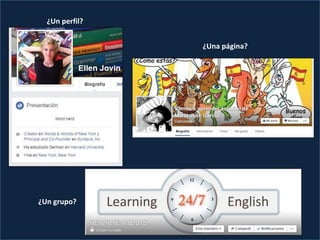
¿Un perfil?
¿Un grupo?
¿Una página?
-Crea una cuenta y hazla privada para que sólo puedan verla los estudiantes.
-Puedes publicar plan semanal de trabajo, informaciones de
clase, eventos, entre otros.
Los estudiantes pueden:
-Elegir temas semanales y publicar imágenes al respecto (ejemplo: publica una imagen
de tu hobby favorito y cuéntanos por qué te gusta?
-Publicar videos de 1 minuto hablando de un tema de clase.
-Utilizar las imágenes que publiques para escribir textos.
-Basarse en una imagen que publiques para crear historias de forma
colaborativa.
-Publicar nubes de palabras con los contenidos de clase.
-Crear un collage con los temas de clase.
-Crear el trailer de un libro.
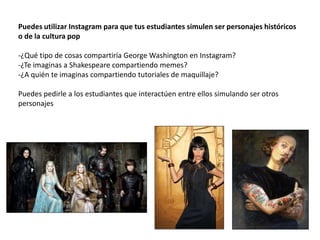
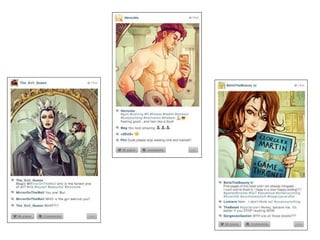
Puedes utilizar Instagram para que tus estudiantes simulen ser personajes históricos
o de la cultura pop
-¿Qué tipo de cosas compartiría George Washington en Instagram?
-¿Te imaginas a Shakespeare compartiendo memes?
-¿A quién te imaginas compartiendo tutoriales de maquillaje?
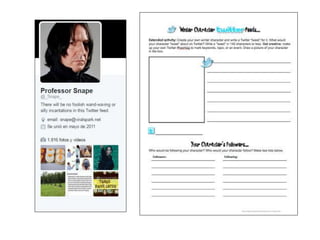
Puedes pedirle a los estudiantes que interactúen entre ellos simulando ser otros
personajes
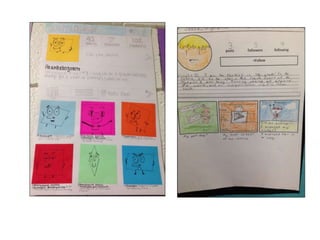
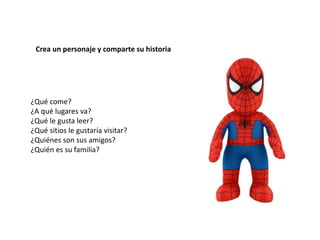
Crea un personaje y comparte su historia
¿Qué come?
¿A qué lugares va?
¿Qué le gusta leer?
¿Qué sitios le gustaría visitar?
¿Quiénes son sus amigos?
¿Quién es su familia?
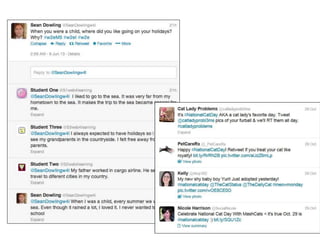
6. Track a hash tag. More ambitious educators may want to incorporate Twitter in

lessons that track hash tags for another interesting lesson in how trends spread and
the various ways in which people use social media to communicate ideas.
8. Follow the issues. Bring a little technology into debates by asking the class which
issues they would like to follow. Subscribe to relevant hash tags and accounts from
all perspectives and compile an updated resource cobbling together as much
research as possible.
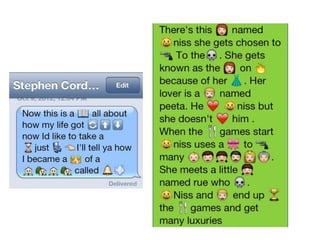
9. Write a story or poem. Many writers and poets have experimented
with Twitter’s 140-character format to bring new, serialized works in small
chunks to attention-divided audiences. Some educators may like the idea
of asking their students to apply their creative writing skills to a restrictive
social media outlet.
12. Set up a foreign language news stream. Keep foreign language
students informed of current events from relevant nations while
simultaneously challenging them to use their translation skills by
keeping a specific news feed.
13. Role play. Computer-savvy teachers can keep history lessons engaging for
children by asking them to tweet ideas and quotes from their favorite figures.
Alternately, they can also pretend to be famous fictional characters as well.
38. Channel that inner Lois Lane. Send journalism students out into the world of
microblogging and assign them to poll fellow students or ask questions of experts for use
in assignments on trends, opinions and current events and research.
42. Play word games. Post a daily challenge asking kids to unscramble anagrams,
contribute synonyms or antonyms or give a definition for any vocabulary or spelling
words as another way of getting them more involved in their language lessons.
50. Summarize. At the conclusion of each lecture, ask students to type a 140-
character or less summary of what they have learned and perhaps pose any
questions to be considered in the next class.
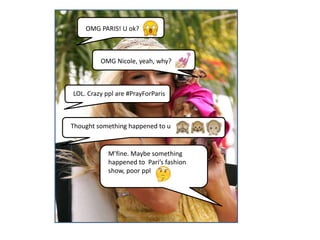
OMG PARIS! U ok?
OMG Nicole, yeah, why?
LOL. Crazy ppl are #PrayForParis
Thought something happened to u
M’fine. Maybe something
happened to Pari’s fashion
show, poor ppl
Las actividades de clase, a través del uso de
dispositivos móviles, tienen el potencial de ser
constructivistas, colaborativas, centradas en el
estudiante, basadas en tareas, de explotar la
creatividad de los mismos, y que requieren del
desarrollo de competencias lingüísticas para poder
ser realizadas Burston (2016).
cuándo compartir una publicación de Facebook?
cuándo retwitear?
cuándo hacer repost a una imagen en Instagram?
.
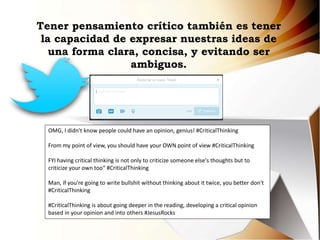
Tener pensamiento crítico también es tener
la capacidad de expresar nuestras ideas de
una forma clara, concisa, y evitando ser
ambiguos.
OMG, I didn't know people could have an opinion, genius! #CriticalThinking
From my point of view, you should have your OWN point of view #CriticalThinking
FYI having critical thinking is not only to criticize someone else's thoughts but to
criticize your own too“ #CriticalThinking
Man, if you're going to write bullshit without thinking about it twice, you better don't
#CriticalThinking
#CriticalThinking is about going deeper in the reading, developing a critical opinion
based in your opinion and into others #JesusRocks
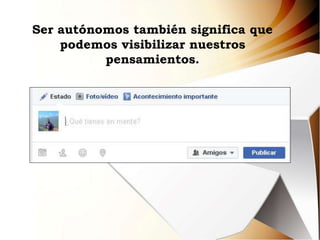
Ser autónomos también significa que
podemos visibilizar nuestros
pensamientos.
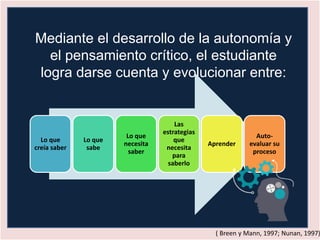
Mediante el desarrollo de la autonomía y
el pensamiento crítico, el estudiante
logra darse cuenta y evolucionar entre:
Lo que
creía saber
Lo que
sabe
Lo que
necesita
saber
Las
estrategias
que
necesita
para
saberlo
Aprender
Auto-
evaluar su
proceso
( Breen y Mann, 1997; Nunan, 1997)
El uso de la tecnología en nuestras aulas de clases debe
perseguir un propósito pedagógico que corresponda con nuestro
programa de clases y los diferentes estilos de aprendizaje de los
estudiantes (Tomlinson, 2003; Deriwanka, 2003); por
consiguiente, el diseño de cursos que impliquen el uso de
tecnología tiende a ser una tarea más pedagógica que
tecnológica (Area y Adell, 2009). Sin embargo, debemos estar
conscientes de que esta “integración” no debe darse al azar.
Todos los ingredientes que deseemos incorporar a esta mezcla
deben complementarse y ser coherentes entre ellos mismos
(Sharpe et al., 2008; Area y Adell, 2009).
El desarrollo de actividades que impliquen la puesta en práctica de las
habilidades de pensamiento crítico y autonomía en el aprendizaje a través del uso
de los dispositivos móviles requiere que los docentes:
Estimulen la interacción docente-estudiante y estudiante-estudiante para que así
los estudiantes formen sus propias ideas y sean independientes.
Involucren a los estudiantes al momento de la selección de los materiales y
actividades de clase.
Tengan claro cuáles son las
actividades que serán
desarrolladas previo a las clases, así como las
que se desarrollarán durante y después de la misma.
Brinden apoyo al estudiante, no sólo a nivel académico, sino también
a nivel técnico (uso de la plataforma digital) y afectivo.
Tomen en cuenta el tiempo que los estudiantes deben dedicar
individualmente tanto a las clases presenciales como al desarrollo de
actividades en línea. También, el tiempo que les pueda tomar a ellos
mismos como docentes al momento de monitorear el proceso de
aprendizaje de los estudiantes.
Tomen en cuenta las limitaciones que pudiesen implicar el uso de la
tecnología en un aula de clases.
Modulo ii. mall y redes sociales

Modulo ii. mall y redes sociales

  • 1.
    Aprendizaje Móvil yRedes Sociales
  • 2.
    ¿Cómo ha sidotu experiencia?
  • 3.
  • 4.
  • 5.
    Gracias a laweb 2.0, la tecnología se ha vuelto más accesible y los estudiantes tienen acceso a fuentes de información y contenido multimedia para complementar su proceso de aprendizaje. De esta forma, los estudiantes pueden aprender donde y como quieran, y pueden cambiar de un contexto informal a uno formal con la ayuda de sus dispositivos (Chan et al., 2006; Sharpe et al., 2008).
  • 6.
    Los estudiantes parecenestar más que cómodos y motivados con la idea de utilizar sus dispositivos móviles para hacer valer su voz, expresar sus pensamientos, resumir ideas, dar opiniones, y aplicar conocimientos de la cultura popular en su vida diaria (Sharpe et al., 2008). Esto, gracias, en parte, a que pasan una gran parte de su tiempo buscando información en línea, compartiendo, comentando y publicando en sus redes sociales y apps móviles
  • 7.
    Los dispositivos móvilespueden ser utilizados para: Leer y discutir el material de clases Comparar/contrastar información Corroborar información Publicar actividades Proveer feedback Búsqueda de vocabulario BYOD Búsqueda de acontecimientos/celebraciones Show and tell
  • 8.
  • 9.
  • 10.
    ¿Podrías describir laimagen? ¿Por qué crees que está molesto? Y a ti, ¿Qué te molesta?
  • 11.
    ¿Qué ves enla imagen?
  • 12.
    ¿Puedes describir larosa? ¿Cuántas rosas ves? ¿Te gusta esta flor ? ¿Cuál es tu flor favorita?
  • 14.
    A weird reality Myname is John. I study History at ULA. I’ve been researching about Kyojins, a lost civilization which lived in 1090 – 2000 B.C. I’m fascinated with their cultural background, so I’m running an investigation about their beliefs and rituals. They worshiped horses, and sometimes made human sacrifices. They also had an oracle, who predicted the explosion that would eradicate them, but nobody believes this. I’d like to prove it, so I’m going to interview professor Howard Archer, the paleontologist in charge of the new explorations. He sent me a mask so I can start my own investigations. I’ve spend all the afternoon at the library of my faculty, studying the hieroglyphs carved on the mask, but it’s late and I have to go home. I put my things in my bag and the mask in a box. I leave the building, but things look so different of what I see every day. There’s like a vale, with trees and grass. I rub my eyes but everything is still here. I walk down trying to find the way out, but I can’t find any exit. It’s like a dream, all this reminds me the old city of Krane, where Kyojins lived, but this has no logical explanation. I keep walking until I found an entrance, and I come in just because I need to find a refuge. I hear many voices crying out at the same time. I follow the sounds down a hall, until I reach its end. A light hits my face, and I cover my eyes. The voices finish abruptly, and when I open my eyes, I see thousands of people staring at me. Suddenly, someone puts something in my head, at the same time someone else pulls off my bag. I turn back and I see two little kids, they chest are painted with the symbols I’ve seen during my research. I don’t understand what is happening, but I feel this is not going to end up well. “The time has come!” says a voice. “The prophecy has fulfilled tonight with the awakening of the moon of blood, and with this sacrifice, our gods will give us the power to arise from the ashes!” The people started to cheer. My hands are wrapped, and one of the kids leads me to the altar of sacrifice with a spear. I want to scream for help but I can’t find my voice. I’m lifted and put in the altar. I see the Chief using the mask they took away from me and raising a knife. He is about to kill me. I want to scape but I can’t move; I can only close my eyes and wait for my death. “For the gods!” is the last thing I hear before everything ends. When I wake up, I’m still at the library. I breathe relieved, understanding that everything was just a dream. I put my things in my bag and stand up. Then, my blood chills. The mask is missing.
  • 16.
  • 27.
    -Crea una cuentay hazla privada para que sólo puedan verla los estudiantes. -Puedes publicar plan semanal de trabajo, informaciones de clase, eventos, entre otros. Los estudiantes pueden: -Elegir temas semanales y publicar imágenes al respecto (ejemplo: publica una imagen de tu hobby favorito y cuéntanos por qué te gusta? -Publicar videos de 1 minuto hablando de un tema de clase. -Utilizar las imágenes que publiques para escribir textos. -Basarse en una imagen que publiques para crear historias de forma colaborativa. -Publicar nubes de palabras con los contenidos de clase. -Crear un collage con los temas de clase. -Crear el trailer de un libro.
  • 28.
    Puedes utilizar Instagrampara que tus estudiantes simulen ser personajes históricos o de la cultura pop -¿Qué tipo de cosas compartiría George Washington en Instagram? -¿Te imaginas a Shakespeare compartiendo memes? -¿A quién te imaginas compartiendo tutoriales de maquillaje? Puedes pedirle a los estudiantes que interactúen entre ellos simulando ser otros personajes
  • 31.
    Crea un personajey comparte su historia ¿Qué come? ¿A qué lugares va? ¿Qué le gusta leer? ¿Qué sitios le gustaría visitar? ¿Quiénes son sus amigos? ¿Quién es su familia?
  • 34.
    6. Track ahash tag. More ambitious educators may want to incorporate Twitter in lessons that track hash tags for another interesting lesson in how trends spread and the various ways in which people use social media to communicate ideas. 8. Follow the issues. Bring a little technology into debates by asking the class which issues they would like to follow. Subscribe to relevant hash tags and accounts from all perspectives and compile an updated resource cobbling together as much research as possible. 9. Write a story or poem. Many writers and poets have experimented with Twitter’s 140-character format to bring new, serialized works in small chunks to attention-divided audiences. Some educators may like the idea of asking their students to apply their creative writing skills to a restrictive social media outlet. 12. Set up a foreign language news stream. Keep foreign language students informed of current events from relevant nations while simultaneously challenging them to use their translation skills by keeping a specific news feed.
  • 35.
    13. Role play.Computer-savvy teachers can keep history lessons engaging for children by asking them to tweet ideas and quotes from their favorite figures. Alternately, they can also pretend to be famous fictional characters as well. 38. Channel that inner Lois Lane. Send journalism students out into the world of microblogging and assign them to poll fellow students or ask questions of experts for use in assignments on trends, opinions and current events and research. 42. Play word games. Post a daily challenge asking kids to unscramble anagrams, contribute synonyms or antonyms or give a definition for any vocabulary or spelling words as another way of getting them more involved in their language lessons. 50. Summarize. At the conclusion of each lecture, ask students to type a 140- character or less summary of what they have learned and perhaps pose any questions to be considered in the next class.
  • 41.
    OMG PARIS! Uok? OMG Nicole, yeah, why? LOL. Crazy ppl are #PrayForParis Thought something happened to u M’fine. Maybe something happened to Pari’s fashion show, poor ppl
  • 42.
    Las actividades declase, a través del uso de dispositivos móviles, tienen el potencial de ser constructivistas, colaborativas, centradas en el estudiante, basadas en tareas, de explotar la creatividad de los mismos, y que requieren del desarrollo de competencias lingüísticas para poder ser realizadas Burston (2016).
  • 43.
    cuándo compartir unapublicación de Facebook? cuándo retwitear? cuándo hacer repost a una imagen en Instagram? .
  • 44.
    Tener pensamiento críticotambién es tener la capacidad de expresar nuestras ideas de una forma clara, concisa, y evitando ser ambiguos. OMG, I didn't know people could have an opinion, genius! #CriticalThinking From my point of view, you should have your OWN point of view #CriticalThinking FYI having critical thinking is not only to criticize someone else's thoughts but to criticize your own too“ #CriticalThinking Man, if you're going to write bullshit without thinking about it twice, you better don't #CriticalThinking #CriticalThinking is about going deeper in the reading, developing a critical opinion based in your opinion and into others #JesusRocks
  • 45.
    Ser autónomos tambiénsignifica que podemos visibilizar nuestros pensamientos.
  • 47.
    Mediante el desarrollode la autonomía y el pensamiento crítico, el estudiante logra darse cuenta y evolucionar entre: Lo que creía saber Lo que sabe Lo que necesita saber Las estrategias que necesita para saberlo Aprender Auto- evaluar su proceso ( Breen y Mann, 1997; Nunan, 1997)
  • 48.
    El uso dela tecnología en nuestras aulas de clases debe perseguir un propósito pedagógico que corresponda con nuestro programa de clases y los diferentes estilos de aprendizaje de los estudiantes (Tomlinson, 2003; Deriwanka, 2003); por consiguiente, el diseño de cursos que impliquen el uso de tecnología tiende a ser una tarea más pedagógica que tecnológica (Area y Adell, 2009). Sin embargo, debemos estar conscientes de que esta “integración” no debe darse al azar. Todos los ingredientes que deseemos incorporar a esta mezcla deben complementarse y ser coherentes entre ellos mismos (Sharpe et al., 2008; Area y Adell, 2009).
  • 49.
    El desarrollo deactividades que impliquen la puesta en práctica de las habilidades de pensamiento crítico y autonomía en el aprendizaje a través del uso de los dispositivos móviles requiere que los docentes: Estimulen la interacción docente-estudiante y estudiante-estudiante para que así los estudiantes formen sus propias ideas y sean independientes. Involucren a los estudiantes al momento de la selección de los materiales y actividades de clase. Tengan claro cuáles son las actividades que serán desarrolladas previo a las clases, así como las que se desarrollarán durante y después de la misma.
  • 50.
    Brinden apoyo alestudiante, no sólo a nivel académico, sino también a nivel técnico (uso de la plataforma digital) y afectivo. Tomen en cuenta el tiempo que los estudiantes deben dedicar individualmente tanto a las clases presenciales como al desarrollo de actividades en línea. También, el tiempo que les pueda tomar a ellos mismos como docentes al momento de monitorear el proceso de aprendizaje de los estudiantes. Tomen en cuenta las limitaciones que pudiesen implicar el uso de la tecnología en un aula de clases.