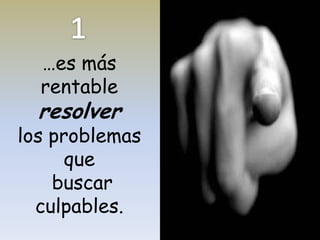
…es más
rentable

resolver

los problemas
que
buscar
culpables.
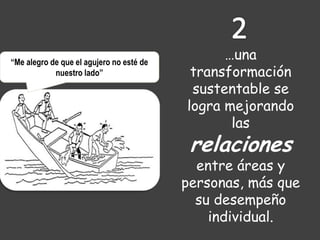
“Me alegro de que el agujero no esté de
nuestro lado”

…una
transformación
sustentable se
logra mejorando
las

relaciones

entre áreas y
personas, más que
su desempeño
individual.
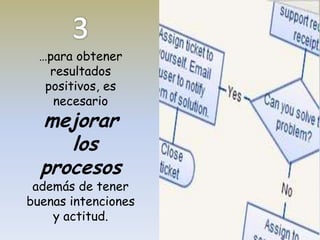
…para obtener
resultados
positivos, es
necesario

mejorar
los
procesos

además de tener
buenas intenciones
y actitud.
…la manera
más efectiva
de

aprender

es
haciendo y
conversando.
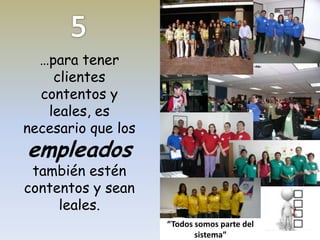
…para tener
clientes
contentos y
leales, es
necesario que los

empleados

también estén
contentos y sean
leales.
“Todos somos parte del
sistema”
PROGRESO

ID
MC

…mejora continua
e innovación
discontinua

pueden y
deben

ID
MC
ID
MC

TIEMPO

coexistir para
acelerar un
progreso
sostenible.
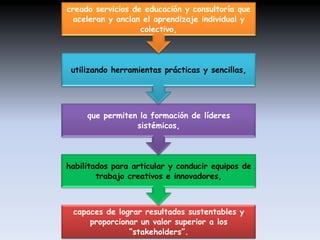
creado servicios de educación y consultoría que
aceleran y anclan el aprendizaje individual y
colectivo,

utilizando herramientas prácticas y sencillas,

que permiten la formación de líderes
sistémicos,

habilitados para articular y conducir equipos de
trabajo creativos e innovadores,

capaces de lograr resultados sustentables y
proporcionar un valor superior a los
“stakeholders”.
vive el simulador humano con enfoque sistémico Quest21
lleva tus emociones al límite
atrévete a confrontar y cambiar tus paradigmas
experimenta trabajar en equipo creativamente
descubre cómo surge la motivación para pertenecer y contribuir
comprueba que siempre es posible mejorar

inicia tu formación como líder sistémico
Informes:
(55) 5528-0421
55 5413-2740
fgarfias@quest2001.com.mx
www.quest21.mx
facilitamos tus reuniones con la tecnología “Open Space”
sólo necesitas un tema o propósito claro
invitar a todos los genuinamente interesados
grupos de 20 a 500 personas
uno o dos días de duración
incrementa el compromiso para la acción

varias aplicaciones y beneficios
Informes:
(55) 5528-0421
55 5413-2740
fgarfias@quest2001.com.mx
www.quest21.mx

Presentación quest pp jul13

  • 2.
  • 3.
    “Me alegro deque el agujero no esté de nuestro lado” …una transformación sustentable se logra mejorando las relaciones entre áreas y personas, más que su desempeño individual.
  • 4.
  • 5.
  • 6.
    …para tener clientes contentos y leales,es necesario que los empleados también estén contentos y sean leales. “Todos somos parte del sistema”
  • 7.
    PROGRESO ID MC …mejora continua e innovación discontinua puedeny deben ID MC ID MC TIEMPO coexistir para acelerar un progreso sostenible.
  • 9.
    creado servicios deeducación y consultoría que aceleran y anclan el aprendizaje individual y colectivo, utilizando herramientas prácticas y sencillas, que permiten la formación de líderes sistémicos, habilitados para articular y conducir equipos de trabajo creativos e innovadores, capaces de lograr resultados sustentables y proporcionar un valor superior a los “stakeholders”.
  • 13.
    vive el simuladorhumano con enfoque sistémico Quest21 lleva tus emociones al límite atrévete a confrontar y cambiar tus paradigmas experimenta trabajar en equipo creativamente descubre cómo surge la motivación para pertenecer y contribuir comprueba que siempre es posible mejorar inicia tu formación como líder sistémico Informes: (55) 5528-0421 55 5413-2740 fgarfias@quest2001.com.mx www.quest21.mx
  • 14.
    facilitamos tus reunionescon la tecnología “Open Space” sólo necesitas un tema o propósito claro invitar a todos los genuinamente interesados grupos de 20 a 500 personas uno o dos días de duración incrementa el compromiso para la acción varias aplicaciones y beneficios Informes: (55) 5528-0421 55 5413-2740 fgarfias@quest2001.com.mx www.quest21.mx

Notas del editor

  • #2 Chrome text with reflection(Advanced)To reproduce the text effects on this slide, do the following:On the Home tab, in the Slides group, click Layout, and then click Blank.On the Insert tab, in the Text group, click Text Box, and then on the slide, drag to draw the text box.Enter text in the text box, select the text, and then on the Home tab, in the Font group, select Corbel from the Font list, select 60 from the Font Size list, and then click Bold.On the Home tab, in the Paragraph group, click Center to center the text in the text box.On the Home tab, in the Font group, click Character Spacing, and then click More Spacing. In the Font dialog box, on the Character Spacing tab, in the Spacing list, select Expanded. In the By box, enter 2.Under Drawing Tools, on the Format tab, in the WordArt Styles group, click the arrow next to Text Fill, point to Gradient, and then click More Gradients.In the Format Text Effects dialog box, click Text Fill in the left pane, select Gradient fill in the right pane, and then do the following:In the Type list, select Linear.Click the button next to Direction, and then click Linear Down (first row, second option from the left). In the Angle box, enter 90°.Under Gradient stops, click Add gradient stops or Remove gradient stops until five stops appear in the sliderAlso under Gradient stops, customize the gradient stops that you added as follows:Select the first stop in the slider, and then do the following:In the Position box, enter 0%. Click the button next to Color, click More Colors, and then in the Colors dialog box, on the Custom tab, enter values for Red: 55, Green: 146, and Blue: 170.Select the next stop in the slider, and then do the following:In the Position box, enter 50%.Click the button next to Color, click More Colors, and then in the Colors dialog box, on the Custom tab, enter values for Red: 223, Green: 240, Blue: 245.Select the next stop in the slider, and then do the following:In the Position box, enter 56%. Click the button next to Color, click More Colors, and then in the Colors dialog box, on the Custom tab, enter values for Red: 67, Green: 74, Blue: 90.Select the next stop in the slider, and then do the following:In the Position box, enter 60%. Click the button next to Color, click More Colors, and then in the Colors dialog box, on the Custom tab, enter values for Red: 185, Green: 171, Blue: 147.Select the last stop in the slider, and then do the following:In the Position box, enter 90%. Click the button next to Color, and then under Theme Colors click White, Background 1 (first row, first option from the left). Select the text on the slide, and then under Drawing Tools, on the Format tab, in the WordArt Styles group, click Text Effects, and then do the following:Point to Reflection, and then under Reflection Variations, click Half Reflection, touching (first row, second option from the left).Point to Bevel, and then under Bevel, click Cool Slant (first row, fourth option from the left).Under Drawing Tools, on the Format tab, in the bottom right corner of the WordArt Styles group, click the Format Text Effects dialog box launcher. In the Format Text Effects dialog box, click 3-D Format in the left pane, and then do the following in the right pane:Under Bevel, next to Top, in the Width box, enter 4 pt,and in the Height box, enter 0.8 pt.Under Surface, click the button next to Material, and then under Standard, click Metal (fourth option from the left). In the Angle box, enter 80°.To reproduce the background on this slide, do the following:Right-click the slide background area, and then click Format Background. In the Format Background dialog box, click Fill in the left pane, select Gradient fill in the right pane, and then do the following:In the Type list, select Linear.Click the button next to Direction, and then click Linear Down (first row, second option from the left).Under Gradient stops, click Add gradient stop or Remove gradient stop until two stops appear in the slider.Also under Gradient stops, customize the gradient stops that you added as follows:Select the first stop in the slider, and then do the following:In the Position box, enter 72%.Click the button next to Color, and then under Theme Colors click Black, Text 1, Lighter 5% (sixth row, second option from the left).Select the last stop in the slider, and then do the following:In the Position box, enter 100%.Click the button next to Color, and then under Theme Colors click White, Background 1, Darker 35% (fifth row, first option from the left).
  • #8 Chrome text with reflection(Advanced)To reproduce the text effects on this slide, do the following:On the Home tab, in the Slides group, click Layout, and then click Blank.On the Insert tab, in the Text group, click Text Box, and then on the slide, drag to draw the text box.Enter text in the text box, select the text, and then on the Home tab, in the Font group, select Corbel from the Font list, select 60 from the Font Size list, and then click Bold.On the Home tab, in the Paragraph group, click Center to center the text in the text box.On the Home tab, in the Font group, click Character Spacing, and then click More Spacing. In the Font dialog box, on the Character Spacing tab, in the Spacing list, select Expanded. In the By box, enter 2.Under Drawing Tools, on the Format tab, in the WordArt Styles group, click the arrow next to Text Fill, point to Gradient, and then click More Gradients.In the Format Text Effects dialog box, click Text Fill in the left pane, select Gradient fill in the right pane, and then do the following:In the Type list, select Linear.Click the button next to Direction, and then click Linear Down (first row, second option from the left). In the Angle box, enter 90°.Under Gradient stops, click Add gradient stops or Remove gradient stops until five stops appear in the sliderAlso under Gradient stops, customize the gradient stops that you added as follows:Select the first stop in the slider, and then do the following:In the Position box, enter 0%. Click the button next to Color, click More Colors, and then in the Colors dialog box, on the Custom tab, enter values for Red: 55, Green: 146, and Blue: 170.Select the next stop in the slider, and then do the following:In the Position box, enter 50%.Click the button next to Color, click More Colors, and then in the Colors dialog box, on the Custom tab, enter values for Red: 223, Green: 240, Blue: 245.Select the next stop in the slider, and then do the following:In the Position box, enter 56%. Click the button next to Color, click More Colors, and then in the Colors dialog box, on the Custom tab, enter values for Red: 67, Green: 74, Blue: 90.Select the next stop in the slider, and then do the following:In the Position box, enter 60%. Click the button next to Color, click More Colors, and then in the Colors dialog box, on the Custom tab, enter values for Red: 185, Green: 171, Blue: 147.Select the last stop in the slider, and then do the following:In the Position box, enter 90%. Click the button next to Color, and then under Theme Colors click White, Background 1 (first row, first option from the left). Select the text on the slide, and then under Drawing Tools, on the Format tab, in the WordArt Styles group, click Text Effects, and then do the following:Point to Reflection, and then under Reflection Variations, click Half Reflection, touching (first row, second option from the left).Point to Bevel, and then under Bevel, click Cool Slant (first row, fourth option from the left).Under Drawing Tools, on the Format tab, in the bottom right corner of the WordArt Styles group, click the Format Text Effects dialog box launcher. In the Format Text Effects dialog box, click 3-D Format in the left pane, and then do the following in the right pane:Under Bevel, next to Top, in the Width box, enter 4 pt,and in the Height box, enter 0.8 pt.Under Surface, click the button next to Material, and then under Standard, click Metal (fourth option from the left). In the Angle box, enter 80°.To reproduce the background on this slide, do the following:Right-click the slide background area, and then click Format Background. In the Format Background dialog box, click Fill in the left pane, select Gradient fill in the right pane, and then do the following:In the Type list, select Linear.Click the button next to Direction, and then click Linear Down (first row, second option from the left).Under Gradient stops, click Add gradient stop or Remove gradient stop until two stops appear in the slider.Also under Gradient stops, customize the gradient stops that you added as follows:Select the first stop in the slider, and then do the following:In the Position box, enter 72%.Click the button next to Color, and then under Theme Colors click Black, Text 1, Lighter 5% (sixth row, second option from the left).Select the last stop in the slider, and then do the following:In the Position box, enter 100%.Click the button next to Color, and then under Theme Colors click White, Background 1, Darker 35% (fifth row, first option from the left).
  • #9 Chrome text with reflection(Advanced)To reproduce the text effects on this slide, do the following:On the Home tab, in the Slides group, click Layout, and then click Blank.On the Insert tab, in the Text group, click Text Box, and then on the slide, drag to draw the text box.Enter text in the text box, select the text, and then on the Home tab, in the Font group, select Corbel from the Font list, select 60 from the Font Size list, and then click Bold.On the Home tab, in the Paragraph group, click Center to center the text in the text box.On the Home tab, in the Font group, click Character Spacing, and then click More Spacing. In the Font dialog box, on the Character Spacing tab, in the Spacing list, select Expanded. In the By box, enter 2.Under Drawing Tools, on the Format tab, in the WordArt Styles group, click the arrow next to Text Fill, point to Gradient, and then click More Gradients.In the Format Text Effects dialog box, click Text Fill in the left pane, select Gradient fill in the right pane, and then do the following:In the Type list, select Linear.Click the button next to Direction, and then click Linear Down (first row, second option from the left). In the Angle box, enter 90°.Under Gradient stops, click Add gradient stops or Remove gradient stops until five stops appear in the sliderAlso under Gradient stops, customize the gradient stops that you added as follows:Select the first stop in the slider, and then do the following:In the Position box, enter 0%. Click the button next to Color, click More Colors, and then in the Colors dialog box, on the Custom tab, enter values for Red: 55, Green: 146, and Blue: 170.Select the next stop in the slider, and then do the following:In the Position box, enter 50%.Click the button next to Color, click More Colors, and then in the Colors dialog box, on the Custom tab, enter values for Red: 223, Green: 240, Blue: 245.Select the next stop in the slider, and then do the following:In the Position box, enter 56%. Click the button next to Color, click More Colors, and then in the Colors dialog box, on the Custom tab, enter values for Red: 67, Green: 74, Blue: 90.Select the next stop in the slider, and then do the following:In the Position box, enter 60%. Click the button next to Color, click More Colors, and then in the Colors dialog box, on the Custom tab, enter values for Red: 185, Green: 171, Blue: 147.Select the last stop in the slider, and then do the following:In the Position box, enter 90%. Click the button next to Color, and then under Theme Colors click White, Background 1 (first row, first option from the left). Select the text on the slide, and then under Drawing Tools, on the Format tab, in the WordArt Styles group, click Text Effects, and then do the following:Point to Reflection, and then under Reflection Variations, click Half Reflection, touching (first row, second option from the left).Point to Bevel, and then under Bevel, click Cool Slant (first row, fourth option from the left).Under Drawing Tools, on the Format tab, in the bottom right corner of the WordArt Styles group, click the Format Text Effects dialog box launcher. In the Format Text Effects dialog box, click 3-D Format in the left pane, and then do the following in the right pane:Under Bevel, next to Top, in the Width box, enter 4 pt,and in the Height box, enter 0.8 pt.Under Surface, click the button next to Material, and then under Standard, click Metal (fourth option from the left). In the Angle box, enter 80°.To reproduce the background on this slide, do the following:Right-click the slide background area, and then click Format Background. In the Format Background dialog box, click Fill in the left pane, select Gradient fill in the right pane, and then do the following:In the Type list, select Linear.Click the button next to Direction, and then click Linear Down (first row, second option from the left).Under Gradient stops, click Add gradient stop or Remove gradient stop until two stops appear in the slider.Also under Gradient stops, customize the gradient stops that you added as follows:Select the first stop in the slider, and then do the following:In the Position box, enter 72%.Click the button next to Color, and then under Theme Colors click Black, Text 1, Lighter 5% (sixth row, second option from the left).Select the last stop in the slider, and then do the following:In the Position box, enter 100%.Click the button next to Color, and then under Theme Colors click White, Background 1, Darker 35% (fifth row, first option from the left).
  • #13 Chrome text with reflection(Advanced)To reproduce the text effects on this slide, do the following:On the Home tab, in the Slides group, click Layout, and then click Blank.On the Insert tab, in the Text group, click Text Box, and then on the slide, drag to draw the text box.Enter text in the text box, select the text, and then on the Home tab, in the Font group, select Corbel from the Font list, select 60 from the Font Size list, and then click Bold.On the Home tab, in the Paragraph group, click Center to center the text in the text box.On the Home tab, in the Font group, click Character Spacing, and then click More Spacing. In the Font dialog box, on the Character Spacing tab, in the Spacing list, select Expanded. In the By box, enter 2.Under Drawing Tools, on the Format tab, in the WordArt Styles group, click the arrow next to Text Fill, point to Gradient, and then click More Gradients.In the Format Text Effects dialog box, click Text Fill in the left pane, select Gradient fill in the right pane, and then do the following:In the Type list, select Linear.Click the button next to Direction, and then click Linear Down (first row, second option from the left). In the Angle box, enter 90°.Under Gradient stops, click Add gradient stops or Remove gradient stops until five stops appear in the sliderAlso under Gradient stops, customize the gradient stops that you added as follows:Select the first stop in the slider, and then do the following:In the Position box, enter 0%. Click the button next to Color, click More Colors, and then in the Colors dialog box, on the Custom tab, enter values for Red: 55, Green: 146, and Blue: 170.Select the next stop in the slider, and then do the following:In the Position box, enter 50%.Click the button next to Color, click More Colors, and then in the Colors dialog box, on the Custom tab, enter values for Red: 223, Green: 240, Blue: 245.Select the next stop in the slider, and then do the following:In the Position box, enter 56%. Click the button next to Color, click More Colors, and then in the Colors dialog box, on the Custom tab, enter values for Red: 67, Green: 74, Blue: 90.Select the next stop in the slider, and then do the following:In the Position box, enter 60%. Click the button next to Color, click More Colors, and then in the Colors dialog box, on the Custom tab, enter values for Red: 185, Green: 171, Blue: 147.Select the last stop in the slider, and then do the following:In the Position box, enter 90%. Click the button next to Color, and then under Theme Colors click White, Background 1 (first row, first option from the left). Select the text on the slide, and then under Drawing Tools, on the Format tab, in the WordArt Styles group, click Text Effects, and then do the following:Point to Reflection, and then under Reflection Variations, click Half Reflection, touching (first row, second option from the left).Point to Bevel, and then under Bevel, click Cool Slant (first row, fourth option from the left).Under Drawing Tools, on the Format tab, in the bottom right corner of the WordArt Styles group, click the Format Text Effects dialog box launcher. In the Format Text Effects dialog box, click 3-D Format in the left pane, and then do the following in the right pane:Under Bevel, next to Top, in the Width box, enter 4 pt,and in the Height box, enter 0.8 pt.Under Surface, click the button next to Material, and then under Standard, click Metal (fourth option from the left). In the Angle box, enter 80°.To reproduce the background on this slide, do the following:Right-click the slide background area, and then click Format Background. In the Format Background dialog box, click Fill in the left pane, select Gradient fill in the right pane, and then do the following:In the Type list, select Linear.Click the button next to Direction, and then click Linear Down (first row, second option from the left).Under Gradient stops, click Add gradient stop or Remove gradient stop until two stops appear in the slider.Also under Gradient stops, customize the gradient stops that you added as follows:Select the first stop in the slider, and then do the following:In the Position box, enter 72%.Click the button next to Color, and then under Theme Colors click Black, Text 1, Lighter 5% (sixth row, second option from the left).Select the last stop in the slider, and then do the following:In the Position box, enter 100%.Click the button next to Color, and then under Theme Colors click White, Background 1, Darker 35% (fifth row, first option from the left).