SIMPLE PRESENT
I, you, we, they
Affirmative form
I, you, we, they
• Ahora hablaremos de las actividades diarias, cotidianas, periódicas,
frecuentes, o que de alguna manera son repetitivas. Por ejemplo, las
actividades que realizas todos los días, los fines de semanas, cada mes, cada
Navidad, etc.
• Comenzaremos por las personas, cosas o animales que corresponden a los
pronombres I, you, we, they para facilitar su aprendizaje. ¿Los recuerdas?...
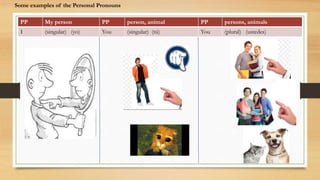
PP My person PP person, animal PP persons, animals
I (singular) (yo) You (singular) (tú) You (plural) (ustedes)
Some examples of the Personal Pronouns
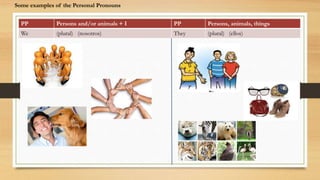
PP Persons and/or animals + I PP Persons, animals, things
We (plural) (nosotros) They (plural) (ellos)
Some examples of the Personal Pronouns
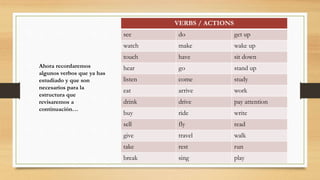
VERBS / ACTIONS
see do get up
watch make wake up
touch have sit down
hear go stand up
listen come study
eat arrive work
drink drive pay attention
buy ride write
sell fly read
give travel walk
take rest run
break sing play
Ahora recordaremos
algunos verbos que ya has
estudiado y que son
necesarios para la
estructura que
revisaremos a
continuación…
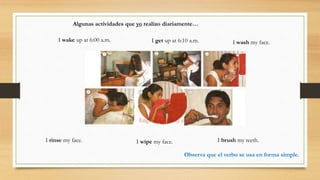
I wake up at 6:00 a.m. I get up at 6:10 a.m. I wash my face.
I rinse my face. I wipe my face. I brush my teeth.
Algunas actividades que yo realizo diariamente…
Observa que el verbo se usa en forma simple.
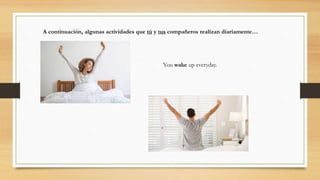
A continuación, algunas actividades que tú y tus compañeros realizan diariamente…
You wake up everyday.
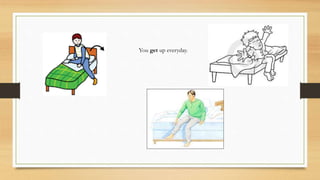
You get up everyday.
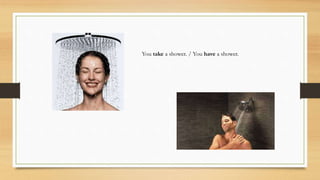
You take a shower. / You have a shower.
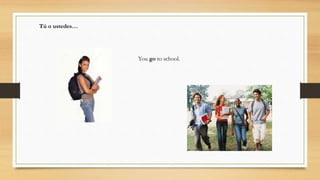
You go to school.
Tú o ustedes…
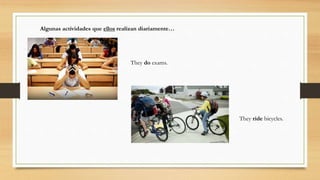
Algunas actividades que ellos realizan diariamente…
They do exams.
They ride bicycles.
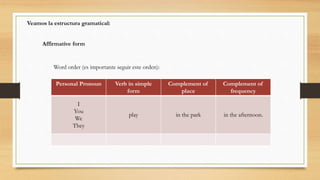
Personal Pronoun Verb in simple
form
Complement of
place
Complement of
frequency
I
You
We
They
play in the park in the afternoon.
Affirmative form
Word order (es importante seguir este orden):
Veamos la estructura gramatical:
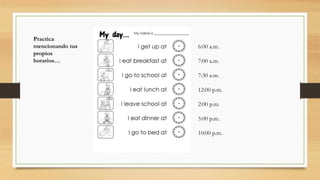
Practica
mencionando tus
propios
horarios…
6:00 a.m.
7:00 a.m.
7:30 a.m.
12:00 p.m.
2:00 p.m.
5:00 p.m.
10:00 p.m.
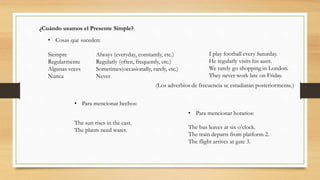
¿Cuándo usamos el Presente Simple?
• Cosas que suceden:
Siempre Always (everyday, constantly, etc.)
Regularmente Regularly (often, frequently, etc.)
Algunas veces Sometimes(occasionally, rarely, etc.)
Nunca Never
I play football every Saturday.
He regularly visits his aunt.
We rarely go shopping in London.
They never work late on Friday.
• Para mencionar hechos:
The sun rises in the east.
The plants need water.
• Para mencionar horarios:
The bus leaves at six o’clock.
The train departs from platform 2.
The flight arrives at gate 3.
(Los adverbios de frecuencia se estudiarán posteriormente.)

Simple present affirmatitve

  • 1.
    SIMPLE PRESENT I, you,we, they Affirmative form
  • 2.
    I, you, we,they • Ahora hablaremos de las actividades diarias, cotidianas, periódicas, frecuentes, o que de alguna manera son repetitivas. Por ejemplo, las actividades que realizas todos los días, los fines de semanas, cada mes, cada Navidad, etc. • Comenzaremos por las personas, cosas o animales que corresponden a los pronombres I, you, we, they para facilitar su aprendizaje. ¿Los recuerdas?...
  • 3.
    PP My personPP person, animal PP persons, animals I (singular) (yo) You (singular) (tú) You (plural) (ustedes) Some examples of the Personal Pronouns
  • 4.
    PP Persons and/oranimals + I PP Persons, animals, things We (plural) (nosotros) They (plural) (ellos) Some examples of the Personal Pronouns
  • 5.
    VERBS / ACTIONS seedo get up watch make wake up touch have sit down hear go stand up listen come study eat arrive work drink drive pay attention buy ride write sell fly read give travel walk take rest run break sing play Ahora recordaremos algunos verbos que ya has estudiado y que son necesarios para la estructura que revisaremos a continuación…
  • 6.
    I wake upat 6:00 a.m. I get up at 6:10 a.m. I wash my face. I rinse my face. I wipe my face. I brush my teeth. Algunas actividades que yo realizo diariamente… Observa que el verbo se usa en forma simple.
  • 7.
    A continuación, algunasactividades que tú y tus compañeros realizan diariamente… You wake up everyday.
  • 8.
    You get upeveryday.
  • 9.
    You take ashower. / You have a shower.
  • 10.
    You go toschool. Tú o ustedes…
  • 11.
    Algunas actividades queellos realizan diariamente… They do exams. They ride bicycles.
  • 12.
    Personal Pronoun Verbin simple form Complement of place Complement of frequency I You We They play in the park in the afternoon. Affirmative form Word order (es importante seguir este orden): Veamos la estructura gramatical:
  • 13.
    Practica mencionando tus propios horarios… 6:00 a.m. 7:00a.m. 7:30 a.m. 12:00 p.m. 2:00 p.m. 5:00 p.m. 10:00 p.m.
  • 14.
    ¿Cuándo usamos elPresente Simple? • Cosas que suceden: Siempre Always (everyday, constantly, etc.) Regularmente Regularly (often, frequently, etc.) Algunas veces Sometimes(occasionally, rarely, etc.) Nunca Never I play football every Saturday. He regularly visits his aunt. We rarely go shopping in London. They never work late on Friday. • Para mencionar hechos: The sun rises in the east. The plants need water. • Para mencionar horarios: The bus leaves at six o’clock. The train departs from platform 2. The flight arrives at gate 3. (Los adverbios de frecuencia se estudiarán posteriormente.)