ENGLISH ll
UNIT 1
PRESENT SIMPLE
ReflexionemosReflexionemos
• ¿Cuándo usamos el inglés?
• ¿Para qué nos sirve?
*En situaciones diarias.
*Nos sirve para sentirnos
más integrados dentro de
un mundo globalizado,
para relacionarnos.
• ¿Dónde encuentras o escuchas
palabras en inglés?
para relacionarnos.
* Lo escuchamos en la
calle, la TV, la música, el
cine, la computadora, los
deportes.
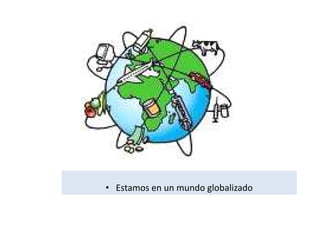
• Estamos en un mundo globalizado
UNIT 1UNIT 1..
TIEMPO PRESENTE SIMPLETIEMPO PRESENTE SIMPLE
(PRESENT SIMPLE TENSE(PRESENT SIMPLE TENSE))
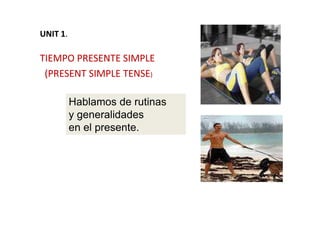
Hablamos de rutinas
y generalidadesy generalidades
en el presente.
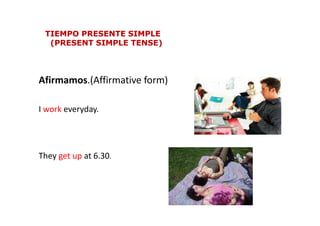
Afirmamos.(Affirmative form)
I work everyday.
TIEMPO PRESENTE SIMPLETIEMPO PRESENTE SIMPLE
(PRESENT SIMPLE TENSE)(PRESENT SIMPLE TENSE)
I work everyday.
They get up at 6.30.
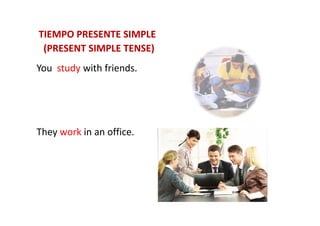
You study with friends.
TIEMPO PRESENTE SIMPLETIEMPO PRESENTE SIMPLE
(PRESENT SIMPLE TENSE)(PRESENT SIMPLE TENSE)
They work in an office.
TIEMPO PRESENTE SIMPLETIEMPO PRESENTE SIMPLE
(PRESENT SIMPLE TENSE)(PRESENT SIMPLE TENSE)
Observa
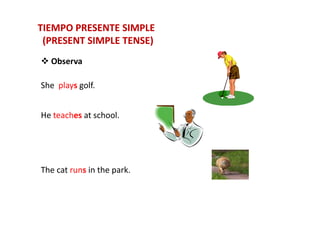
She plays golf.
He teaches at school.He teaches at school.
The cat runs in the park.
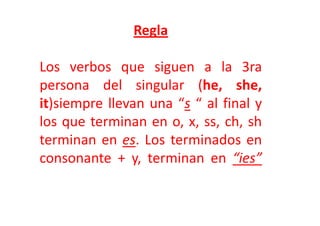
Regla
Los verbos que siguen a la 3ra
persona del singular (he, she,
it)siempre llevan una “s “ al final y
los que terminan en o, x, ss, ch, shlos que terminan en o, x, ss, ch, sh
terminan en es. Los terminados en
consonante + y, terminan en “ies”
Marisa (She) goes to the park every day.
John (He) fixes his bike at home.
Aldo kisses his girlfriend.
Mary watches her e-mails in the morning.Mary watches her e-mails in the morning.
Joan fishes with her brother in the river.
Examples
TIEMPO PRESENTE SIMPLETIEMPO PRESENTE SIMPLE
(PRESENT SIMPLE TENSE(PRESENT SIMPLE TENSE))
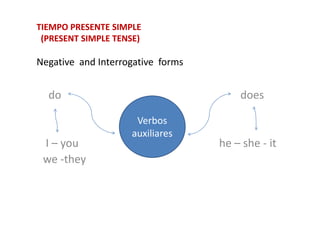
Negative and Interrogative forms
do does
I – you he – she - it
we -they
Verbos
auxiliares
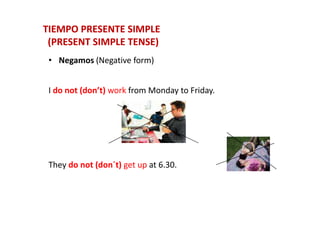
• Negamos (Negative form)
I do not (don’t) work from Monday to Friday.
TIEMPO PRESENTE SIMPLETIEMPO PRESENTE SIMPLE
(PRESENT SIMPLE TENSE)(PRESENT SIMPLE TENSE)
They do not (don´t) get up at 6.30.
TIEMPO PRESENTE SIMPLETIEMPO PRESENTE SIMPLE
(PRESENT SIMPLE TENSE)(PRESENT SIMPLE TENSE)
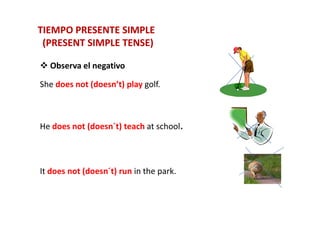
Observa el negativo
She does not (doesn’t) play golf.
He does not (doesn´t) teach at school.
It does not (doesn´t) run in the park.
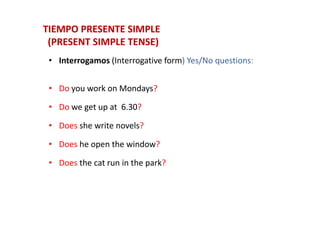
• Interrogamos (Interrogative form) Yes/No questions:
• Do you work on Mondays?
• Do we get up at 6.30?
TIEMPO PRESENTE SIMPLETIEMPO PRESENTE SIMPLE
(PRESENT SIMPLE TENSE)(PRESENT SIMPLE TENSE)
• Does she write novels?
• Does he open the window?
• Does the cat run in the park?
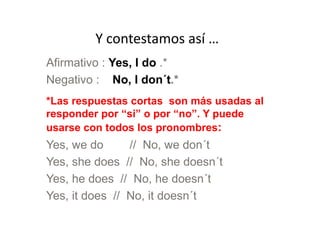
Y contestamos así …
Afirmativo : Yes, I do .*
Negativo : No, I don´t.*
*Las respuestas cortas son más usadas al
responder por “si” o por “no”. Y puederesponder por “si” o por “no”. Y puede
usarse con todos los pronombres:
Yes, we do // No, we don´t
Yes, she does // No, she doesn´t
Yes, he does // No, he doesn´t
Yes, it does // No, it doesn´t
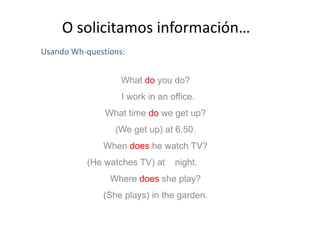
O solicitamos información…
Usando Wh-questions:
What do you do?
I work in an office.
What time do we get up?What time do we get up?
(We get up) at 6.50.
When does he watch TV?
(He watches TV) at night.
Where does she play?
(She plays) in the garden.
Al hablar en presente …
Repasamos también
• Pronombres + Verb “to be” (ser/estar)
• I am I´m [yo soy /estoy]
• You are You´re [ud es / está]
• He is He´s [él es / está]• He is He´s [él es / está]
• She is She´s [ella es / está]
• It is It´s [ello es/ está]
• We are We´re [nos somos/estamos]
• You are You´re [uds son / están]
• They are They´re [ellos son/ están]
Ahora a practicar… suerte!!
Material preparado por
Alicia Ocampo
Profesora en Inglés
aliciaocampo0@gmail.com
Año 2013

Present simple presentation

  • 1.
  • 2.
    ReflexionemosReflexionemos • ¿Cuándo usamosel inglés? • ¿Para qué nos sirve? *En situaciones diarias. *Nos sirve para sentirnos más integrados dentro de un mundo globalizado, para relacionarnos. • ¿Dónde encuentras o escuchas palabras en inglés? para relacionarnos. * Lo escuchamos en la calle, la TV, la música, el cine, la computadora, los deportes.
  • 3.
    • Estamos enun mundo globalizado
  • 4.
    UNIT 1UNIT 1.. TIEMPOPRESENTE SIMPLETIEMPO PRESENTE SIMPLE (PRESENT SIMPLE TENSE(PRESENT SIMPLE TENSE)) Hablamos de rutinas y generalidadesy generalidades en el presente.
  • 5.
    Afirmamos.(Affirmative form) I workeveryday. TIEMPO PRESENTE SIMPLETIEMPO PRESENTE SIMPLE (PRESENT SIMPLE TENSE)(PRESENT SIMPLE TENSE) I work everyday. They get up at 6.30.
  • 6.
    You study withfriends. TIEMPO PRESENTE SIMPLETIEMPO PRESENTE SIMPLE (PRESENT SIMPLE TENSE)(PRESENT SIMPLE TENSE) They work in an office.
  • 7.
    TIEMPO PRESENTE SIMPLETIEMPOPRESENTE SIMPLE (PRESENT SIMPLE TENSE)(PRESENT SIMPLE TENSE) Observa She plays golf. He teaches at school.He teaches at school. The cat runs in the park.
  • 8.
    Regla Los verbos quesiguen a la 3ra persona del singular (he, she, it)siempre llevan una “s “ al final y los que terminan en o, x, ss, ch, shlos que terminan en o, x, ss, ch, sh terminan en es. Los terminados en consonante + y, terminan en “ies”
  • 9.
    Marisa (She) goesto the park every day. John (He) fixes his bike at home. Aldo kisses his girlfriend. Mary watches her e-mails in the morning.Mary watches her e-mails in the morning. Joan fishes with her brother in the river. Examples
  • 10.
    TIEMPO PRESENTE SIMPLETIEMPOPRESENTE SIMPLE (PRESENT SIMPLE TENSE(PRESENT SIMPLE TENSE)) Negative and Interrogative forms do does I – you he – she - it we -they Verbos auxiliares
  • 11.
    • Negamos (Negativeform) I do not (don’t) work from Monday to Friday. TIEMPO PRESENTE SIMPLETIEMPO PRESENTE SIMPLE (PRESENT SIMPLE TENSE)(PRESENT SIMPLE TENSE) They do not (don´t) get up at 6.30.
  • 12.
    TIEMPO PRESENTE SIMPLETIEMPOPRESENTE SIMPLE (PRESENT SIMPLE TENSE)(PRESENT SIMPLE TENSE) Observa el negativo She does not (doesn’t) play golf. He does not (doesn´t) teach at school. It does not (doesn´t) run in the park.
  • 13.
    • Interrogamos (Interrogativeform) Yes/No questions: • Do you work on Mondays? • Do we get up at 6.30? TIEMPO PRESENTE SIMPLETIEMPO PRESENTE SIMPLE (PRESENT SIMPLE TENSE)(PRESENT SIMPLE TENSE) • Does she write novels? • Does he open the window? • Does the cat run in the park?
  • 14.
    Y contestamos así… Afirmativo : Yes, I do .* Negativo : No, I don´t.* *Las respuestas cortas son más usadas al responder por “si” o por “no”. Y puederesponder por “si” o por “no”. Y puede usarse con todos los pronombres: Yes, we do // No, we don´t Yes, she does // No, she doesn´t Yes, he does // No, he doesn´t Yes, it does // No, it doesn´t
  • 15.
    O solicitamos información… UsandoWh-questions: What do you do? I work in an office. What time do we get up?What time do we get up? (We get up) at 6.50. When does he watch TV? (He watches TV) at night. Where does she play? (She plays) in the garden.
  • 16.
    Al hablar enpresente … Repasamos también • Pronombres + Verb “to be” (ser/estar) • I am I´m [yo soy /estoy] • You are You´re [ud es / está] • He is He´s [él es / está]• He is He´s [él es / está] • She is She´s [ella es / está] • It is It´s [ello es/ está] • We are We´re [nos somos/estamos] • You are You´re [uds son / están] • They are They´re [ellos son/ están]
  • 17.
  • 18.
    Material preparado por AliciaOcampo Profesora en Inglés aliciaocampo0@gmail.com Año 2013