UNIT 1

TO BE (SER O ESTAR)

A: TIEMPO PRESENTE

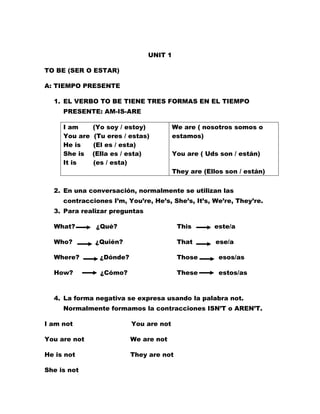
  1. EL VERBO TO BE TIENE TRES FORMAS EN EL TIEMPO
     PRESENTE: AM-IS-ARE

     I am      (Yo soy / estoy)          We are ( nosotros somos o
     You are    (Tu eres / estas)        estamos)
     He is     (El es / esta)
     She is    (Ella es / esta)          You are ( Uds son / están)
     It is     (es / esta)
                                         They are (Ellos son / están)


  2. En una conversación, normalmente se utilizan las
     contracciones I’m, You’re, He’s, She’s, It’s, We’re, They’re.
  3. Para realizar preguntas

  What?         ¿Qué?                     This       este/a

  Who?         ¿Quién?                    That        ese/a

  Where?         ¿Dónde?                  Those        esos/as

  How?           ¿Cómo?                   These        estos/as


  4. La forma negativa se expresa usando la palabra not.
     Normalmente formamos la contracciones ISN’T o AREN’T.

I am not                   You are not

You are not                We are not

He is not                  They are not

She is not
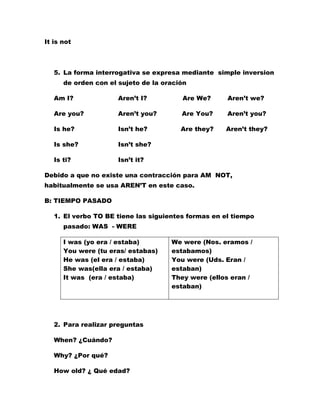
It is not


   5. La forma interrogativa se expresa mediante simple inversion
      de orden con el sujeto de la oración

   Am I?              Aren’t I?         Are We?      Aren’t we?

   Are you?           Aren’t you?       Are You?     Aren’t you?

   Is he?             Isn’t he?         Are they?   Aren’t they?

   Is she?            Isn’t she?

   Is ti?             Isn’t it?

Debido a que no existe una contracción para AM NOT,
habitualmente se usa AREN’T en este caso.

B: TIEMPO PASADO

   1. El verbo TO BE tiene las siguientes formas en el tiempo
      pasado: WAS - WERE

      I was (yo era / estaba)        We were (Nos. eramos /
      You were (tu eras/ estabas)    estabamos)
      He was (el era / estaba)       You were (Uds. Eran /
      She was(ella era / estaba)     estaban)
      It was (era / estaba)          They were (ellos eran /
                                     estaban)


   2. Para realizar preguntas

   When? ¿Cuándo?

   Why? ¿Por qué?

   How old? ¿ Qué edad?
Last week la semana pasada

   Two days ago hace dos días

   Last night anoche

   3. La forma negativa se expresa usando NOT después de WAS O
      WERE. Normalmente se usan las contracciones WASN’T,
      WEREN’T.

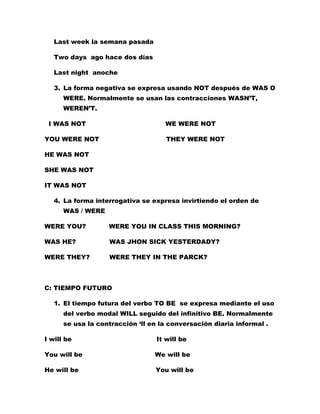
 I WAS NOT                          WE WERE NOT

YOU WERE NOT                         THEY WERE NOT

HE WAS NOT

SHE WAS NOT

IT WAS NOT

   4. La forma interrogativa se expresa invirtiendo el orden de
      WAS / WERE

WERE YOU?          WERE YOU IN CLASS THIS MORNING?

WAS HE?            WAS JHON SICK YESTERDADY?

WERE THEY?         WERE THEY IN THE PARCK?


C: TIEMPO FUTURO

   1. El tiempo futura del verbo TO BE se expresa mediante el uso
      del verbo modal WILL seguido del infinitivo BE. Normalmente
      se usa la contracción ‘ll en la conversación diaria informal .

I will be                         It will be

You will be                      We will be

He will be                       You will be
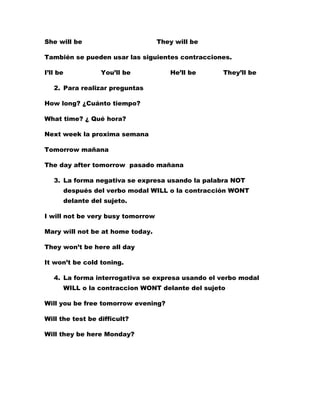
She will be                        They will be

También se pueden usar las siguientes contracciones.

I’ll be              You’ll be         He’ll be       They’ll be

   2. Para realizar preguntas

How long? ¿Cuánto tiempo?

What time? ¿ Qué hora?

Next week la proxima semana

Tomorrow mañana

The day after tomorrow pasado mañana

   3. La forma negativa se expresa usando la palabra NOT
          después del verbo modal WILL o la contracción WONT
          delante del sujeto.

I will not be very busy tomorrow

Mary will not be at home today.

They won’t be here all day

It won’t be cold toning.

   4. La forma interrogativa se expresa usando el verbo modal
          WILL o la contraccion WONT delante del sujeto

Will you be free tomorrow evening?

Will the test be difficult?

Will they be here Monday?
UNIT 2
THERE TO BE (HABER, EXISTIR)

A: TIEMPO PRESENTE

  1. Estas expresiones se usan para indicar la existencia de algo.
     Son equivalentes a la expresión HAY, en castellano.

THERE IS se usan con sustantivos singulares o incontables.
THERE ARE se usan con sustantivos plurales. Normalmente, en el
singular se usa la contracción THERE’S.

There is a book on the desk.

There’s a car in the car park.


  2. La forma negativa se expresa con THRE IS NOT / THERE ARE
     NOT / THERE AREN’T.

There is not a book on the desk.

There isn’t a car in the park.

There aren’t 10 students in my class.

  3. La forma interrogativa se hace mediante simple inversion del
     verbo con la palabra THERE.

Is there a book on the desk?

Are there 10 students in the class?

Is there any water in the glass?

Unit 1

  • 1.
    UNIT 1 TO BE(SER O ESTAR) A: TIEMPO PRESENTE 1. EL VERBO TO BE TIENE TRES FORMAS EN EL TIEMPO PRESENTE: AM-IS-ARE I am (Yo soy / estoy) We are ( nosotros somos o You are (Tu eres / estas) estamos) He is (El es / esta) She is (Ella es / esta) You are ( Uds son / están) It is (es / esta) They are (Ellos son / están) 2. En una conversación, normalmente se utilizan las contracciones I’m, You’re, He’s, She’s, It’s, We’re, They’re. 3. Para realizar preguntas What? ¿Qué? This este/a Who? ¿Quién? That ese/a Where? ¿Dónde? Those esos/as How? ¿Cómo? These estos/as 4. La forma negativa se expresa usando la palabra not. Normalmente formamos la contracciones ISN’T o AREN’T. I am not You are not You are not We are not He is not They are not She is not
  • 2.
    It is not 5. La forma interrogativa se expresa mediante simple inversion de orden con el sujeto de la oración Am I? Aren’t I? Are We? Aren’t we? Are you? Aren’t you? Are You? Aren’t you? Is he? Isn’t he? Are they? Aren’t they? Is she? Isn’t she? Is ti? Isn’t it? Debido a que no existe una contracción para AM NOT, habitualmente se usa AREN’T en este caso. B: TIEMPO PASADO 1. El verbo TO BE tiene las siguientes formas en el tiempo pasado: WAS - WERE I was (yo era / estaba) We were (Nos. eramos / You were (tu eras/ estabas) estabamos) He was (el era / estaba) You were (Uds. Eran / She was(ella era / estaba) estaban) It was (era / estaba) They were (ellos eran / estaban) 2. Para realizar preguntas When? ¿Cuándo? Why? ¿Por qué? How old? ¿ Qué edad?
  • 3.
    Last week lasemana pasada Two days ago hace dos días Last night anoche 3. La forma negativa se expresa usando NOT después de WAS O WERE. Normalmente se usan las contracciones WASN’T, WEREN’T. I WAS NOT WE WERE NOT YOU WERE NOT THEY WERE NOT HE WAS NOT SHE WAS NOT IT WAS NOT 4. La forma interrogativa se expresa invirtiendo el orden de WAS / WERE WERE YOU? WERE YOU IN CLASS THIS MORNING? WAS HE? WAS JHON SICK YESTERDADY? WERE THEY? WERE THEY IN THE PARCK? C: TIEMPO FUTURO 1. El tiempo futura del verbo TO BE se expresa mediante el uso del verbo modal WILL seguido del infinitivo BE. Normalmente se usa la contracción ‘ll en la conversación diaria informal . I will be It will be You will be We will be He will be You will be
  • 4.
    She will be They will be También se pueden usar las siguientes contracciones. I’ll be You’ll be He’ll be They’ll be 2. Para realizar preguntas How long? ¿Cuánto tiempo? What time? ¿ Qué hora? Next week la proxima semana Tomorrow mañana The day after tomorrow pasado mañana 3. La forma negativa se expresa usando la palabra NOT después del verbo modal WILL o la contracción WONT delante del sujeto. I will not be very busy tomorrow Mary will not be at home today. They won’t be here all day It won’t be cold toning. 4. La forma interrogativa se expresa usando el verbo modal WILL o la contraccion WONT delante del sujeto Will you be free tomorrow evening? Will the test be difficult? Will they be here Monday?
  • 5.
    UNIT 2 THERE TOBE (HABER, EXISTIR) A: TIEMPO PRESENTE 1. Estas expresiones se usan para indicar la existencia de algo. Son equivalentes a la expresión HAY, en castellano. THERE IS se usan con sustantivos singulares o incontables. THERE ARE se usan con sustantivos plurales. Normalmente, en el singular se usa la contracción THERE’S. There is a book on the desk. There’s a car in the car park. 2. La forma negativa se expresa con THRE IS NOT / THERE ARE NOT / THERE AREN’T. There is not a book on the desk. There isn’t a car in the park. There aren’t 10 students in my class. 3. La forma interrogativa se hace mediante simple inversion del verbo con la palabra THERE. Is there a book on the desk? Are there 10 students in the class? Is there any water in the glass?