Reflexivos y el Tiempo
       Presente

  Español IIICCP T1
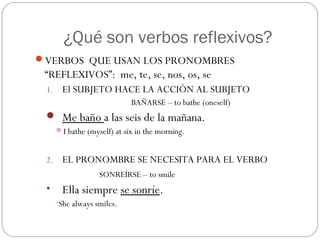
¿Qué son verbos reflexivos?
VERBOS QUE USAN LOS PRONOMBRES
 “REFLEXIVOS”: me, te, se, nos, os, se
 1.    El SUBJETO HACE LA ACCIÓN AL SUBJETO
                             BAÑARSE – to bathe (oneself)
  Me baño a las seis de la mañana.
      I bathe (myself) at six in the morning.


 2.    EL PRONOMBRE SE NECESITA PARA EL VERBO
                   SONREÍRSE – to smile
 •     Ella siempre se sonríe.
      •She always smiles.
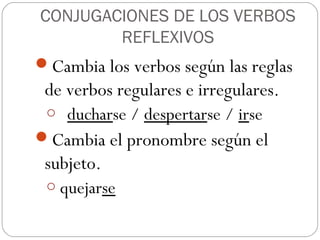
CONJUGACIONES DE LOS VERBOS
        REFLEXIVOS
Cambia los verbos según las reglas
 de verbos regulares e irregulares.
 o ducharse / despertarse / irse
Cambia el pronombre según el
 subjeto.
 o quejarse
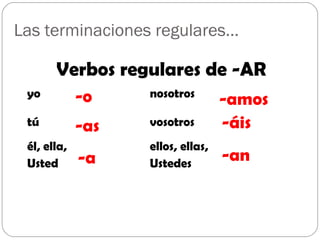
Las terminaciones regulares…

       Verbos regulares de -AR
 yo          -o    nosotros
                                   -amos
 tú          -as   vosotros        -áis
 él, ella,         ellos, ellas,
 Usted       -a    Ustedes
                                   -an
Las terminaciones regulares…

       Verbos regulares de -ER
 yo          -o    nosotros
                                   -emos
 tú          -es   vosotros        -éis
 él, ella,         ellos, ellas,
 Usted       -e    Ustedes
                                   -en
Las terminaciones regulares…

        Verbos regulares de -IR
 yo          -o    nosotros
                                   -imos
 tú          -es   vosotros        -ís
 él, ella,         ellos, ellas,
 Usted       -e    Ustedes
                                   -en
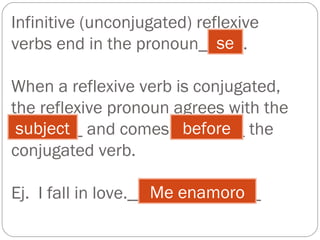
Infinitive (unconjugated) reflexive
                             se
verbs end in the pronoun_____.

When a reflexive verb is conjugated,
the reflexive pronoun agrees with the
________ and comes ________ the
 subject               before
conjugated verb.

Ej. I fall in love._______________
                      Me enamoro
REFLEXIVE PRONOUNS
yo          me   nosotros
                                 nos
tú          te   vosotros        os
él, ella,        ellos, ellas,
Usted       se   Ustedes
                                  se
Reflexive pronouns may also be placed
at the end of the infinitive or present
progressive.
                              Remember to
                              add an accent
I’m going to say goodbye.
                               mark on the
   Voy a despedirme.
_______________________        vowel before
                                  the n!
We are getting along well.
 Estamos llevándonos bien.
________________________

They are getting bored.
  Ellos están aburriéndose.
________________________
Practiquemos…

                alegrarse
 yo   me alegro       nosotros
                        nos alegramos
 tú   te alegras vosotros os alegráis
 él, ella,            ellos, ellas,
 Usted se    alegra   Ustedes
                                  se   alegran
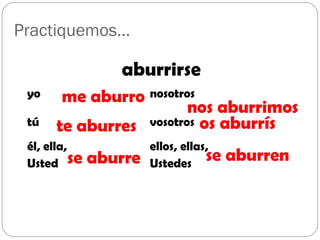
Practiquemos…

                aburrirse
 yo    me aburro nosotros
                        nos aburrimos
 tú   te aburres vosotros os aburrís
 él, ella,            ellos, ellas,
 Usted se    aburre   Ustedes
                                  se   aburren
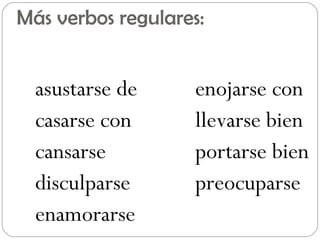
Más verbos regulares:


  asustarse de     enojarse con
  casarse con      llevarse bien
  cansarse         portarse bien
  disculparse      preocuparse
  enamorarse
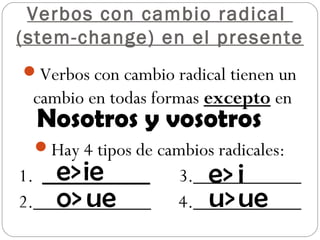
Verbos con cambio radical
(stem-change) en el presente
Verbos con cambio radical tienen un
 cambio en todas formas excepto en
  Nosotros y vosotros
 Hay 4 tipos de cambios radicales:
    e> ie
1. ___________          e> i
                    3.___________
    o> ue
2.____________          u> ue
                    4.___________
Practiquemos…

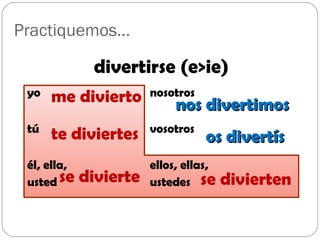
              divertirse (e>ie)
 yo   me divierto       nosotros
                             nos divertimos
 tú                     vosotros
      te diviertes                 os divertís
 él, ella,              ellos, ellas,
 usted se    divierte   ustedes se      divierten
Practiquemos…

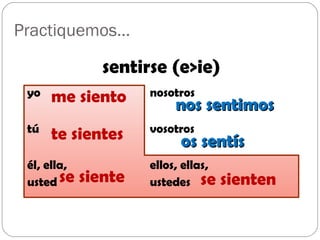
                sentirse (e>ie)
 yo   me siento       nosotros
                           nos sentimos
 tú                   vosotros
      te sientes            os sentís
 él, ella,            ellos, ellas,
 usted se    siente   ustedes se      sienten
Practiquemos…

              despedirse (e>i)
 yo   me despido       nosotros
                         nos despedímos
                             desped
 tú                    vosotros
      te despides           os despedís
                               desped
 él, ella,             ellos, ellas,
 usted se    despide   ustedes se      despiden
Practiquemos…

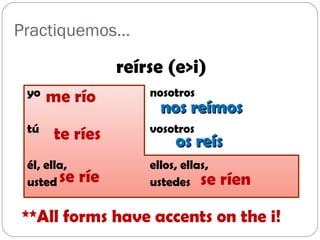
                   reírse (e>i)
 yo   me río           nosotros
                         nos reímos
 tú                    vosotros
      te ríes               os reís
 él, ella,             ellos, ellas,
 usted se    ríe       ustedes se      ríen

**All forms have accents on the i!
El tiempo presente con una
     forma irregular de “yo”
Estos verbos tienen las reglas normales en
   todas formas excepto en la forma de
                 yo         .
Practiquemos…

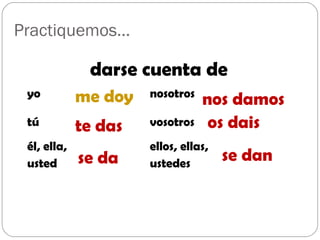
              darse cuenta de
 yo          me doy   nosotros
                                 nos damos
 tú          te das   vosotros    os dais
 él, ella,            ellos, ellas,
 usted       se da    ustedes
                                      se dan
Practiquemos…

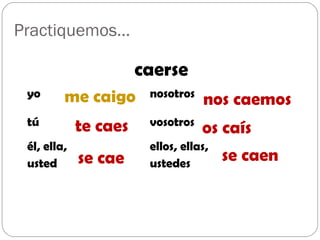
                       caerse
 yo      me caigo       nosotros
                                   nos caemos
 tú          te caes    vosotros
                                   os caís
 él, ella,              ellos, ellas,
 usted       se cae     ustedes
                                        se caen
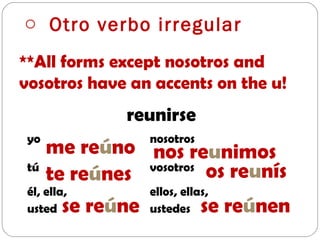
o Otro verbo irregular

**All forms except nosotros and
vosotros have an accents on the u!
              reunirse
 yo              nosotros
     me reúno nos reunimos
 tú
     te reúnes  vosotros
                            os reunís
 él, ella,      ellos, ellas,
 usted se reúne ustedes se reúnen

Verbos reflexivos en el presente

  • 1.
    Reflexivos y elTiempo Presente Español IIICCP T1
  • 2.
    ¿Qué son verbosreflexivos? VERBOS QUE USAN LOS PRONOMBRES “REFLEXIVOS”: me, te, se, nos, os, se 1. El SUBJETO HACE LA ACCIÓN AL SUBJETO BAÑARSE – to bathe (oneself)  Me baño a las seis de la mañana. I bathe (myself) at six in the morning. 2. EL PRONOMBRE SE NECESITA PARA EL VERBO SONREÍRSE – to smile • Ella siempre se sonríe. •She always smiles.
  • 3.
    CONJUGACIONES DE LOSVERBOS REFLEXIVOS Cambia los verbos según las reglas de verbos regulares e irregulares. o ducharse / despertarse / irse Cambia el pronombre según el subjeto. o quejarse
  • 4.
    Las terminaciones regulares… Verbos regulares de -AR yo -o nosotros -amos tú -as vosotros -áis él, ella, ellos, ellas, Usted -a Ustedes -an
  • 5.
    Las terminaciones regulares… Verbos regulares de -ER yo -o nosotros -emos tú -es vosotros -éis él, ella, ellos, ellas, Usted -e Ustedes -en
  • 6.
    Las terminaciones regulares… Verbos regulares de -IR yo -o nosotros -imos tú -es vosotros -ís él, ella, ellos, ellas, Usted -e Ustedes -en
  • 7.
    Infinitive (unconjugated) reflexive se verbs end in the pronoun_____. When a reflexive verb is conjugated, the reflexive pronoun agrees with the ________ and comes ________ the subject before conjugated verb. Ej. I fall in love._______________ Me enamoro
  • 8.
    REFLEXIVE PRONOUNS yo me nosotros nos tú te vosotros os él, ella, ellos, ellas, Usted se Ustedes se
  • 9.
    Reflexive pronouns mayalso be placed at the end of the infinitive or present progressive. Remember to add an accent I’m going to say goodbye. mark on the Voy a despedirme. _______________________ vowel before the n! We are getting along well. Estamos llevándonos bien. ________________________ They are getting bored. Ellos están aburriéndose. ________________________
  • 10.
    Practiquemos… alegrarse yo me alegro nosotros nos alegramos tú te alegras vosotros os alegráis él, ella, ellos, ellas, Usted se alegra Ustedes se alegran
  • 11.
    Practiquemos… aburrirse yo me aburro nosotros nos aburrimos tú te aburres vosotros os aburrís él, ella, ellos, ellas, Usted se aburre Ustedes se aburren
  • 12.
    Más verbos regulares: asustarse de enojarse con casarse con llevarse bien cansarse portarse bien disculparse preocuparse enamorarse
  • 13.
    Verbos con cambioradical (stem-change) en el presente Verbos con cambio radical tienen un cambio en todas formas excepto en Nosotros y vosotros Hay 4 tipos de cambios radicales: e> ie 1. ___________ e> i 3.___________ o> ue 2.____________ u> ue 4.___________
  • 14.
    Practiquemos… divertirse (e>ie) yo me divierto nosotros nos divertimos tú vosotros te diviertes os divertís él, ella, ellos, ellas, usted se divierte ustedes se divierten
  • 15.
    Practiquemos… sentirse (e>ie) yo me siento nosotros nos sentimos tú vosotros te sientes os sentís él, ella, ellos, ellas, usted se siente ustedes se sienten
  • 16.
    Practiquemos… despedirse (e>i) yo me despido nosotros nos despedímos desped tú vosotros te despides os despedís desped él, ella, ellos, ellas, usted se despide ustedes se despiden
  • 17.
    Practiquemos… reírse (e>i) yo me río nosotros nos reímos tú vosotros te ríes os reís él, ella, ellos, ellas, usted se ríe ustedes se ríen **All forms have accents on the i!
  • 18.
    El tiempo presentecon una forma irregular de “yo” Estos verbos tienen las reglas normales en todas formas excepto en la forma de yo .
  • 19.
    Practiquemos… darse cuenta de yo me doy nosotros nos damos tú te das vosotros os dais él, ella, ellos, ellas, usted se da ustedes se dan
  • 20.
    Practiquemos… caerse yo me caigo nosotros nos caemos tú te caes vosotros os caís él, ella, ellos, ellas, usted se cae ustedes se caen
  • 21.
    o Otro verboirregular **All forms except nosotros and vosotros have an accents on the u! reunirse yo nosotros me reúno nos reunimos tú te reúnes vosotros os reunís él, ella, ellos, ellas, usted se reúne ustedes se reúnen