GRAMMAR BOOK
  Jazmin Bishop
TABLE OF CONTENTS


                1. Nationalities
               2. Stem Changers
                 3. Use of Para
          4. Indirect Object Pronouns
         5. Object Pronoun Placement
                    6. Gustar
        7. Affirmative/Negative Words
                 8. Superlatives
                  9. Reflexives
10. Affirmative Tu/irregulars/pronoun placement
 11. Negative Tu/irregulars/pronoun placement
             12. Sequencing Events
STEM CHANGING VERBS


                            Poder    O  UE
Stem doesn’t
change for                  Puedo    Podemos
nosotros or                 Puedes   Podeis
vosotros!
                            Puede    Pueden


       Pensar    E  IE                  Pedir   EI
       Pienso    Pensamos                Pido    Pedimos
       Piensas   Pensais                 Pides   Pedis
       Piensa    Piensan                 Pide    Piden
USE OF PARA


                                         PURPOSE: Vamos
                                         al restaurante para
Use para to indicate the                 comer.
recipient of items!

                                          IMPLIED
                                          PURPOSE:
                                          Tengo dinero
                                          para comprar
                                          algo.
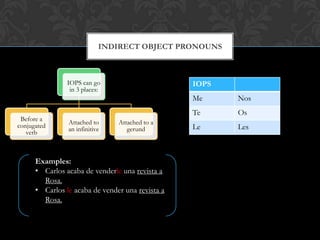
INDIRECT OBJECT PRONOUNS


                IOPS can go                       IOPS
                 in 3 places:
                                                  Me     Nos
                                                  Te     Os
 Before a
                Attached to     Attached to a
conjugated                                        Le     Les
                an infinitive      gerund
   verb


      Examples:
      • Carlos acaba de venderle una revista a
        Rosa.
      • Carlos le acaba de vender una revista a
        Rosa.
OBJECT PRONOUN PLACEMENT


     1.  Attach the pronoun to the infinitive
  2.  Attach the pronoun to a progressive tense
3. Attach the pronoun to an affirmative command
  4. Place the pronoun before a conjugated verb
GUSTAR


      Le      Nos
                                               Notice that the
 Te                    Os                      form of gustar
                                               matches the noun
                                               not the speaker
Me     Gusta              Les


           • Me gusta el boliguato.
           • Me gustan los perros.
AFFIRMATIVE/NEGATIVE WORDS


  Affirmative
    Words                  Negative Verbs             • Algo de
                                                        tomar?
                                                        (Something to
                                                        eat?)
                                                      • Por ahora.
Algun/Alguno     Alguien   Ningun/Ninguno    Nada       Nada mas.
                                                        (For now.
                                                        Nothing
                                                        more.)
Algo   Siempre   Tambien   Nadie    Nunca   Tampoco
SUPERLATIVES


            •    Isimo
Change :    •    Isimos
C = QU      •    Isima
G = GU      •    Isimas
Z=C
           • Equivalent to
             extremely or
             very.             • Malo  Malisimo
                               • MuchasMuchisimas
End in                         • Dificil Dificilismo
N or R     • Goes before
add          adjective or
Cisimo!      adverb.
REFLEXIVES


Reflexives

Me               Nos                                        • Yo me levanto a las ocho de
                                                              manana.
Te               Os
                                                            • Ella se despierta muy
Se               Se                                           temprano.
                                                            • A que hora te desayunas
                                                              cada dia?
                                                            • Estoy acostandome ahora
                                                              mismo.
                                   Positions
                                                            • Banate!


     In front of a                                          Attached to
                       Attached to a       Attached to
      conjugated                                           an affirmative
                          gerund           an infinitive
          verb                                               command
AFFIRMATIVE
                         TU/IRREGULARS/PRONOUN
                               PLACEMENT                   •Gives
                                                           instructions
 Pronoun                                                   or commands
                                                           to someone.
Placement
                                                           •Di •Pon •Ten
                            •Primero haz los quehaceres.   •Haz •Sal •Ven
      Infinitive            •Camina en el parque.          •Ve •Se
                            •Come toda la hamburguesa.
      Gerund                •Abre la puerta, quiero
                            entrar.                        •Drop the “s”

Before conjugated verb


  Affirmative command
NEGATIVE
                           TU/IRREGULARS/PRONOUN
                                 PLACEMENT


                           NO:
                                                    •Use when you
Des/digas   Vayas          Seas            Hagas    want to tell
                                                    someone what
Estes       Sepas/salgas   Tengas          Vengas   NOT to do.

                                                    •Put in yo form
                                                    •Change vowel
                                                    •Add the “s”


                 •No le des mi direccion a nadie.   •AR  E
                 •No estes triste.                  •ER, IR  A
                 •No vayas a la tienda.
                 •No seas mala.
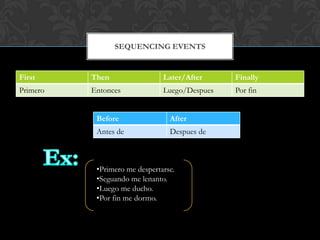
SEQUENCING EVENTS


First     Then                 Later/After     Finally
Primero   Entonces             Luego/Despues   Por fin


           Before                After
           Antes de              Despues de


           •Primero me despertarse.
           •Seguando me lenanto.
           •Luego me ducho.
           •Por fin me dormo.

Current grammar book

  • 1.
    GRAMMAR BOOK Jazmin Bishop
  • 2.
    TABLE OF CONTENTS 1. Nationalities 2. Stem Changers 3. Use of Para 4. Indirect Object Pronouns 5. Object Pronoun Placement 6. Gustar 7. Affirmative/Negative Words 8. Superlatives 9. Reflexives 10. Affirmative Tu/irregulars/pronoun placement 11. Negative Tu/irregulars/pronoun placement 12. Sequencing Events
  • 4.
    STEM CHANGING VERBS Poder O  UE Stem doesn’t change for Puedo Podemos nosotros or Puedes Podeis vosotros! Puede Pueden Pensar E  IE Pedir EI Pienso Pensamos Pido Pedimos Piensas Pensais Pides Pedis Piensa Piensan Pide Piden
  • 5.
    USE OF PARA PURPOSE: Vamos al restaurante para Use para to indicate the comer. recipient of items! IMPLIED PURPOSE: Tengo dinero para comprar algo.
  • 6.
    INDIRECT OBJECT PRONOUNS IOPS can go IOPS in 3 places: Me Nos Te Os Before a Attached to Attached to a conjugated Le Les an infinitive gerund verb Examples: • Carlos acaba de venderle una revista a Rosa. • Carlos le acaba de vender una revista a Rosa.
  • 7.
    OBJECT PRONOUN PLACEMENT 1. Attach the pronoun to the infinitive 2. Attach the pronoun to a progressive tense 3. Attach the pronoun to an affirmative command 4. Place the pronoun before a conjugated verb
  • 8.
    GUSTAR Le Nos Notice that the Te Os form of gustar matches the noun not the speaker Me Gusta Les • Me gusta el boliguato. • Me gustan los perros.
  • 9.
    AFFIRMATIVE/NEGATIVE WORDS Affirmative Words Negative Verbs • Algo de tomar? (Something to eat?) • Por ahora. Algun/Alguno Alguien Ningun/Ninguno Nada Nada mas. (For now. Nothing more.) Algo Siempre Tambien Nadie Nunca Tampoco
  • 10.
    SUPERLATIVES • Isimo Change : • Isimos C = QU • Isima G = GU • Isimas Z=C • Equivalent to extremely or very. • Malo  Malisimo • MuchasMuchisimas End in • Dificil Dificilismo N or R • Goes before add adjective or Cisimo! adverb.
  • 11.
    REFLEXIVES Reflexives Me Nos • Yo me levanto a las ocho de manana. Te Os • Ella se despierta muy Se Se temprano. • A que hora te desayunas cada dia? • Estoy acostandome ahora mismo. Positions • Banate! In front of a Attached to Attached to a Attached to conjugated an affirmative gerund an infinitive verb command
  • 12.
    AFFIRMATIVE TU/IRREGULARS/PRONOUN PLACEMENT •Gives instructions Pronoun or commands to someone. Placement •Di •Pon •Ten •Primero haz los quehaceres. •Haz •Sal •Ven Infinitive •Camina en el parque. •Ve •Se •Come toda la hamburguesa. Gerund •Abre la puerta, quiero entrar. •Drop the “s” Before conjugated verb Affirmative command
  • 13.
    NEGATIVE TU/IRREGULARS/PRONOUN PLACEMENT NO: •Use when you Des/digas Vayas Seas Hagas want to tell someone what Estes Sepas/salgas Tengas Vengas NOT to do. •Put in yo form •Change vowel •Add the “s” •No le des mi direccion a nadie. •AR  E •No estes triste. •ER, IR  A •No vayas a la tienda. •No seas mala.
  • 14.
    SEQUENCING EVENTS First Then Later/After Finally Primero Entonces Luego/Despues Por fin Before After Antes de Despues de •Primero me despertarse. •Seguando me lenanto. •Luego me ducho. •Por fin me dormo.