Descargar para leer sin conexión
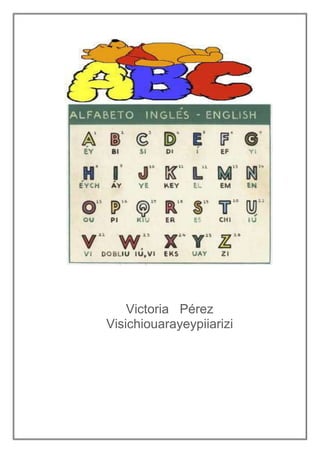
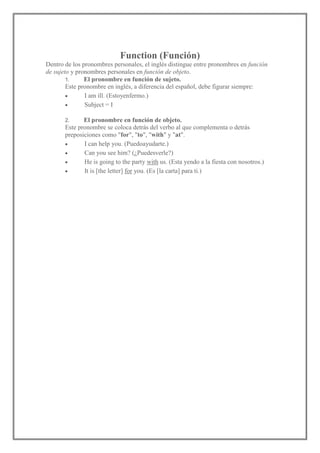
![Honesty <br />21678909461500<br />If you search for tendernessit isn't hard to find.you can have the love you need to live.but if you look for truthfulnessyou might just as well be blind.it always seems to be so hard to give.Honesty is such a lonely word.everyone is so untrue.honesty is hardly ever heard.and mostly what i need from you.I can always find someoneto say they sympathize.if i wear my heart out on my sleeve.but i don't want some pretty faceto tell me pretty lies.all i want is someone to believe.Honesty is such a lonely word.everyone is so untrue.honesty is hardly ever heard.and mostly what i need from you.I can find a lover.i can find a friend.i can have security until the bitter end.anyone can comfort mewith promises again.i know, i know.When i'm deep inside of medon't be too concerned.i won't as for nothin' while i'm gone.but when i want sinceritytell me where else can i turn.because you're the one i depend upon.Honesty is such a lonely word.everyone is so untrue.honesty is hardly ever heard.and mostly what i need from you.<br />Victoria Pérez <br />Visichiouarayey piiarizi<br />Personal Pronouns<br /> (Pronombres personales)<br />En inglés no existe la forma \"
usted\"
o \"
ustedes\"
formal. Por lo tanto los nativos de la lengua ni siquiera lo tienen conceptualizado como una forma aquí llamada \"
formal\"
. Se tiene que entender entonces que la forma masculina, femenina y neutra son lo mismo, lo único que les diferencia es el género.<br />Además, ten en cuenta que en inglés sólo existe una forma para \"
tu\"
y \"
vosotros\"
- \"
you,\"
excepto en la forma reflexiva que distingue entre el singular (yourself) y plural <br />(yourselves).<br />Pronombres personales(función de sujeto)EjemploTraducción ejemploIyoPlayI am ill.Yo estoy enfermo.Youtú, ustedPlayYou are tall.Tú eres alto. / Usted es alto.HeélPlayHe is handsome.Él es guapo.SheellaPlayShe is pretty.Ella es guapa.Itello (neutro)PlayIt is cold today.Hoy hace frío.WenosotrosPlayWe are tired.Nosotros estamos cansados.Youvosotros, ustedesPlayYou are angry.Vosotros estáis enfadados. Ustedes están enfadados.Theyellos, ellasPlayThey are at the cinema.Ellos están en el cine.Pronombres personales(función de objeto)Ejemplo Traducción ejemploMemíPlayCan you help me?¿Puedes ayudarme?Youa tí, a ustedPlayI can help you.Puedo ayudarte. / Puedo ayudarse.Hima élPlayCan you see him?¿Le puedes ver?Hera ellaPlayGive it to her.Dáselo a ella.Ita elloPlayGive it a kick.Dale una patada.Usa nosotrosPlayCan you see us?¿Nos puedes ver?Youa vosotros, a ustedesPlayI see you.Os veo. / Les veo.Thema ellosPlayHe can help them.Les puede ayudar.<br />Neuter Form (Forma neutra)<br />Los pronombres en inglés distinguen entre masculino (he), femenino (she) y neutro (it), tal y como se muestra en la tabla de pronombres.<br />El pronombre personal \"
it\"
se utiliza cuando nos referimos a cosas, a animales que no sabemos su sexo o al tiempo (calendario y meteorológico).<br />Ejemplos:<br />Where is it [the book]? (¿Dónde está [el libro]?)<br />What is its [the dog] name? (¿Cómo se llama [el perro]?)<br />What time is it? (¿Qué hora es?)<br />It is raining. (Está lloviendo.)<br />Nota: \"
It” es una particula muy importante en inglés de la que los hablantes de lengua española se suelen olvidar.<br />Function (Función)<br />Dentro de los pronombres personales, el inglés distingue entre pronombres en función de sujeto y pronombres personales en función de objeto.<br />El pronombre en función de sujeto.Este pronombre en inglés, a diferencia del español, debe figurar siempre:<br />I am ill. (Estoy enfermo.)<br />Subject = I<br />El pronombre en función de objeto.Este pronombre se coloca detrás del verbo al que complementa o detrás preposiciones como \"
for\"
, \"
to\"
, \"
with\"
y \"
at\"
.<br />I can help you. (Puedo ayudarte.)<br />Can you see him? (¿Puedes verle?)<br />He is going to the party with us. (Esta yendo a la fiesta con nosotros.)<br />It is [the letter] for you. (Es [la carta] para ti.)<br />](https://image.slidesharecdn.com/english-111012164052-phpapp02/85/English-1-320.jpg)



La canción habla sobre la soledad de la honestidad y la falta de sinceridad en las personas. El cantante dice que es fácil encontrar a alguien que diga simpatizar pero que lo que realmente necesita es a alguien que crea en él y sea sincero.


