INGLÉS BÁSICO II
Thursday, October 1, 2020.
Teacher Belisa Howard
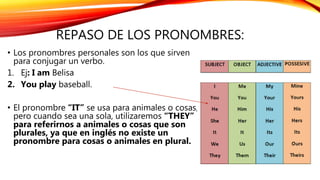
REPASO DE LOS PRONOMBRES:
• Los pronombres personales son los que sirven
para conjugar un verbo.
1. Ej: I am Belisa
2. You play baseball.
• El pronombre “IT” se usa para animales o cosas,
pero cuando sea una sola, utilizaremos “THEY”
para referirnos a animales o cosas que son
plurales, ya que en inglés no existe un
pronombre para cosas o animales en plural.
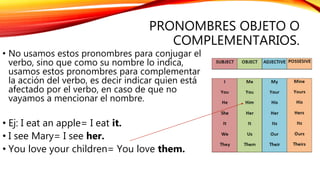
PRONOMBRES OBJETO O
COMPLEMENTARIOS.
• No usamos estos pronombres para conjugar el
verbo, sino que como su nombre lo indica,
usamos estos pronombres para complementar
la acción del verbo, es decir indicar quien está
afectado por el verbo, en caso de que no
vayamos a mencionar el nombre.
• Ej: I eat an apple= I eat it.
• I see Mary= I see her.
• You love your children= You love them.
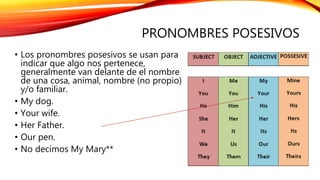
PRONOMBRES POSESIVOS
• Los pronombres posesivos se usan para
indicar que algo nos pertenece,
generalmente van delante de el nombre
de una cosa, animal, nombre (no propio)
y/o familiar.
• My dog.
• Your wife.
• Her Father.
• Our pen.
• No decimos My Mary**
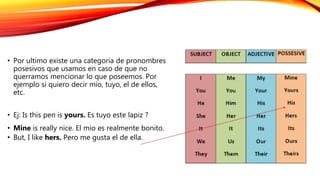
• Por ultimo existe una categoria de pronombres
posesivos que usamos en caso de que no
querramos mencionar lo que poseemos. Por
ejemplo si quiero decir mio, tuyo, el de ellos,
etc.
• Ej: Is this pen is yours. Es tuyo este lapiz ?
• Mine is really nice. El mio es realmente bonito.
• But, I like hers. Pero me gusta el de ella.
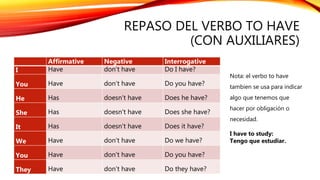
REPASO DEL VERBO TO HAVE
(CON AUXILIARES)
Affirmative Negative Interrogative
I Have don’t have Do I have?
You Have don’t have Do you have?
He Has doesn't have Does he have?
She Has doesn't have Does she have?
It Has doesn't have Does it have?
We Have don’t have Do we have?
You Have don't have Do you have?
They Have don’t have Do they have?
Nota: el verbo to have
tambien se usa para indicar
algo que tenemos que
hacer por obligación o
necesidad.
I have to study:
Tengo que estudiar.
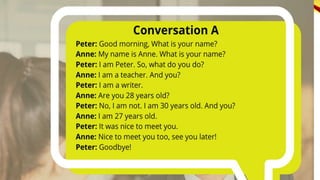
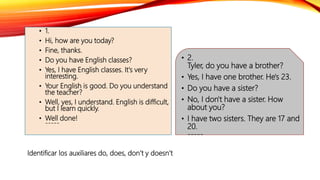
• 1.
• Hi, how are you today?
• Fine, thanks.
• Do you have English classes?
• Yes, I have English classes. It's very
interesting.
• Your English is good. Do you understand
the teacher?
• Well, yes, I understand. English is difficult,
but I learn quickly.
• Well done!
-----
• 2.
Tyler, do you have a brother?
• Yes, I have one brother. He's 23.
• Do you have a sister?
• No, I don't have a sister. How
about you?
• I have two sisters. They are 17 and
20.
-----
Identificar los auxiliares do, does, don’t y doesn’t
UNIT III
Time and Place
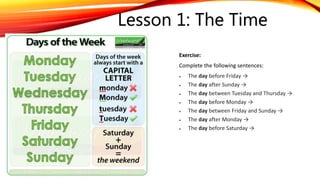
Exercise:
Complete the following sentences:
 The day before Friday →
 The day after Sunday →
 The day between Tuesday and Thursday →
 The day before Monday →
 The day between Friday and Sunday →
 The day after Monday →
 The day before Saturday →
Lesson 1: The Time
HOMEWORK. (TAREA)
•Chequear en la plataforma el contenido y las
asignaciones que estan en la carpeta de la semana
3.

English II

  • 1.
    INGLÉS BÁSICO II Thursday,October 1, 2020. Teacher Belisa Howard
  • 2.
    REPASO DE LOSPRONOMBRES: • Los pronombres personales son los que sirven para conjugar un verbo. 1. Ej: I am Belisa 2. You play baseball. • El pronombre “IT” se usa para animales o cosas, pero cuando sea una sola, utilizaremos “THEY” para referirnos a animales o cosas que son plurales, ya que en inglés no existe un pronombre para cosas o animales en plural.
  • 3.
    PRONOMBRES OBJETO O COMPLEMENTARIOS. •No usamos estos pronombres para conjugar el verbo, sino que como su nombre lo indica, usamos estos pronombres para complementar la acción del verbo, es decir indicar quien está afectado por el verbo, en caso de que no vayamos a mencionar el nombre. • Ej: I eat an apple= I eat it. • I see Mary= I see her. • You love your children= You love them.
  • 4.
    PRONOMBRES POSESIVOS • Lospronombres posesivos se usan para indicar que algo nos pertenece, generalmente van delante de el nombre de una cosa, animal, nombre (no propio) y/o familiar. • My dog. • Your wife. • Her Father. • Our pen. • No decimos My Mary**
  • 5.
    • Por ultimoexiste una categoria de pronombres posesivos que usamos en caso de que no querramos mencionar lo que poseemos. Por ejemplo si quiero decir mio, tuyo, el de ellos, etc. • Ej: Is this pen is yours. Es tuyo este lapiz ? • Mine is really nice. El mio es realmente bonito. • But, I like hers. Pero me gusta el de ella.
  • 9.
    REPASO DEL VERBOTO HAVE (CON AUXILIARES) Affirmative Negative Interrogative I Have don’t have Do I have? You Have don’t have Do you have? He Has doesn't have Does he have? She Has doesn't have Does she have? It Has doesn't have Does it have? We Have don’t have Do we have? You Have don't have Do you have? They Have don’t have Do they have? Nota: el verbo to have tambien se usa para indicar algo que tenemos que hacer por obligación o necesidad. I have to study: Tengo que estudiar.
  • 10.
    • 1. • Hi,how are you today? • Fine, thanks. • Do you have English classes? • Yes, I have English classes. It's very interesting. • Your English is good. Do you understand the teacher? • Well, yes, I understand. English is difficult, but I learn quickly. • Well done! ----- • 2. Tyler, do you have a brother? • Yes, I have one brother. He's 23. • Do you have a sister? • No, I don't have a sister. How about you? • I have two sisters. They are 17 and 20. ----- Identificar los auxiliares do, does, don’t y doesn’t
  • 11.
  • 12.
    Exercise: Complete the followingsentences:  The day before Friday →  The day after Sunday →  The day between Tuesday and Thursday →  The day before Monday →  The day between Friday and Sunday →  The day after Monday →  The day before Saturday → Lesson 1: The Time
  • 13.
    HOMEWORK. (TAREA) •Chequear enla plataforma el contenido y las asignaciones que estan en la carpeta de la semana 3.