Talking About  the Future in Spanish Using the Future Tense  and the “Going to” Form www.professorjason.com  © jason r. jolley
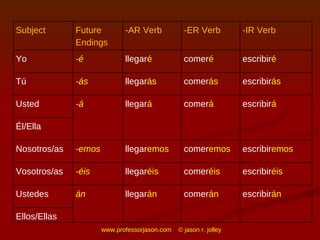
www.professorjason.com  © jason r. jolley Subject Future Endings -AR Verb -ER Verb -IR Verb Yo -é llegar é comer é escribir é Tú -ás llegar ás comer ás escribir ás Usted -á llegar á comer á escribir á Él/Ella Nosotros/as -emos llegar emos comer emos escribir emos Vosotros/as -éis llegar éis comer éis escribir éis Ustedes án llegar án comer án escribir án Ellos/Ellas
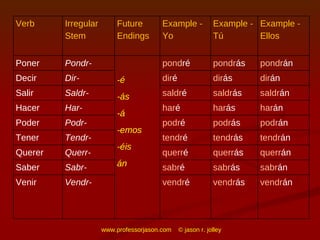
www.professorjason.com  © jason r. jolley Verb Irregular Stem Future Endings Example -Yo Example -Tú Example - Ellos Poner Pondr- -é -ás -á -emos -éis án pond ré pondr ás pondr án Decir Dir- dir é dir ás dir án Salir Saldr- saldr é saldr ás saldr án Hacer Har- har é har ás har án Poder Podr-  podr é podr ás podr án Tener Tendr- tendr é tendr ás tendr án Querer Querr- querr é querr ás querr án Saber Sabr- sabr é sabr ás sabr án Venir Vendr- vendr é vendr ás vendr án
Yo te  llamaré  el miércoles. I will call you on Wednesday. Juan  volverá  antes del almuerzo. Juan will return before lunch. Ellos  llegarán  mañana. They will arrive tomorrow. ¿Cuándo  tendremos  los resultados? When will we have the results? La reunión  comenzará  a las diez y media de la mañana. The meeting will begin at 10:30 a.m. Haremos  todo lo que nos pidan. We will do everything they ask. Veréis  que tengo razón. You will see that I am right. www.professorjason.com  © jason r. jolley
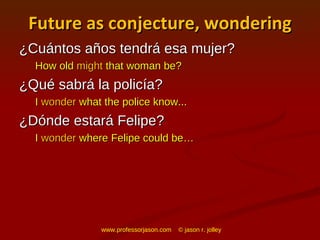
Future as conjecture, wondering ¿Cuántos años tendrá esa mujer? How old  might  that woman be? ¿Qué sabrá la policía? I  wonder  what the police know... ¿Dónde estará Felipe? I  wonder  where Felipe could be… www.professorjason.com  © jason r. jolley
“ Going to” form in English I am going to watch some TV. She is going to make cookies. He’s going to run in the park later. We are going to go to the beach tomorrow. They’re going to wash the car together. www.professorjason.com  © jason r. jolley
Yo  voy I go / am going Tú  vas You go / are going Usted  va You go / are going Él/Ella  va He/She goes / is going Nostros/as  vamos We go / are going Vosotros/as  vais You all go / are going Ustedes  van You all go / are going Ellos/Ellas  van They go / are going www.professorjason.com  © jason r. jolley
Ir + a + Infinitive (“going to”)  Voy a mirar   un poco de televisión. I am going to watch some TV. Ella  va a hacer   las galletas. She is going to make the cookies. Él  va a correr   en el parque más tarde. He’s going to run in the park later. Vamos a ir   a la playa mañana. We are going to go to the beach tomorrow. Ellos  van a lavar   el carro juntos. They’re going to wash the car together. www.professorjason.com  © jason r. jolley
Yo te  llamaré  el miércoles. Voy a llamarte   el miércoles. Juan  volverá  antes del almuerzo. Juan  va a volver   antes del almuerzo. Ellos  llegarán  mañana. Ellos  van a llegar   mañana. ¿Cuándo  tendremos  los resultados? ¿Cuándo  vamos a tener   los resultados? La reunión  comenzará  a las diez y media de la mañana. La reunión  va a comenzar   a las diez y media. Haremos  todo lo que nos pidan. Vamos a hacer   todo lo que nos pidan. Veréis  que tengo razón. Vais a ver   que tengo razón. www.professorjason.com  © jason r. jolley

Future Tense in Spanish

  • 1.
    Talking About the Future in Spanish Using the Future Tense and the “Going to” Form www.professorjason.com © jason r. jolley
  • 2.
    www.professorjason.com ©jason r. jolley Subject Future Endings -AR Verb -ER Verb -IR Verb Yo -é llegar é comer é escribir é Tú -ás llegar ás comer ás escribir ás Usted -á llegar á comer á escribir á Él/Ella Nosotros/as -emos llegar emos comer emos escribir emos Vosotros/as -éis llegar éis comer éis escribir éis Ustedes án llegar án comer án escribir án Ellos/Ellas
  • 3.
    www.professorjason.com ©jason r. jolley Verb Irregular Stem Future Endings Example -Yo Example -Tú Example - Ellos Poner Pondr- -é -ás -á -emos -éis án pond ré pondr ás pondr án Decir Dir- dir é dir ás dir án Salir Saldr- saldr é saldr ás saldr án Hacer Har- har é har ás har án Poder Podr- podr é podr ás podr án Tener Tendr- tendr é tendr ás tendr án Querer Querr- querr é querr ás querr án Saber Sabr- sabr é sabr ás sabr án Venir Vendr- vendr é vendr ás vendr án
  • 4.
    Yo te llamaré el miércoles. I will call you on Wednesday. Juan volverá antes del almuerzo. Juan will return before lunch. Ellos llegarán mañana. They will arrive tomorrow. ¿Cuándo tendremos los resultados? When will we have the results? La reunión comenzará a las diez y media de la mañana. The meeting will begin at 10:30 a.m. Haremos todo lo que nos pidan. We will do everything they ask. Veréis que tengo razón. You will see that I am right. www.professorjason.com © jason r. jolley
  • 5.
    Future as conjecture,wondering ¿Cuántos años tendrá esa mujer? How old might that woman be? ¿Qué sabrá la policía? I wonder what the police know... ¿Dónde estará Felipe? I wonder where Felipe could be… www.professorjason.com © jason r. jolley
  • 6.
    “ Going to”form in English I am going to watch some TV. She is going to make cookies. He’s going to run in the park later. We are going to go to the beach tomorrow. They’re going to wash the car together. www.professorjason.com © jason r. jolley
  • 7.
    Yo voyI go / am going Tú vas You go / are going Usted va You go / are going Él/Ella va He/She goes / is going Nostros/as vamos We go / are going Vosotros/as vais You all go / are going Ustedes van You all go / are going Ellos/Ellas van They go / are going www.professorjason.com © jason r. jolley
  • 8.
    Ir + a+ Infinitive (“going to”) Voy a mirar un poco de televisión. I am going to watch some TV. Ella va a hacer las galletas. She is going to make the cookies. Él va a correr en el parque más tarde. He’s going to run in the park later. Vamos a ir a la playa mañana. We are going to go to the beach tomorrow. Ellos van a lavar el carro juntos. They’re going to wash the car together. www.professorjason.com © jason r. jolley
  • 9.
    Yo te llamaré el miércoles. Voy a llamarte el miércoles. Juan volverá antes del almuerzo. Juan va a volver antes del almuerzo. Ellos llegarán mañana. Ellos van a llegar mañana. ¿Cuándo tendremos los resultados? ¿Cuándo vamos a tener los resultados? La reunión comenzará a las diez y media de la mañana. La reunión va a comenzar a las diez y media. Haremos todo lo que nos pidan. Vamos a hacer todo lo que nos pidan. Veréis que tengo razón. Vais a ver que tengo razón. www.professorjason.com © jason r. jolley