Xavier Alexis Luna Reyes 301


   Will/Won´
        t
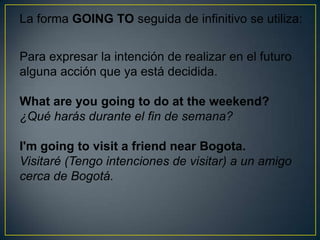
La forma GOING TO seguida de infinitivo se utiliza:


Para expresar la intención de realizar en el futuro
alguna acción que ya está decidida.

What are you going to do at the weekend?
¿Qué harás durante el fin de semana?

I'm going to visit a friend near Bogota.
Visitaré (Tengo intenciones de visitar) a un amigo
cerca de Bogotá.
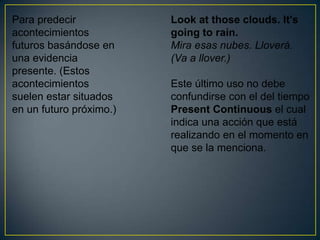
Para predecir            Look at those clouds. It's
acontecimientos          going to rain.
futuros basándose en     Mira esas nubes. Lloverá.
una evidencia            (Va a llover.)
presente. (Estos
acontecimientos          Este último uso no debe
suelen estar situados    confundirse con el del tiempo
en un futuro próximo.)   Present Continuous el cual
                         indica una acción que está
                         realizando en el momento en
                         que se la menciona.
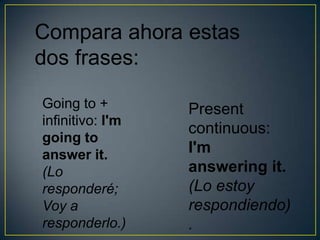
Compara ahora estas
dos frases:

Going to +        Present
infinitivo: I'm
                  continuous:
going to
answer it.        I'm
(Lo               answering it.
responderé;       (Lo estoy
Voy a             respondiendo)
responderlo.)     .
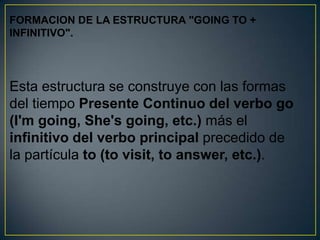
FORMACION DE LA ESTRUCTURA "GOING TO +
INFINITIVO".


Esta estructura se construye con las formas
del tiempo Presente Continuo del verbo go
(I'm going, She's going, etc.) más el
infinitivo del verbo principal precedido de
la partícula to (to visit, to answer, etc.).
El futuro inmediato ingles se construye con
el sujeto + presente del verbo to be +
"going to" + el verbo en presente.

Ejemplos: I am going to play.-------------She
is going to paint.

Segun sea el sujeto de la oracion, se le
pone la forma del to be que corresponda.
Las interrogaciones se forman invirtiendo el
orden sujeto - verbo;

Ejemplos: Am I going to play?-------------Is
she going to paint?
Las negaciones se forman añadiendo "not" al verbo to be;

Ejemplos: I am not going to play.--------She is not going to paint.

Por ultimo, las interrogativas negativas se pueden formar de dos maneras;
A)
sin contraer en cuyo caso ponemos primero el verbo to be, luego el sujeto
y por ultimo "not"

Ejemplo: Am I not going to play?----------Is she not going to paint?


B) Contraida, en cuyo caso contraemos el verbo to be con "not" y se pone
delante del sujeto
de la oracion. ( Esta es la forma mas usada en ingles )

Ejemplo: Aren´t you going to play?----------Isn´t she going to paint?
La primera persona del singular, no tiene contraccion, ya que
no podemos contraer "Am" y "not", en este caso usamos la
forma Aren´t I

Ejemplo: Aren´t I going to play in the team?


Uso del futuro inmediato. (inmediate future)

Usamos el futuro inmediato en ingles cuando hablamos de
una accion futura que ha sido planificada de antemano y se
va a realizar en el momento expecificado.

Ejemplos: I am going to the cinema this evening.
They are going to move to a new house next year.
She is going to celebrate her birthday next month.
Jose is going to university in two years time.
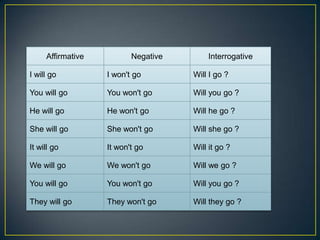
Affirmative          Negative       Interrogative

I will go          I won't go        Will I go ?

You will go        You won't go      Will you go ?

He will go         He won't go       Will he go ?

She will go        She won't go      Will she go ?

It will go         It won't go       Will it go ?

We will go         We won't go       Will we go ?

You will go        You won't go      Will you go ?

They will go       They won't go     Will they go ?
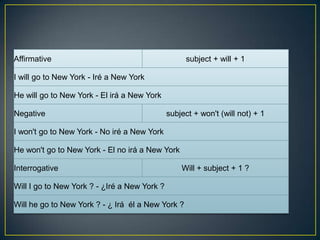
Affirmative                                        subject + will + 1

I will go to New York - Iré a New York

He will go to New York - El irá a New York

Negative                                      subject + won't (will not) + 1

I won't go to New York - No iré a New York

He won't go to New York - El no irá a New York

Interrogative                                     Will + subject + 1 ?

Will I go to New York ? - ¿Iré a New York ?

Will he go to New York ? - ¿ Irá él a New York ?

X avier alexis luna reyes

  • 1.
    Xavier Alexis LunaReyes 301 Will/Won´ t
  • 2.
    La forma GOINGTO seguida de infinitivo se utiliza: Para expresar la intención de realizar en el futuro alguna acción que ya está decidida. What are you going to do at the weekend? ¿Qué harás durante el fin de semana? I'm going to visit a friend near Bogota. Visitaré (Tengo intenciones de visitar) a un amigo cerca de Bogotá.
  • 3.
    Para predecir Look at those clouds. It's acontecimientos going to rain. futuros basándose en Mira esas nubes. Lloverá. una evidencia (Va a llover.) presente. (Estos acontecimientos Este último uso no debe suelen estar situados confundirse con el del tiempo en un futuro próximo.) Present Continuous el cual indica una acción que está realizando en el momento en que se la menciona.
  • 4.
    Compara ahora estas dosfrases: Going to + Present infinitivo: I'm continuous: going to answer it. I'm (Lo answering it. responderé; (Lo estoy Voy a respondiendo) responderlo.) .
  • 5.
    FORMACION DE LAESTRUCTURA "GOING TO + INFINITIVO". Esta estructura se construye con las formas del tiempo Presente Continuo del verbo go (I'm going, She's going, etc.) más el infinitivo del verbo principal precedido de la partícula to (to visit, to answer, etc.).
  • 6.
    El futuro inmediatoingles se construye con el sujeto + presente del verbo to be + "going to" + el verbo en presente. Ejemplos: I am going to play.-------------She is going to paint. Segun sea el sujeto de la oracion, se le pone la forma del to be que corresponda.
  • 7.
    Las interrogaciones seforman invirtiendo el orden sujeto - verbo; Ejemplos: Am I going to play?-------------Is she going to paint?
  • 8.
    Las negaciones seforman añadiendo "not" al verbo to be; Ejemplos: I am not going to play.--------She is not going to paint. Por ultimo, las interrogativas negativas se pueden formar de dos maneras; A) sin contraer en cuyo caso ponemos primero el verbo to be, luego el sujeto y por ultimo "not" Ejemplo: Am I not going to play?----------Is she not going to paint? B) Contraida, en cuyo caso contraemos el verbo to be con "not" y se pone delante del sujeto de la oracion. ( Esta es la forma mas usada en ingles ) Ejemplo: Aren´t you going to play?----------Isn´t she going to paint?
  • 9.
    La primera personadel singular, no tiene contraccion, ya que no podemos contraer "Am" y "not", en este caso usamos la forma Aren´t I Ejemplo: Aren´t I going to play in the team? Uso del futuro inmediato. (inmediate future) Usamos el futuro inmediato en ingles cuando hablamos de una accion futura que ha sido planificada de antemano y se va a realizar en el momento expecificado. Ejemplos: I am going to the cinema this evening. They are going to move to a new house next year. She is going to celebrate her birthday next month. Jose is going to university in two years time.
  • 10.
    Affirmative Negative Interrogative I will go I won't go Will I go ? You will go You won't go Will you go ? He will go He won't go Will he go ? She will go She won't go Will she go ? It will go It won't go Will it go ? We will go We won't go Will we go ? You will go You won't go Will you go ? They will go They won't go Will they go ?
  • 11.
    Affirmative subject + will + 1 I will go to New York - Iré a New York He will go to New York - El irá a New York Negative subject + won't (will not) + 1 I won't go to New York - No iré a New York He won't go to New York - El no irá a New York Interrogative Will + subject + 1 ? Will I go to New York ? - ¿Iré a New York ? Will he go to New York ? - ¿ Irá él a New York ?