Using:
Predictions
• Will / Will not
• Think / Don’t think
• Probably
• Possibly
Aprendimos a usar una forma de "to be" con
"going to" para hablar del futuro.
Este, se utiliza para algo ya planeado.
I'm going to swim. = Voy a nadar
En este caso, no existe un plan firme.
Decimos lo que pensamos que va a pasar.
A menudo utilizamos el tiempo futuro
simple de hacer una predicción sobre
el futuro.
También para hacer decisiones
espontáneas
Pero si hablamos de una predicción donde se ve claramente qué va
a pasar en el momento de hablar, hay que utilizar "going to"
mientras "will" no será posible.
Will / Will not (won’t)Using
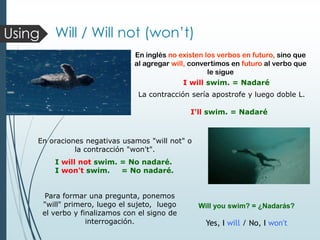
I will swim. = Nadaré
La contracción sería apostrofe y luego doble L.
I'll swim. = Nadaré
En oraciones negativas usamos "will not" o
la contracción "won't".
I will not swim. = No nadaré.
I won't swim. = No nadaré.
Para formar una pregunta, ponemos
"will" primero, luego el sujeto, luego
el verbo y finalizamos con el signo de
interrogación.
Will you swim? = ¿Nadarás?
En inglés no existen los verbos en futuro, sino que
al agregar will, convertimos en futuro al verbo que
le sigue
Yes, I will / No, I won't
subject auxiliary
verb (+ o -)
main
verb
Complement
+ I will open the door.
+ You Won’t finish before me.
- She Will not be at school
tomorrow.
- We Won’t leave yet.
I will I'll
you will you'll
he will
she will
it will
he'll
she'll
it'll
we will we'll
they will they'll
auxiliar
y verb
(+ o -)
subject
main
verb
Complement
? Will You arrive on time?
? Will they want dinner?
Will / Will not (won’t)Using
Think / Don’t thinkUsing
I don’t think I'll go to University in the future.
I think I will go to University in the future.
I think I'll go to University in the future.
She thinks she won't go to University in the future
I think I will go to University in the future.
+ Will / Will not (Won’t)
She thinks she will not go to University in the future
don’t think + sunject+Will  negative predictions
think + Will  positive predictions
Se ocupa cuando decimos lo que pensamos
que va a pasar
Using Probably / Possibly
+ Will / Will not (Won’t)
Probablemente: Con verosimilitud o
fundada apariencia de verdad.
Posiblemente: Probablemente, quizá
We probably won’t have time to go shopping
We will probably have a lot of time tomorrow
probably o possibly:
• Despues de Will si es positivo
• Antes de Will not / Won’t si es negativo
Predictions

Predictions

  • 1.
    Using: Predictions • Will /Will not • Think / Don’t think • Probably • Possibly
  • 2.
    Aprendimos a usaruna forma de "to be" con "going to" para hablar del futuro. Este, se utiliza para algo ya planeado. I'm going to swim. = Voy a nadar En este caso, no existe un plan firme. Decimos lo que pensamos que va a pasar. A menudo utilizamos el tiempo futuro simple de hacer una predicción sobre el futuro. También para hacer decisiones espontáneas Pero si hablamos de una predicción donde se ve claramente qué va a pasar en el momento de hablar, hay que utilizar "going to" mientras "will" no será posible.
  • 3.
    Will / Willnot (won’t)Using I will swim. = Nadaré La contracción sería apostrofe y luego doble L. I'll swim. = Nadaré En oraciones negativas usamos "will not" o la contracción "won't". I will not swim. = No nadaré. I won't swim. = No nadaré. Para formar una pregunta, ponemos "will" primero, luego el sujeto, luego el verbo y finalizamos con el signo de interrogación. Will you swim? = ¿Nadarás? En inglés no existen los verbos en futuro, sino que al agregar will, convertimos en futuro al verbo que le sigue Yes, I will / No, I won't
  • 4.
    subject auxiliary verb (+o -) main verb Complement + I will open the door. + You Won’t finish before me. - She Will not be at school tomorrow. - We Won’t leave yet. I will I'll you will you'll he will she will it will he'll she'll it'll we will we'll they will they'll auxiliar y verb (+ o -) subject main verb Complement ? Will You arrive on time? ? Will they want dinner? Will / Will not (won’t)Using
  • 5.
    Think / Don’tthinkUsing I don’t think I'll go to University in the future. I think I will go to University in the future. I think I'll go to University in the future. She thinks she won't go to University in the future I think I will go to University in the future. + Will / Will not (Won’t) She thinks she will not go to University in the future don’t think + sunject+Will  negative predictions think + Will  positive predictions Se ocupa cuando decimos lo que pensamos que va a pasar
  • 6.
    Using Probably /Possibly + Will / Will not (Won’t) Probablemente: Con verosimilitud o fundada apariencia de verdad. Posiblemente: Probablemente, quizá We probably won’t have time to go shopping We will probably have a lot of time tomorrow probably o possibly: • Despues de Will si es positivo • Antes de Will not / Won’t si es negativo