PRESENT SIMPLE AND PRESENT CONTINUOUS PABLO GUILLÉN HERNÁNDEZ 4ºA Nº 10
PRESENT SIMPLE Se forma igual que la base del verbo pero sin el “to”. La 3ª persona del singular añade una “s”. En negativa, se necesita el auxiliar “do” o “does” + not. En interrogativa el auxiliar do o does se coloca delante del sujeto. En las respuestas breves se coloca detrás del sujeto.
TABLA AFIRMATIVA Y NEGATIVA They don’t like They do not like They like You don’t like You do not like You like We don’t like We do not like We like He doesn’t like He does not like He likes You don’t like You do not like You like I don’t like I do not like I like FORMA CONTRAÍDA NEGATIVA AFIRMATIVA
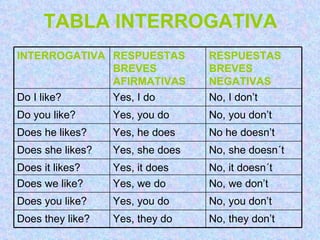
TABLA INTERROGATIVA No, they don’t Yes, they do Does they like? No, you don’t Yes, you do Does you like? No, we don’t Yes, we do Does we like? No, it doesn´t Yes, it does Does it likes? No, she doesn´t Yes, she does Does she likes? No he doesn’t Yes, he does Does he likes? No, you don’t Yes, you do Do you like? No, I don’t Yes, I do Do I like? RESPUESTAS BREVES NEGATIVAS RESPUESTAS BREVES AFIRMATIVAS INTERROGATIVA
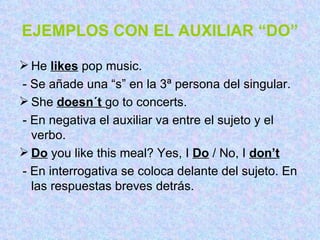
EJEMPLOS CON EL AUXILIAR “DO” He  likes  pop music. - Se añade una “s” en la 3ª persona del singular. She  doesn´t  go to concerts. - En negativa el auxiliar va entre el sujeto y el verbo. Do  you like this meal? Yes, I  Do  / No, I  don’t - En interrogativa se coloca delante del sujeto. En las respuestas breves detrás.
USOS DEL PRESENT SIMPLE Variedades generales y descripciones: - Many Spanish people  go  to pubs. Hechos habituales o cotidianos. - I  send  e-mails every day. Gustos y opiniones. - I  like  rock music. En programas y horarios. - The match  starts  at five o’clock.
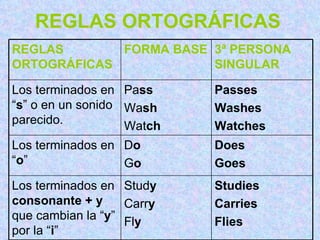
REGLAS ORTOGRÁFICAS Studies Carries Flies Stud y Carr y Fl y Los terminados en  consonante + y  que cambian la “ y ”   por la “ i ” Does Goes D o G o Los terminados en “ o ” Passes Washes Watches Pa ss Wa sh   Wat ch Los terminados en “ s ” o en un sonido parecido. 3ª PERSONA SINGULAR FORMA BASE REGLAS ORTOGRÁFICAS
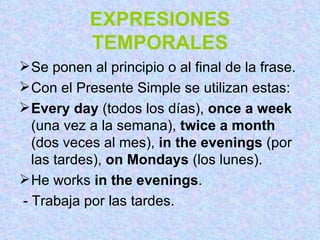
EXPRESIONES TEMPORALES Se ponen al principio o al final de la frase. Con el Presente Simple se utilizan estas: Every day  (todos los días),  once a week  (una vez a la semana),  twice a month  (dos veces al mes),  in the evenings  (por las tardes),  on Mondays  (los lunes). He works  in the evenings . - Trabaja por las tardes.
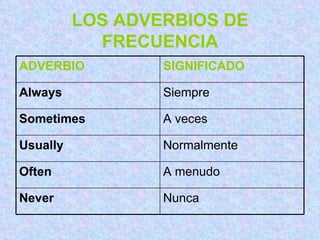
LOS ADVERBIOS DE FRECUENCIA Nunca Never A menudo Often Normalmente Usually A veces Sometimes Siempre Always SIGNIFICADO ADVERBIO
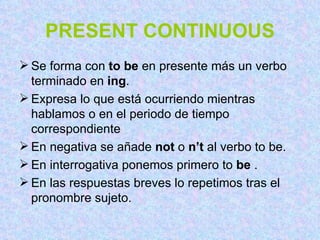
PRESENT CONTINUOUS Se forma con  to be  en presente más un verbo terminado en  ing . Expresa lo que está ocurriendo mientras hablamos o en el periodo de tiempo correspondiente En negativa se añade  not  o  n’t  al verbo to be. En interrogativa ponemos primero to  be  . En las respuestas breves lo repetimos tras el pronombre sujeto.
TABLA AFIRMATIVA They’re writing They  are writing You’re writing You  are writing We’re writing We  are writing It’s writing It  is writing She’s writing She  is writing He’s writing He  is writing You’re writing You  are writing I’m writing I  am writing FORMA CONTRAÍDA AFIRMATIVA
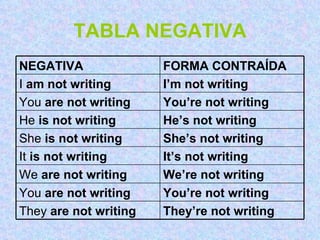
TABLA NEGATIVA They’re not writing They  are not writing You’re not writing You  are not writing We’re not writing We  are not writing It’s not writing It  is not writing She’s not writing She  is not writing He’s not writing He  is not writing You’re not writing You  are not writing I’m not writing I  am not writing FORMA CONTRAÍDA NEGATIVA
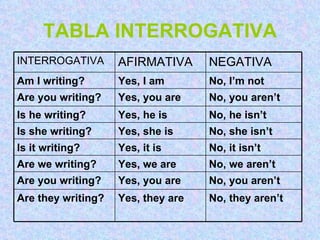
TABLA INTERROGATIVA No, they aren’t Yes, they are Are they writing? No, you aren’t Yes, you are Are you writing? No, we aren’t Yes, we are Are we writing? No, it isn’t Yes, it is Is it writing? No, she isn’t Yes, she is Is she writing? No, he isn’t Yes, he is Is he writing? No, you aren’t Yes, you are Are you writing? No, I’m not Yes, I am Am I writing? NEGATIVA AFIRMATIVA INTERROGATIVA
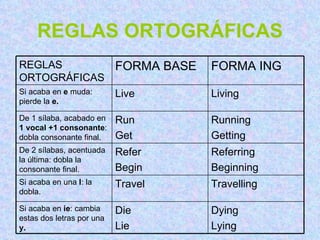
REGLAS ORTOGRÁFICAS Dying Lying Die Lie Si acaba en  ie : cambia estas dos letras por una  y. Travelling Travel Si acaba en una  l : la dobla. Referring Beginning Refer Begin De 2 sílabas, acentuada la última: dobla la consonante final. Running Getting Run Get De 1 sílaba, acabado en  1 vocal +1 consonante : dobla consonante final. Living Live Si acaba en  e  muda: pierde la  e. FORMA ING FORMA BASE REGLAS ORTOGRÁFICAS
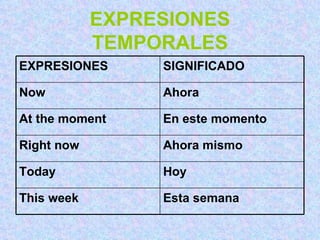
EXPRESIONES TEMPORALES Esta semana This week Hoy Today Ahora mismo Right now En este momento At the moment Ahora Now SIGNIFICADO EXPRESIONES
DIFERENCIAS ENTRE PRESENT SIMPLE Y PRESENT CONTINUOUS El Present Simple expresa hechos habituales. El Present Continuous dice lo que está ocurriendo en el momento de hablar. Ej: I  read  every day. Now,  I’m reading  a novel.
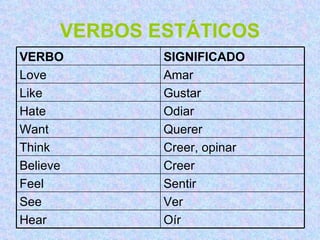
VERBOS ESTÁTICOS Oír Hear Ver See Sentir Feel Creer Believe Creer, opinar Think Querer Want Odiar Hate Gustar Like Amar Love SIGNIFICADO VERBO

Present simple and present continuous

  • 1.
    PRESENT SIMPLE ANDPRESENT CONTINUOUS PABLO GUILLÉN HERNÁNDEZ 4ºA Nº 10
  • 2.
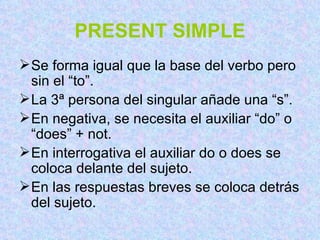
    PRESENT SIMPLE Seforma igual que la base del verbo pero sin el “to”. La 3ª persona del singular añade una “s”. En negativa, se necesita el auxiliar “do” o “does” + not. En interrogativa el auxiliar do o does se coloca delante del sujeto. En las respuestas breves se coloca detrás del sujeto.
  • 3.
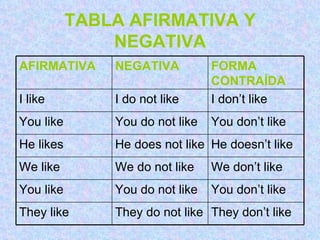
    TABLA AFIRMATIVA YNEGATIVA They don’t like They do not like They like You don’t like You do not like You like We don’t like We do not like We like He doesn’t like He does not like He likes You don’t like You do not like You like I don’t like I do not like I like FORMA CONTRAÍDA NEGATIVA AFIRMATIVA
  • 4.
    TABLA INTERROGATIVA No,they don’t Yes, they do Does they like? No, you don’t Yes, you do Does you like? No, we don’t Yes, we do Does we like? No, it doesn´t Yes, it does Does it likes? No, she doesn´t Yes, she does Does she likes? No he doesn’t Yes, he does Does he likes? No, you don’t Yes, you do Do you like? No, I don’t Yes, I do Do I like? RESPUESTAS BREVES NEGATIVAS RESPUESTAS BREVES AFIRMATIVAS INTERROGATIVA
  • 5.
    EJEMPLOS CON ELAUXILIAR “DO” He likes pop music. - Se añade una “s” en la 3ª persona del singular. She doesn´t go to concerts. - En negativa el auxiliar va entre el sujeto y el verbo. Do you like this meal? Yes, I Do / No, I don’t - En interrogativa se coloca delante del sujeto. En las respuestas breves detrás.
  • 6.
    USOS DEL PRESENTSIMPLE Variedades generales y descripciones: - Many Spanish people go to pubs. Hechos habituales o cotidianos. - I send e-mails every day. Gustos y opiniones. - I like rock music. En programas y horarios. - The match starts at five o’clock.
  • 7.
    REGLAS ORTOGRÁFICAS StudiesCarries Flies Stud y Carr y Fl y Los terminados en consonante + y que cambian la “ y ” por la “ i ” Does Goes D o G o Los terminados en “ o ” Passes Washes Watches Pa ss Wa sh Wat ch Los terminados en “ s ” o en un sonido parecido. 3ª PERSONA SINGULAR FORMA BASE REGLAS ORTOGRÁFICAS
  • 8.
    EXPRESIONES TEMPORALES Seponen al principio o al final de la frase. Con el Presente Simple se utilizan estas: Every day (todos los días), once a week (una vez a la semana), twice a month (dos veces al mes), in the evenings (por las tardes), on Mondays (los lunes). He works in the evenings . - Trabaja por las tardes.
  • 9.
    LOS ADVERBIOS DEFRECUENCIA Nunca Never A menudo Often Normalmente Usually A veces Sometimes Siempre Always SIGNIFICADO ADVERBIO
  • 10.
    PRESENT CONTINUOUS Seforma con to be en presente más un verbo terminado en ing . Expresa lo que está ocurriendo mientras hablamos o en el periodo de tiempo correspondiente En negativa se añade not o n’t al verbo to be. En interrogativa ponemos primero to be . En las respuestas breves lo repetimos tras el pronombre sujeto.
  • 11.
    TABLA AFIRMATIVA They’rewriting They are writing You’re writing You are writing We’re writing We are writing It’s writing It is writing She’s writing She is writing He’s writing He is writing You’re writing You are writing I’m writing I am writing FORMA CONTRAÍDA AFIRMATIVA
  • 12.
    TABLA NEGATIVA They’renot writing They are not writing You’re not writing You are not writing We’re not writing We are not writing It’s not writing It is not writing She’s not writing She is not writing He’s not writing He is not writing You’re not writing You are not writing I’m not writing I am not writing FORMA CONTRAÍDA NEGATIVA
  • 13.
    TABLA INTERROGATIVA No,they aren’t Yes, they are Are they writing? No, you aren’t Yes, you are Are you writing? No, we aren’t Yes, we are Are we writing? No, it isn’t Yes, it is Is it writing? No, she isn’t Yes, she is Is she writing? No, he isn’t Yes, he is Is he writing? No, you aren’t Yes, you are Are you writing? No, I’m not Yes, I am Am I writing? NEGATIVA AFIRMATIVA INTERROGATIVA
  • 14.
    REGLAS ORTOGRÁFICAS DyingLying Die Lie Si acaba en ie : cambia estas dos letras por una y. Travelling Travel Si acaba en una l : la dobla. Referring Beginning Refer Begin De 2 sílabas, acentuada la última: dobla la consonante final. Running Getting Run Get De 1 sílaba, acabado en 1 vocal +1 consonante : dobla consonante final. Living Live Si acaba en e muda: pierde la e. FORMA ING FORMA BASE REGLAS ORTOGRÁFICAS
  • 15.
    EXPRESIONES TEMPORALES Estasemana This week Hoy Today Ahora mismo Right now En este momento At the moment Ahora Now SIGNIFICADO EXPRESIONES
  • 16.
    DIFERENCIAS ENTRE PRESENTSIMPLE Y PRESENT CONTINUOUS El Present Simple expresa hechos habituales. El Present Continuous dice lo que está ocurriendo en el momento de hablar. Ej: I read every day. Now, I’m reading a novel.
  • 17.
    VERBOS ESTÁTICOS OírHear Ver See Sentir Feel Creer Believe Creer, opinar Think Querer Want Odiar Hate Gustar Like Amar Love SIGNIFICADO VERBO