Problema (Circuito Combinacionales o C.C.)
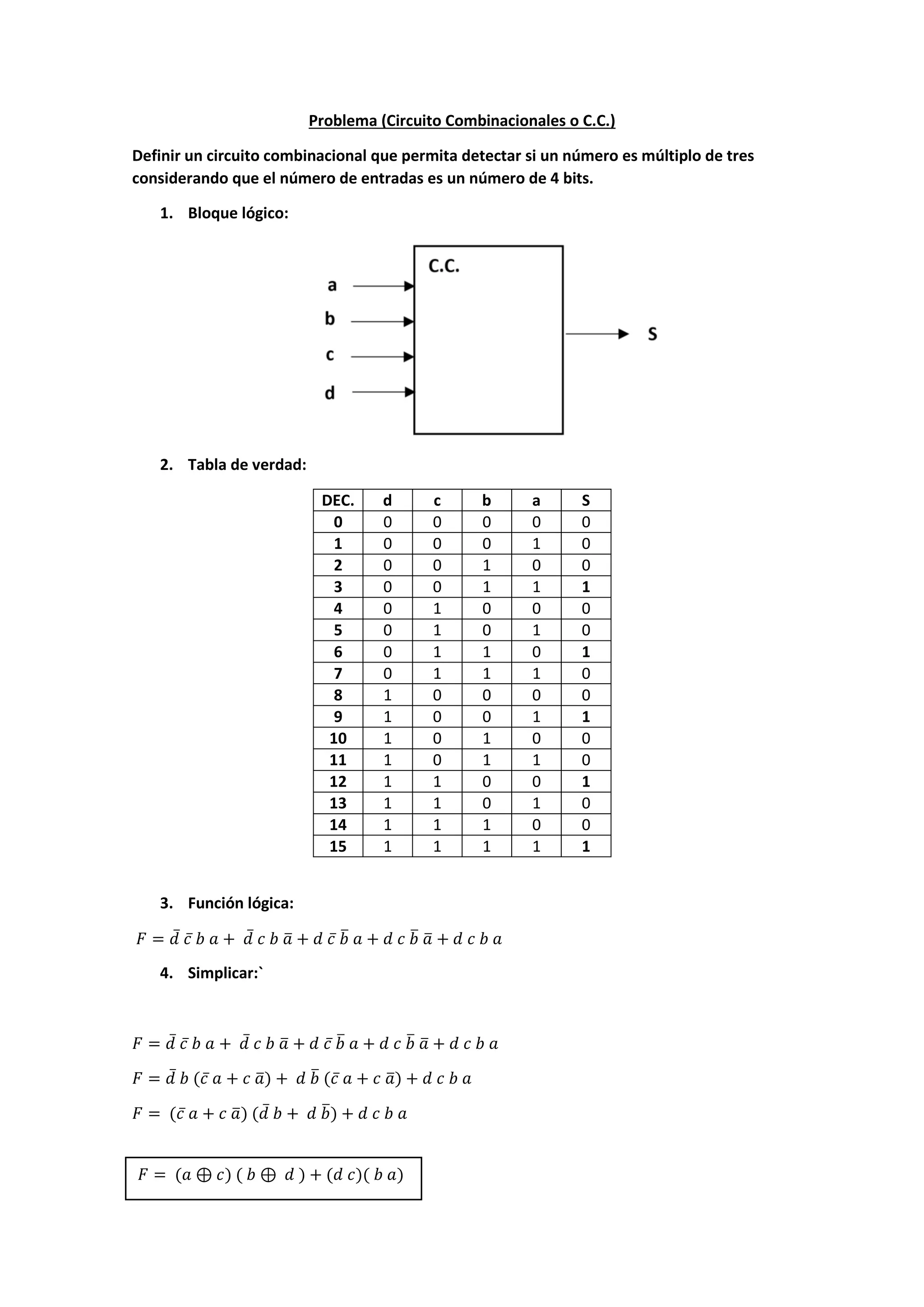
Definir un circuito combinacional que permita detectar si un número es múltiplo de tres
considerando que el número de entradas es un número de 4 bits.
1. Bloque lógico:
2. Tabla de verdad:
DEC. d c b a S
0 0 0 0 0 0
1 0 0 0 1 0
2 0 0 1 0 0
3 0 0 1 1 1
4 0 1 0 0 0
5 0 1 0 1 0
6 0 1 1 0 1
7 0 1 1 1 0
8 1 0 0 0 0
9 1 0 0 1 1
10 1 0 1 0 0
11 1 0 1 1 0
12 1 1 0 0 1
13 1 1 0 1 0
14 1 1 1 0 0
15 1 1 1 1 1
3. Función lógica:
𝐹 = 𝑑̅ 𝑐̅ 𝑏 𝑎 + 𝑑̅ 𝑐 𝑏 𝑎̅ + 𝑑 𝑐̅ 𝑏̅ 𝑎 + 𝑑 𝑐 𝑏̅ 𝑎̅ + 𝑑 𝑐 𝑏 𝑎
4. Simplicar:`
𝐹 = 𝑑̅ 𝑐̅ 𝑏 𝑎 + 𝑑̅ 𝑐 𝑏 𝑎̅ + 𝑑 𝑐̅ 𝑏̅ 𝑎 + 𝑑 𝑐 𝑏̅ 𝑎̅ + 𝑑 𝑐 𝑏 𝑎
𝐹 = 𝑑̅ 𝑏 (𝑐̅ 𝑎 + 𝑐 𝑎̅) + 𝑑 𝑏̅ (𝑐̅ 𝑎 + 𝑐 𝑎̅) + 𝑑 𝑐 𝑏 𝑎
𝐹 = (𝑐̅ 𝑎 + 𝑐 𝑎̅) (𝑑̅ 𝑏 + 𝑑 𝑏̅) + 𝑑 𝑐 𝑏 𝑎
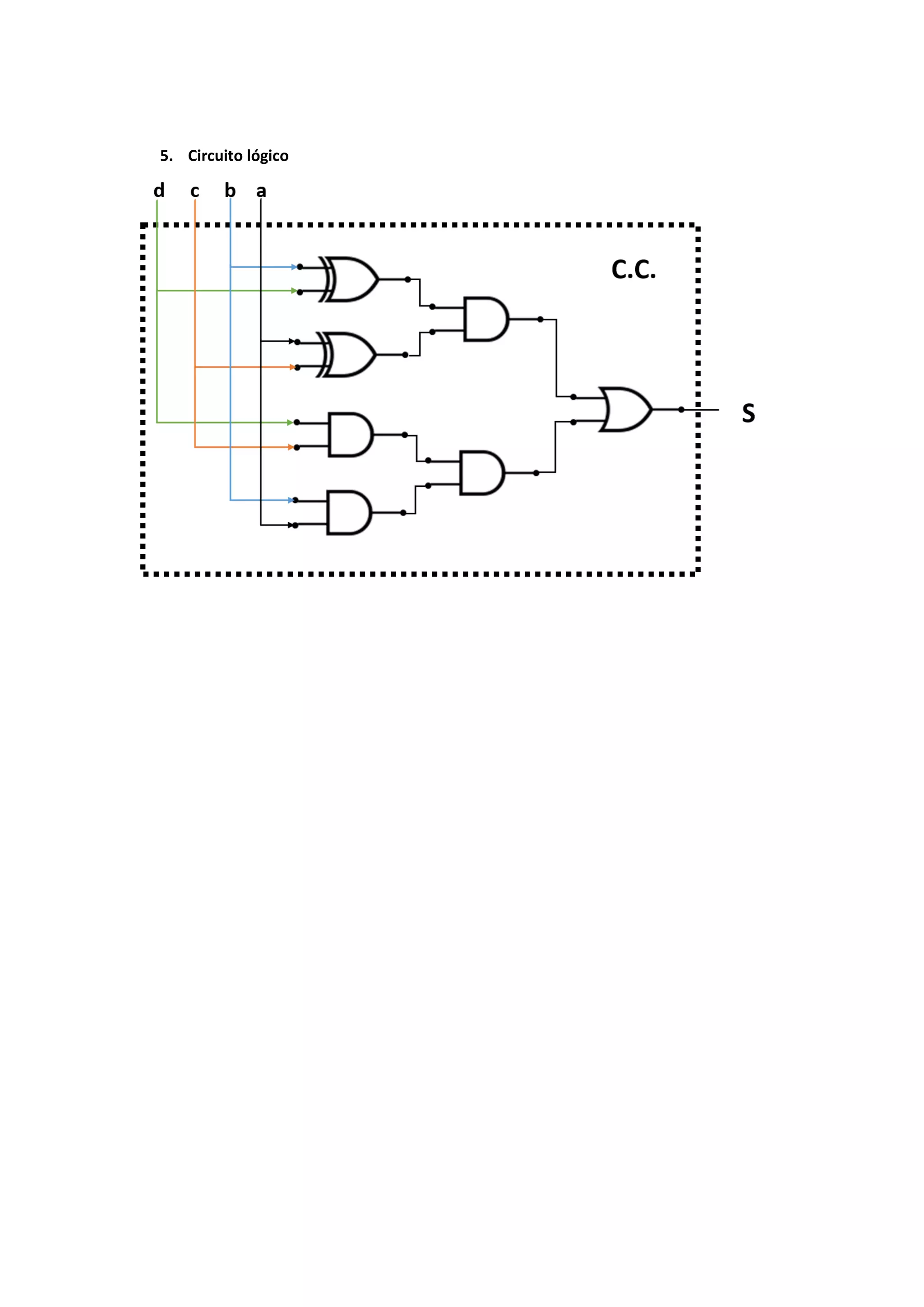
𝐹 = (𝑎 ⊕ 𝑐) ( 𝑏 ⊕ 𝑑 ) + (𝑑 𝑐)( 𝑏 𝑎)
5. Circuito lógico

Ejercicio circuito combinacional c.c.

  • 1.
    Problema (Circuito Combinacionaleso C.C.) Definir un circuito combinacional que permita detectar si un número es múltiplo de tres considerando que el número de entradas es un número de 4 bits. 1. Bloque lógico: 2. Tabla de verdad: DEC. d c b a S 0 0 0 0 0 0 1 0 0 0 1 0 2 0 0 1 0 0 3 0 0 1 1 1 4 0 1 0 0 0 5 0 1 0 1 0 6 0 1 1 0 1 7 0 1 1 1 0 8 1 0 0 0 0 9 1 0 0 1 1 10 1 0 1 0 0 11 1 0 1 1 0 12 1 1 0 0 1 13 1 1 0 1 0 14 1 1 1 0 0 15 1 1 1 1 1 3. Función lógica: 𝐹 = 𝑑̅ 𝑐̅ 𝑏 𝑎 + 𝑑̅ 𝑐 𝑏 𝑎̅ + 𝑑 𝑐̅ 𝑏̅ 𝑎 + 𝑑 𝑐 𝑏̅ 𝑎̅ + 𝑑 𝑐 𝑏 𝑎 4. Simplicar:` 𝐹 = 𝑑̅ 𝑐̅ 𝑏 𝑎 + 𝑑̅ 𝑐 𝑏 𝑎̅ + 𝑑 𝑐̅ 𝑏̅ 𝑎 + 𝑑 𝑐 𝑏̅ 𝑎̅ + 𝑑 𝑐 𝑏 𝑎 𝐹 = 𝑑̅ 𝑏 (𝑐̅ 𝑎 + 𝑐 𝑎̅) + 𝑑 𝑏̅ (𝑐̅ 𝑎 + 𝑐 𝑎̅) + 𝑑 𝑐 𝑏 𝑎 𝐹 = (𝑐̅ 𝑎 + 𝑐 𝑎̅) (𝑑̅ 𝑏 + 𝑑 𝑏̅) + 𝑑 𝑐 𝑏 𝑎 𝐹 = (𝑎 ⊕ 𝑐) ( 𝑏 ⊕ 𝑑 ) + (𝑑 𝑐)( 𝑏 𝑎)
  • 2.